Product Overview (Introduction)
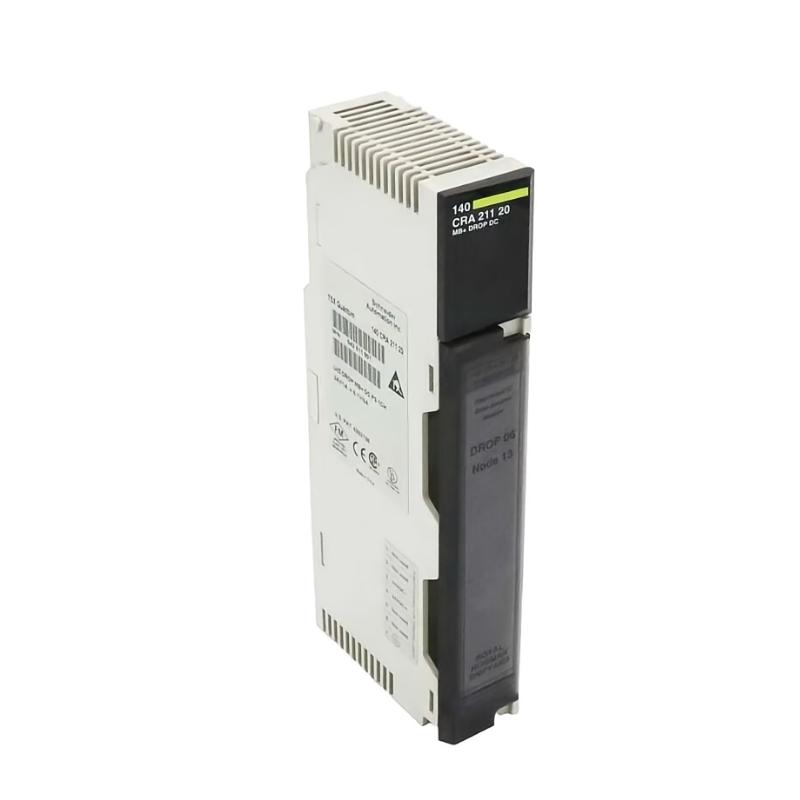
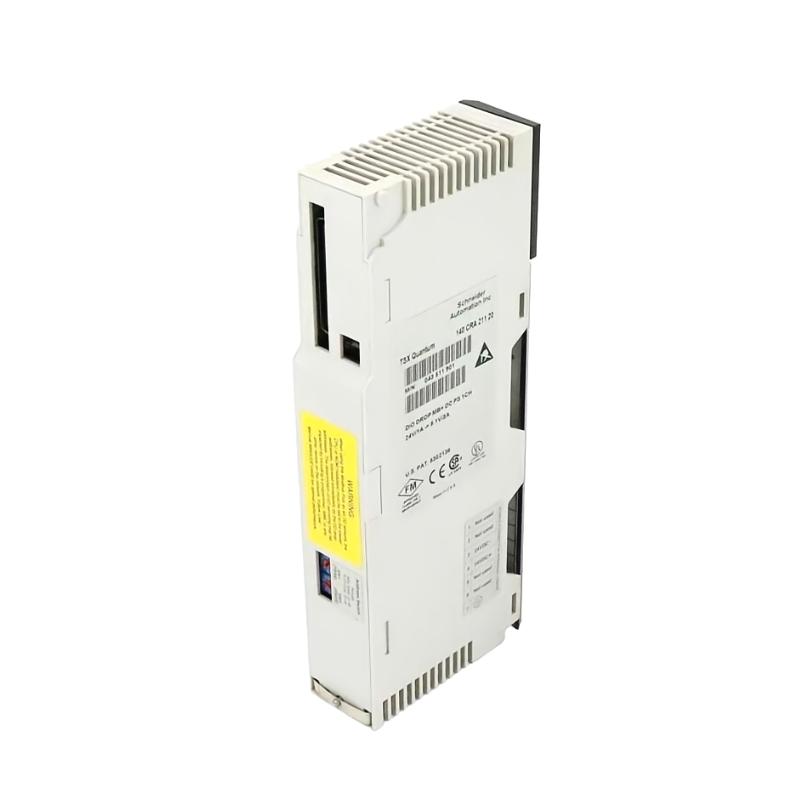
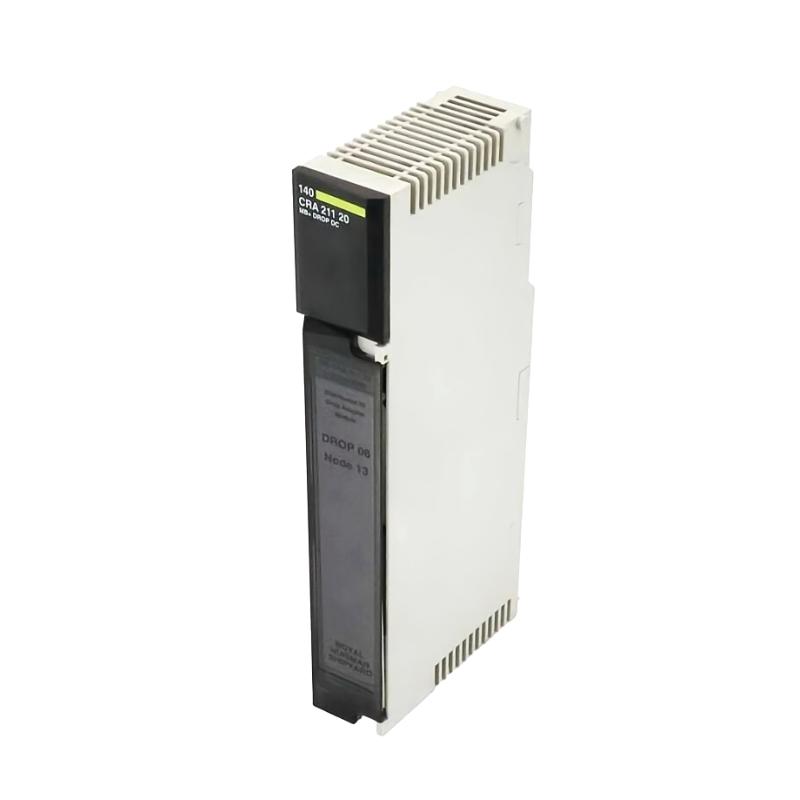
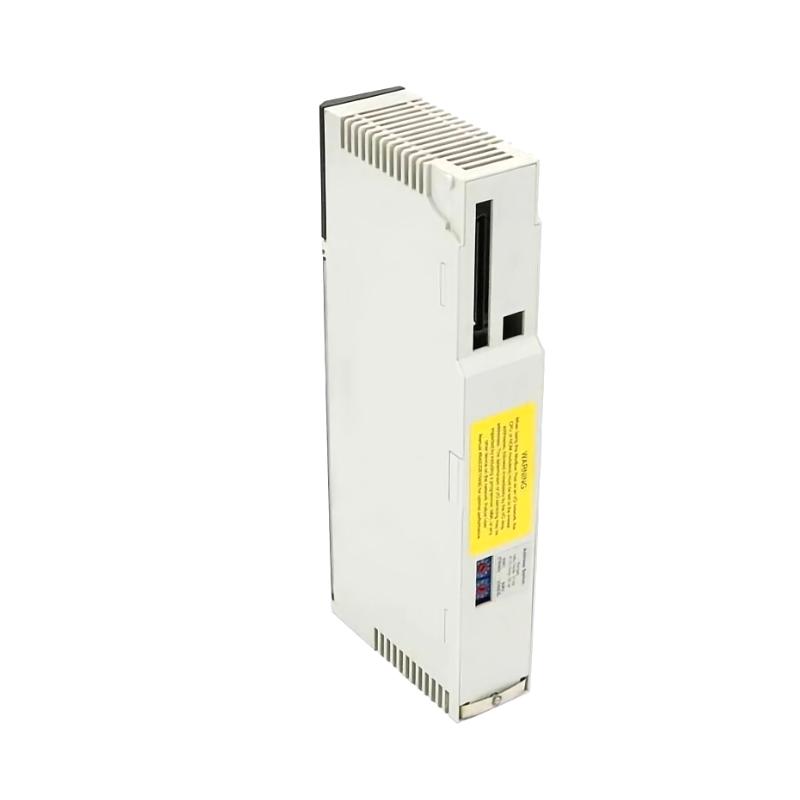
The Schneider 140CRA21120C DIO Sub-Interface is designed to support distributed automation environments where digital I/O devices are located across different sections of an industrial facility. In such systems, reliable communication between field-level devices and central control processors is critical for maintaining operational efficiency.
This module functions as a communication bridge, ensuring that digital signals from remote equipment are accurately transmitted and processed within the control system. Its design supports modular system expansion, allowing additional remote stations to be added as operational requirements grow.
With a compact and robust construction, the 140CRA21120C integrates easily into control cabinets while delivering consistent communication performance in demanding industrial environments.
Technical Specifications
| Specification | Details |
|---|
| Manufacturer | Schneider Electric |
| Model Number | 140CRA21120C |
| Module Type | DIO Sub-Interface |
| System Role | Distributed Digital I/O Communication Interface |
| System Compatibility | Modicon Automation Platforms |
| Installation | Control System Rack Mount |
| Operating Temperature | 0°C to 60°C |
| Storage Temperature | -40°C to 85°C |
| Dimensions | 50 mm × 165 mm × 310 mm |
| Package Weight | 0.702 kg |
Applications Across Distributed Digital Control Architectures (Applications)
The Schneider 140CRA21120C DIO Sub-Interface is engineered to support digital input and output communication within distributed automation systems based on the Modicon platform. It operates as an interface layer that connects remote digital I/O modules with the main controller, enabling synchronized signal exchange and reliable plant-wide automation coordination.
Typical deployment scenarios include:
-
Large manufacturing plants with decentralized digital I/O stations
-
Power generation facilities managing distributed monitoring points
-
Oil and gas operations integrating field-mounted digital devices
-
Water and wastewater treatment plants with remote instrumentation networks
-
Chemical production environments requiring stable digital signal exchange
-
Industrial automation systems expanding remote control capabilities
Through stable communication pathways, the module ensures digital signals are transmitted efficiently across the control infrastructure.
Key Operational Strengths (Advantages)
Consistent Digital I/O Communication
Provides reliable data transfer between remote digital modules and the central automation controller.
Optimized for Distributed Control Layouts
Supports large-scale systems where remote I/O stations are deployed across different plant areas.
Efficient Signal Coordination
Helps maintain accurate digital status updates and command execution across the network.
Compact Integration in Automation Racks
Designed for installation in control cabinets where space optimization is essential.
Reliable Performance in Industrial Environments
Maintains communication stability even in electrically demanding operating conditions.
Technical FAQs (Technical FAQs)
-
What is the primary function of the 140CRA21120C module?
It enables communication between distributed digital I/O modules and the main control processor.
-
Which automation systems typically use this module?
It is used within Schneider Electric Modicon distributed control architectures.
-
Does the module support remote digital signal transmission?
Yes, it facilitates the exchange of digital input and output signals across remote I/O networks.
-
Can it operate in continuous industrial processes?
Yes, it is designed for stable, long-term operation in industrial automation environments.
-
How does this module contribute to system scalability?
It allows additional remote I/O modules to be integrated without redesigning the entire system.
-
Are diagnostic functions supported?
Yes, the module supports monitoring of communication status and operational conditions.
-
What type of signals does the interface manage?
It manages digital input and output communication signals within the system.
-
How is the module installed?
It is mounted within an automation rack and connected to the distributed I/O network and controller.
-
Which industries commonly deploy this interface?
Manufacturing, energy production, oil and gas, water treatment, and process industries.
-
What advantage does distributed digital I/O provide?
It enables centralized control while allowing devices to be installed closer to field processes.
 A DCS Q Co., Ltd. - PLC and DCS Industrial Control Equipment Wholesale