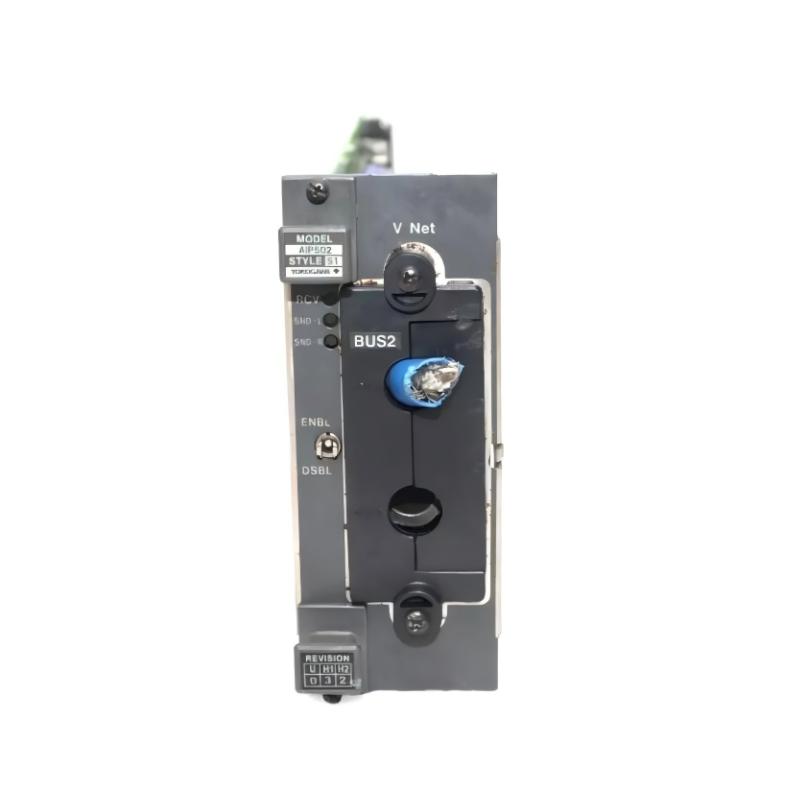
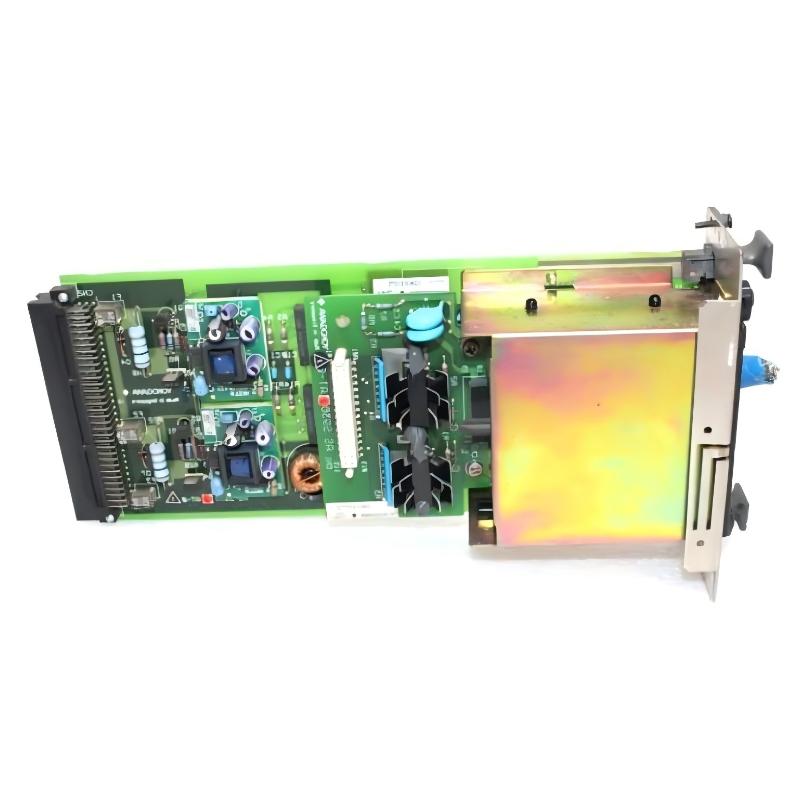
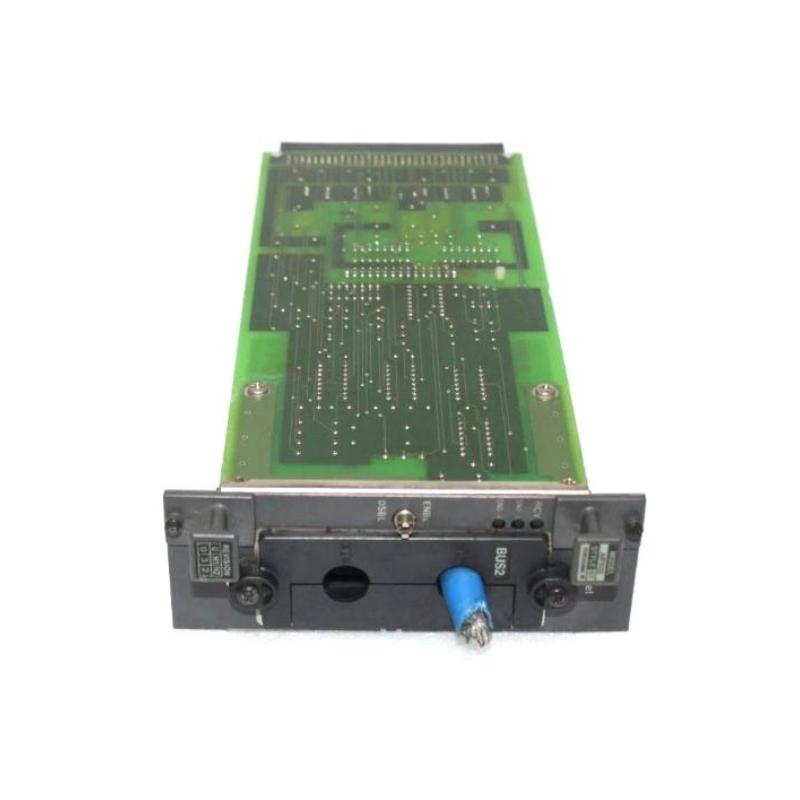
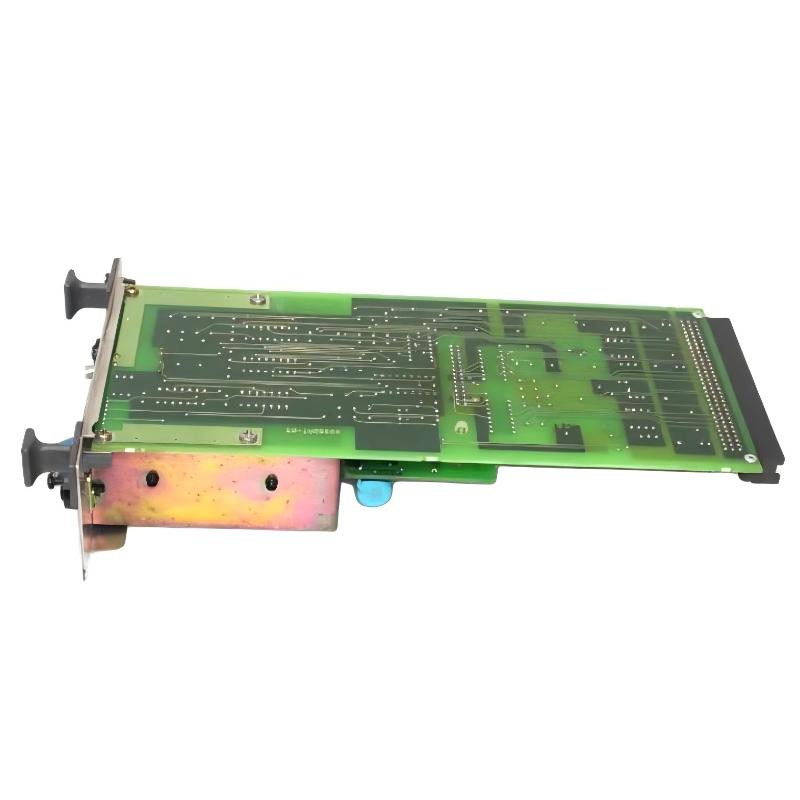
Product Overview (Introduction)
The Yokogawa AIP502 V-Net Coupler Module is a network interface component designed to provide reliable connectivity within Yokogawa distributed control systems. By linking V-Net segments, it allows controllers, I/O modules, and field devices to communicate efficiently, ensuring real-time, coordinated control across industrial automation networks.
In complex process automation systems, network expansion and module integration are critical for maintaining operational efficiency. The AIP502 enables seamless connectivity for additional devices while preserving communication reliability and system stability.
Its compact form factor allows installation in space-constrained control cabinets, while its industrial-grade design ensures consistent performance under demanding environmental conditions. By supporting scalable network architecture, the AIP502 plays a vital role in enhancing the flexibility and reliability of Yokogawa distributed control systems.
Technical Specifications
| Specification | Details |
|---|
| Manufacturer | Yokogawa |
| Model Number | AIP502 |
| Module Type | V-Net Coupler Module |
| System Role | Network Expansion and Interface |
| System Compatibility | Yokogawa Distributed Control Systems (V-Net) |
| Installation | Control System Cabinet / Rack |
| Operating Temperature | 0°C to 60°C |
| Storage Temperature | -20°C to 70°C |
| Dimensions | 152 mm × 76 mm × 254 mm |
| Weight | 0.6 kg |
Applications in Distributed Control Network Expansion (Applications)
The Yokogawa AIP502 V-Net Coupler Module is designed to enhance connectivity within Yokogawa distributed control systems (DCS) by linking V-Net segments and facilitating reliable communication between controllers, I/O modules, and field devices. It enables scalable network architecture and ensures consistent data exchange across complex automation environments.
Typical deployment scenarios include:
Power generation plants integrating multiple automation subsystems
Oil and gas facilities managing distributed process instrumentation
Chemical and petrochemical plants requiring stable modular network communication
Water and wastewater treatment systems coordinating process control
Large-scale industrial plants expanding V-Net networks for additional modules
Manufacturing facilities maintaining synchronized communication across control layers
By bridging V-Net segments, the AIP502 ensures seamless integration of controllers and modules for stable, real-time process control.
Operational Advantages (Advantages)
Reliable V-Net Network Coupling
Facilitates stable communication between multiple control modules and I/O devices within distributed control architectures.
Enhanced System Scalability
Supports network expansion by connecting additional modules without disrupting existing operations.
Compact Design for Space-Constrained Installations
Small footprint allows mounting in control cabinets and racks with limited space.
Industrial-Grade Performance
Maintains high communication integrity under harsh conditions including vibration, temperature fluctuations, and electrical noise.
Optimized for Yokogawa DCS Integration
Designed to work natively with Yokogawa V-Net systems for coordinated plant operations.
Technical FAQs (Technical FAQs)
-
What is the primary function of the AIP502 V-Net Coupler Module?
It connects and expands V-Net segments, enabling reliable communication between controllers, I/O modules, and field devices.
-
Which systems are compatible with this module?
It is designed for Yokogawa distributed control systems utilizing V-Net architecture.
-
Can the module handle real-time data communication?
Yes. It ensures timely and accurate data exchange across V-Net segments.
-
Is the AIP502 suitable for harsh industrial environments?
Yes. It is engineered to operate reliably under vibration, electrical noise, and temperature variation.
-
How is the module installed?
It is mounted within control cabinets or racks, connecting V-Net devices and controllers.
-
Does the module provide diagnostic capabilities?
Yes. It supports monitoring of network status and data integrity.
-
Can multiple modules communicate through a single AIP502?
Yes. It enables coordinated communication across multiple controllers and I/O modules.
-
What industries typically deploy this module?
Power generation, oil & gas, chemical processing, water treatment, and large-scale manufacturing facilities.
-
Does it support network expansion?
Yes. Additional modules and segments can be integrated without affecting existing system performance.
-
What role does the AIP502 play in distributed control systems?
It functions as a V-Net interface that ensures stable, scalable, and synchronized communication across the automation network.
 A DCS Q Co., Ltd. - PLC and DCS Industrial Control Equipment Wholesale