Applications
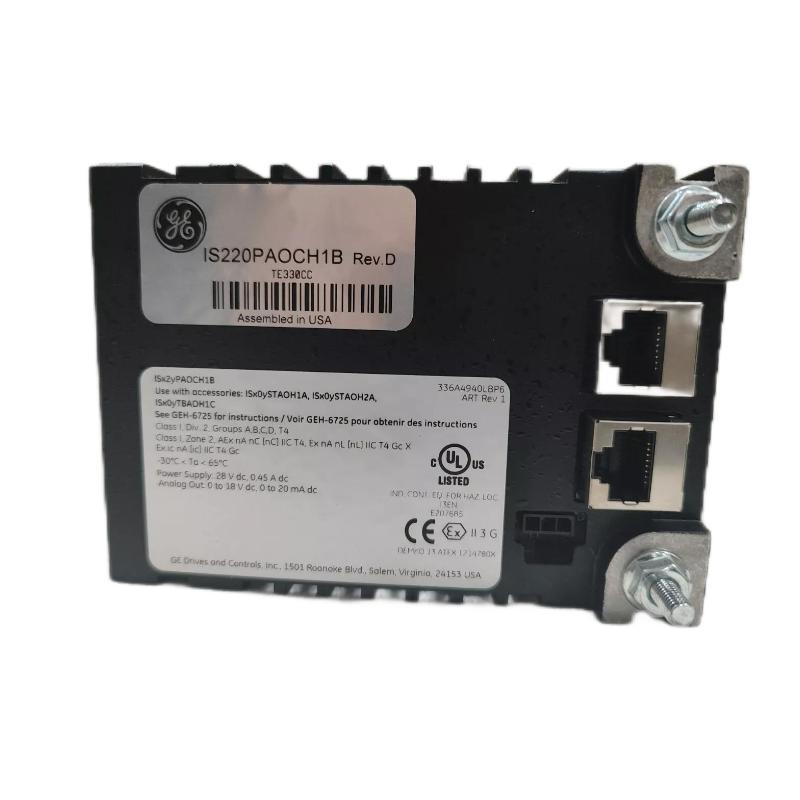
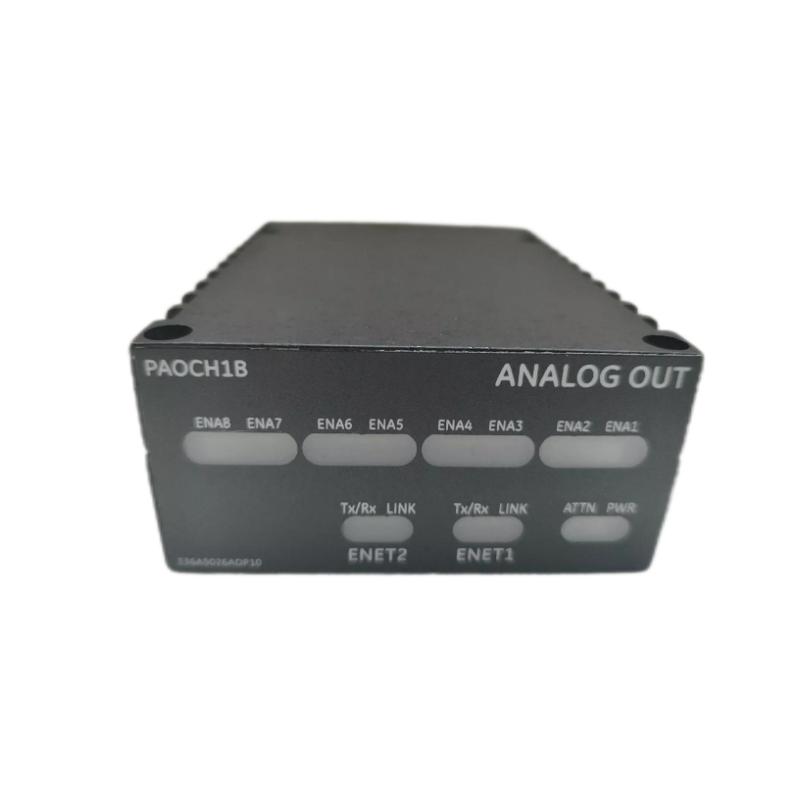
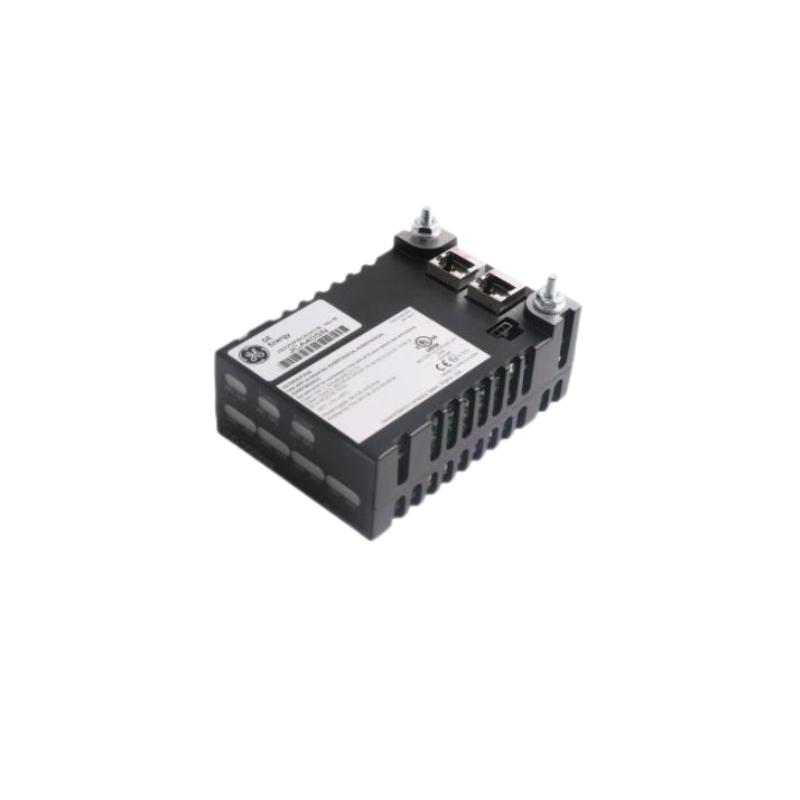
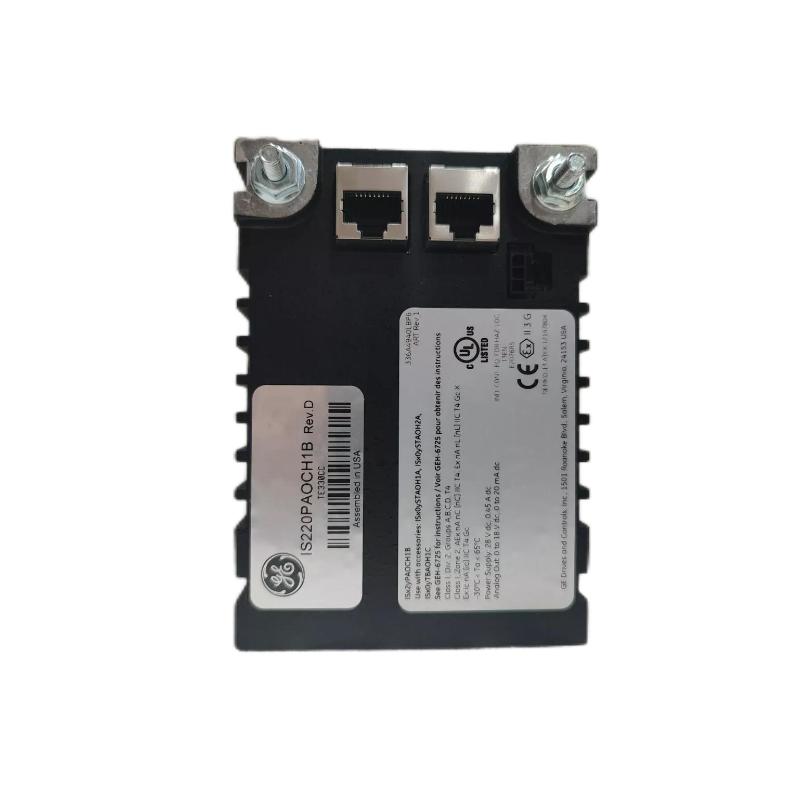
The IS220PAOCH1B module is widely used in industrial automation and turbine control systems where accurate analog output signals are critical:
-
Fuel and steam valve control loops
-
Servo positioning for pitch, throttle, or actuation systems
-
Distributed control system (DCS) analog outputs
-
Turbine governor or blade angle control
-
Process automation requiring analog actuation
By providing stable analog command signals, this board enables smooth interface between digital control logic and physical actuators, enhancing system responsiveness and process precision.
Key Advantages
-
Multi‑Channel Output: Eight independent analog outputs support multiple control loops from one module.
-
Flexible Output Modes: Field‑selectable voltage (±10 V) or current (4–20 mA) outputs suit a variety of field devices.
-
High Precision: 12‑bit resolution and tight accuracy specifications ensure reliable analog command signals.
-
Fast Response: Low update latency (<10 ms) supports dynamic control requirements.
-
Robust Industrial Design: Built to withstand electrical noise, vibration, and temperature variation typical of industrial control rooms and turbine enclosures.
-
Seamless Integration: Backplane digital bus interface ensures compatibility with GE Mark VI and Mark VIe systems.
These strengths combine to make the IS220PAOCH1B an effective solution for analog actuation in complex control environments.
Technical FAQs
1. What is the primary purpose of the IS220PAOCH1B?
It generates precision analog output signals for actuators and control systems.
2. How many analog outputs are provided?
The module supports 8 analog output channels.
3. What signal types can it output?
It supports ±10 V voltage or 4–20 mA current outputs.
4. What is the resolution of the converter?
12‑bit digital‑to‑analog resolution.
5. What is the accuracy rating?
Approximately ±0.25 % of full scale.
6. Can it drive current‑mode devices?
Yes — up to 20 mA per channel.
7. How quickly does the module respond?
Typical response time is under 10 ms.
8. What interface does it use to communicate with the system?
It interfaces via the system backplane digital bus.
9. What environments can it operate in?
It is designed for industrial ambient conditions, including -30°C to +65°C.
10. Is isolation provided?
Yes, channel‑to‑backplane isolation helps maintain signal integrity.
 A DCS Q Co., Ltd. - PLC and DCS Industrial Control Equipment Wholesale