Applications
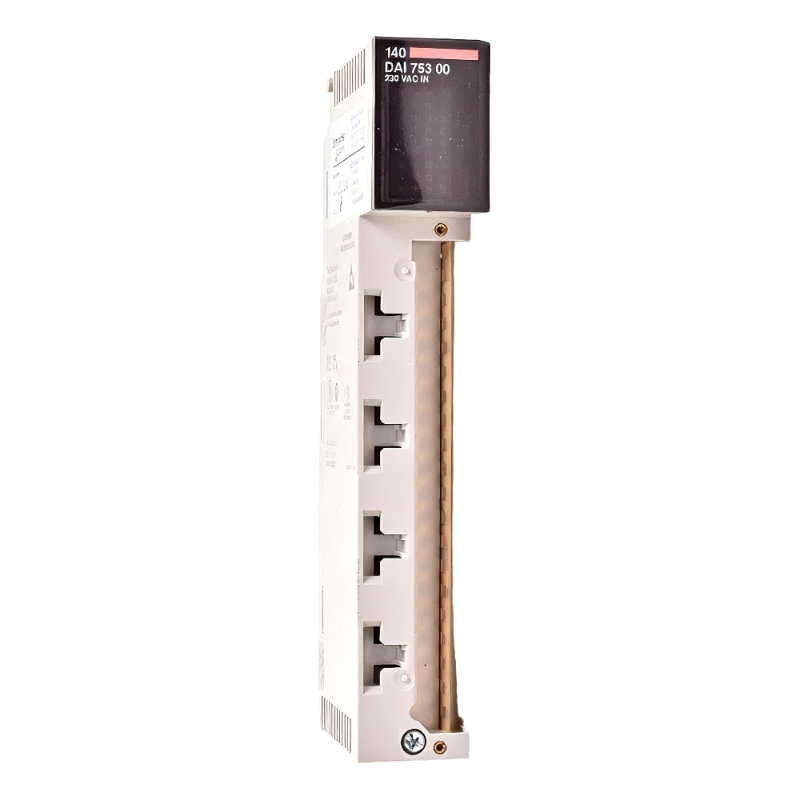
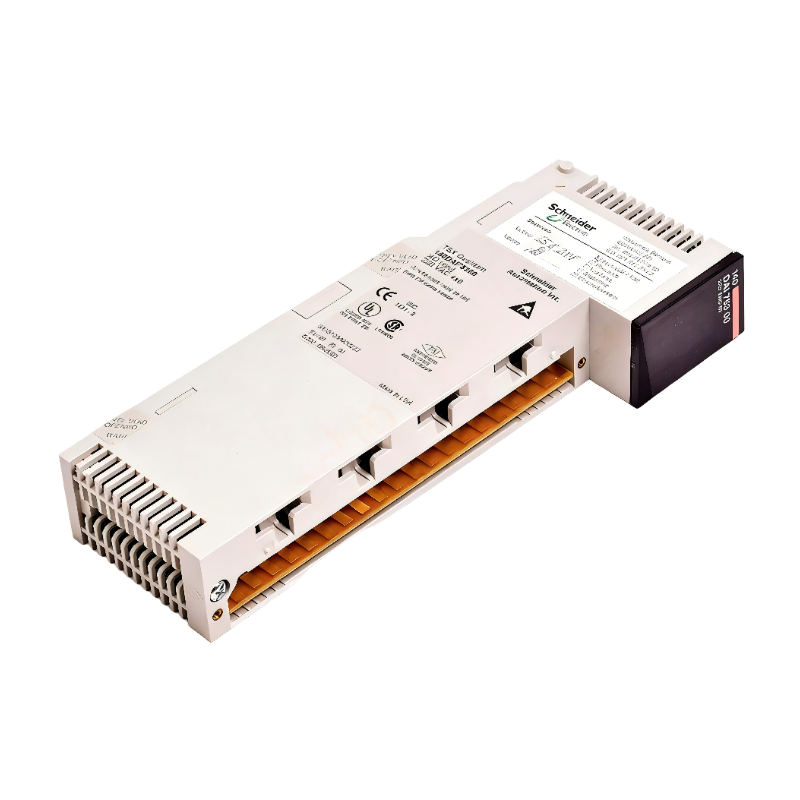
The Schneider 140DAI75300 Discrete Input Module is designed to receive digital signals from field devices and transmit them to a PLC for monitoring and control. It plays an essential role in industrial automation systems where binary input signals such as ON/OFF states must be detected reliably and processed quickly.
Typical applications include:
-
Monitoring switches, pushbuttons, and limit switches in production lines
-
Collecting digital signals from sensors and relay outputs
-
Integration with Schneider Electric PLC systems in process automation
-
Factory automation systems requiring dependable discrete input handling
-
Energy, chemical, and manufacturing facilities using distributed I/O networks
This module helps ensure accurate communication between field devices and the control system.
Advantages
Accurate Digital Signal Detection
Captures ON/OFF input signals from field devices with high reliability.
Designed for PLC Integration
Fully compatible with Schneider Electric PLC platforms.
Compact Industrial Form Factor
Fits easily into PLC racks and automation cabinets.
Stable and Fast Performance
Ensures responsive signal processing for critical automation tasks.
Reliable Industrial Operation
Engineered for continuous use in demanding industrial environments.
Technical FAQs
1. What is the main function of the 140DAI75300 module?
It converts field-level discrete signals into PLC-readable digital inputs.
2. What types of devices can connect to this module?
Switches, sensors, relays, and other binary output devices.
3. Is the module compatible with Schneider PLC systems?
Yes, it is designed for Schneider Electric automation platforms.
4. Can it be used in industrial environments?
Yes, it is built for reliable operation in factory and process plant conditions.
5. Does it support real-time signal monitoring?
Yes, it allows fast detection and transmission of discrete input signals.
6. Is configuration required before operation?
Basic configuration is typically performed through PLC programming software.
7. Can it handle multiple input channels?
Yes, it supports multiple discrete input channels as defined by the module design.
8. Where is the module typically installed?
In PLC racks or industrial automation control cabinets.
9. How does it improve system reliability?
By providing stable and accurate input signal detection for process control.
10. Which industries commonly use this module?
Manufacturing, process automation, chemical plants, energy facilities, and industrial production systems.
 A DCS Q Co., Ltd. - PLC and DCS Industrial Control Equipment Wholesale