Applications
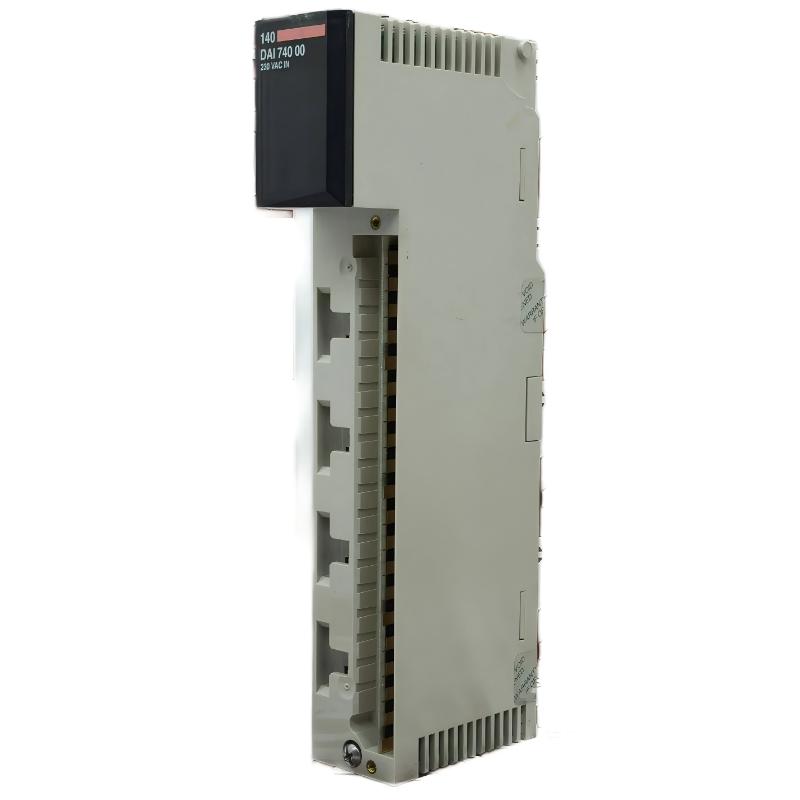
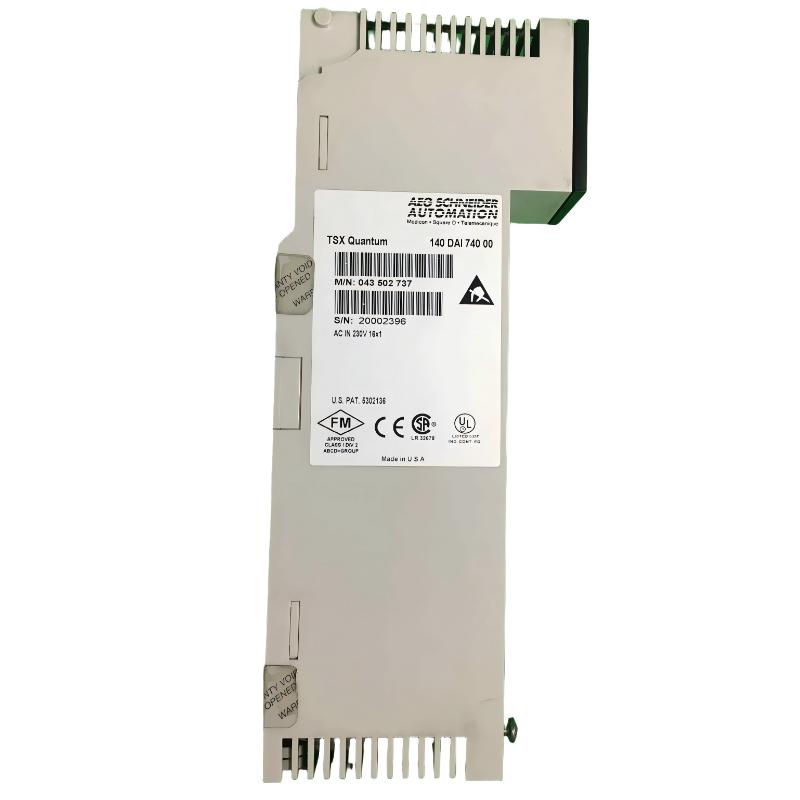
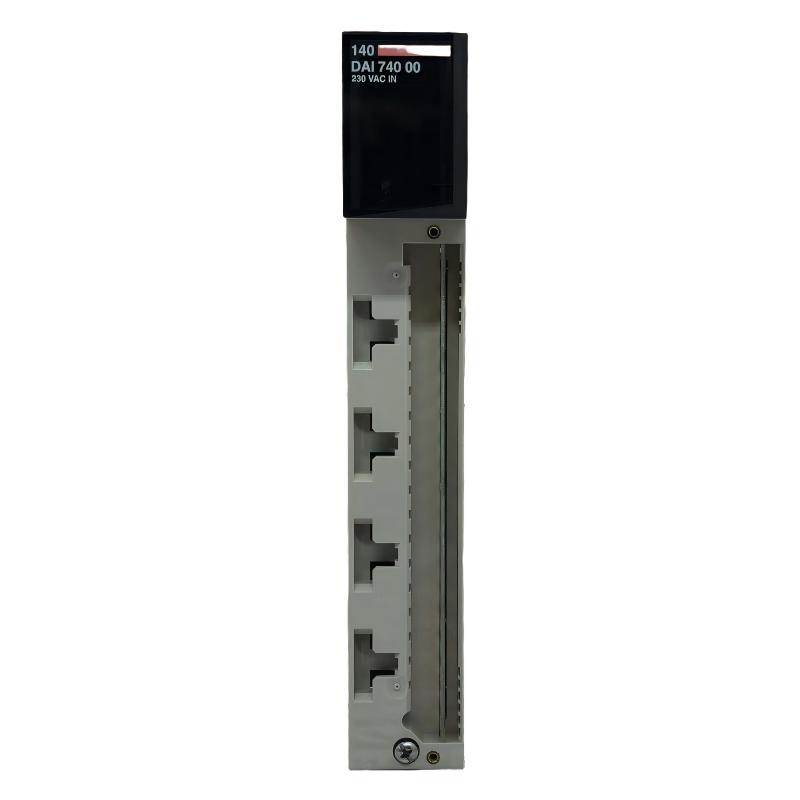
The Schneider 140DAI74000C Discrete Input Module is designed to interface field-level digital signals with a PLC system, enabling reliable monitoring of binary inputs such as switches, sensors, and relays. It is widely used in industrial automation environments where accurate and consistent discrete signal detection is essential.
Typical applications include:
-
Monitoring field devices in manufacturing and process plants
-
Collecting ON/OFF status signals from switches, relays, and sensors
-
Integration with Schneider Electric PLCs for discrete process control
-
Factory automation requiring rapid input processing
-
Industrial facilities in energy, chemical, and process industries
This module ensures dependable communication of discrete signals from field devices to the PLC controller.
Advantages
Reliable Discrete Input Processing
Captures ON/OFF status from sensors, switches, and other binary devices accurately.
Seamless PLC Integration
Optimized for Schneider Electric PLC systems.
Compact Industrial Design
Fits standard PLC racks while withstanding harsh industrial conditions.
Fast and Stable Operation
Ensures rapid response for critical control applications.
Enhanced System Reliability
Maintains consistent signal detection to reduce downtime and operational errors.
Technical FAQs
1. What is the primary function of the 140DAI74000C?
It converts field-level discrete signals into PLC-readable inputs.
2. Can it handle multiple inputs simultaneously?
Yes, it supports multiple discrete inputs per module depending on PLC configuration.
3. Is it compatible with Schneider Electric PLCs?
Yes, it integrates seamlessly with Schneider Electric PLC systems.
4. What types of devices can be connected?
Switches, relays, and other binary output devices.
5. Can it operate in industrial environments?
Yes, it is built to withstand industrial conditions.
6. Does it require special configuration?
Minimal setup is needed; configuration is handled via PLC software.
7. Can it detect fast signal changes?
Yes, it is designed for rapid and accurate input detection.
8. Is it hot-swappable?
Depends on the PLC rack design; some systems allow replacement without powering down.
9. How does it improve process reliability?
By accurately detecting discrete inputs and ensuring timely communication to the controller.
10. Which industries commonly deploy this module?
Manufacturing, process automation, energy, chemical, and industrial facilities.
 A DCS Q Co., Ltd. - PLC and DCS Industrial Control Equipment Wholesale