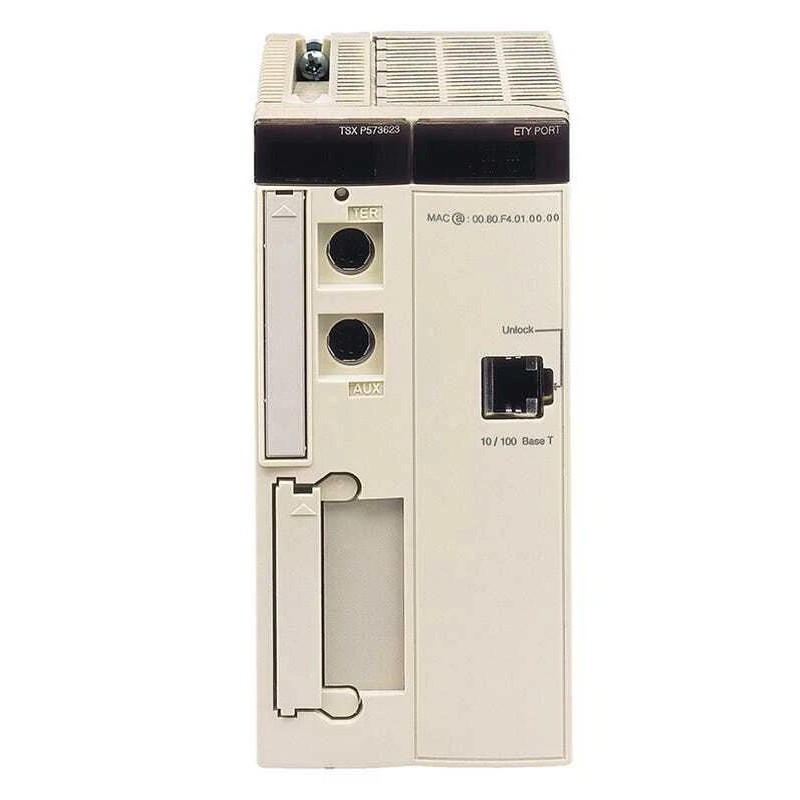
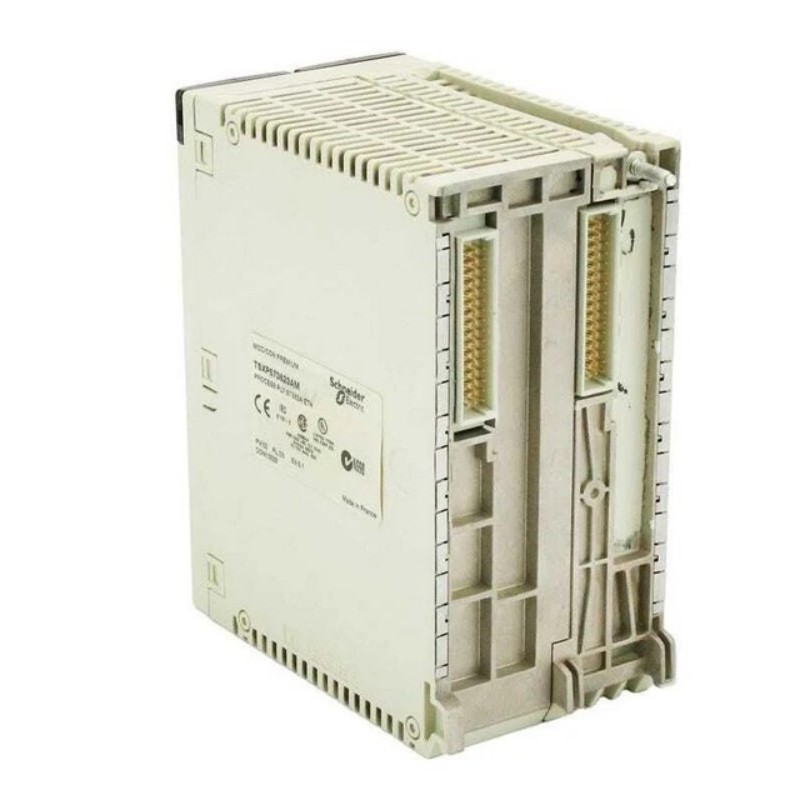
Modular Fieldbus Connectivity for Industrial Automation
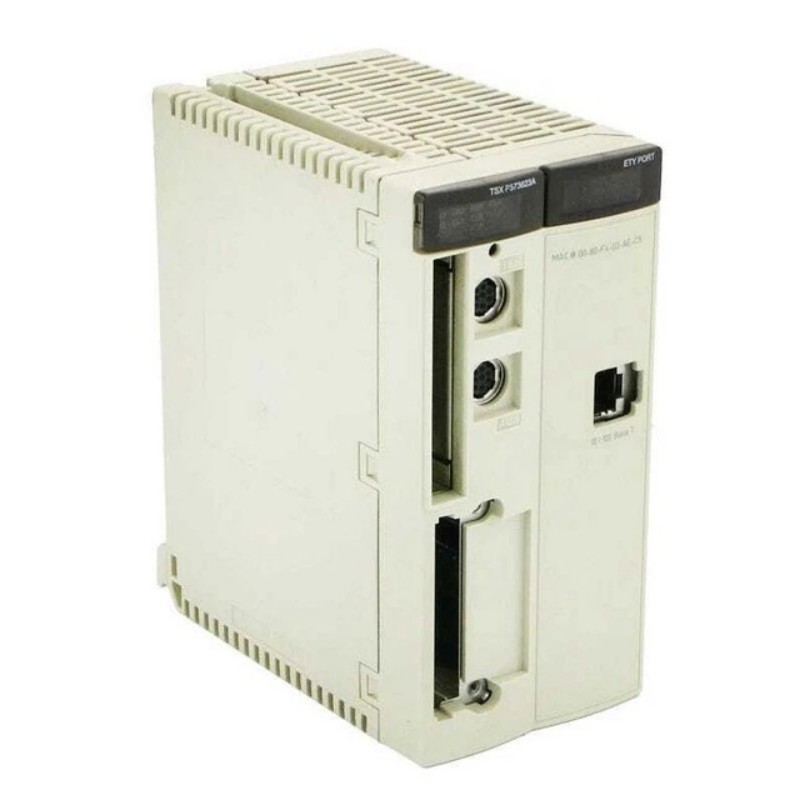
The Schneider TSXP573623 Fieldbus Modules deliver robust, flexible, and scalable network interfacing within Schneider Electric’s Modicon and Unity automation platforms. Designed to support industrial fieldbus communication standards, these modules enable reliable data exchange between controllers, I/O devices, and intelligent field equipment, simplifying system architecture and reducing wiring complexity.
Ideal for distributed automation, the TSXP573623 family enhances performance in systems requiring synchronized control, remote I/O integration, and optimized field communication.
Technical Specifications
| Parameter | Specification |
|---|
| Product Type | Fieldbus Communication Module |
| Model Number | TSXP573623 |
| Supported Fieldbus Standards | PROFIBUS DP, Modbus, CANopen (depending on variant) |
| Communication Interface | RS‑485 / Fieldbus port |
| Baud Rate Range | Up to 12 Mbps (PROFIBUS DP) |
| Nodes Supported | Up to 127 on PROFIBUS DP |
| Isolation Voltage | 1500 V DC |
| Operating Temperature | 0°C to 60°C |
| Storage Temperature | ‑20°C to 70°C |
| Dimensions (HxWxD) | Approx. 80 × 35 × 150 mm |
| Weight | Approx. 0.5 kg |
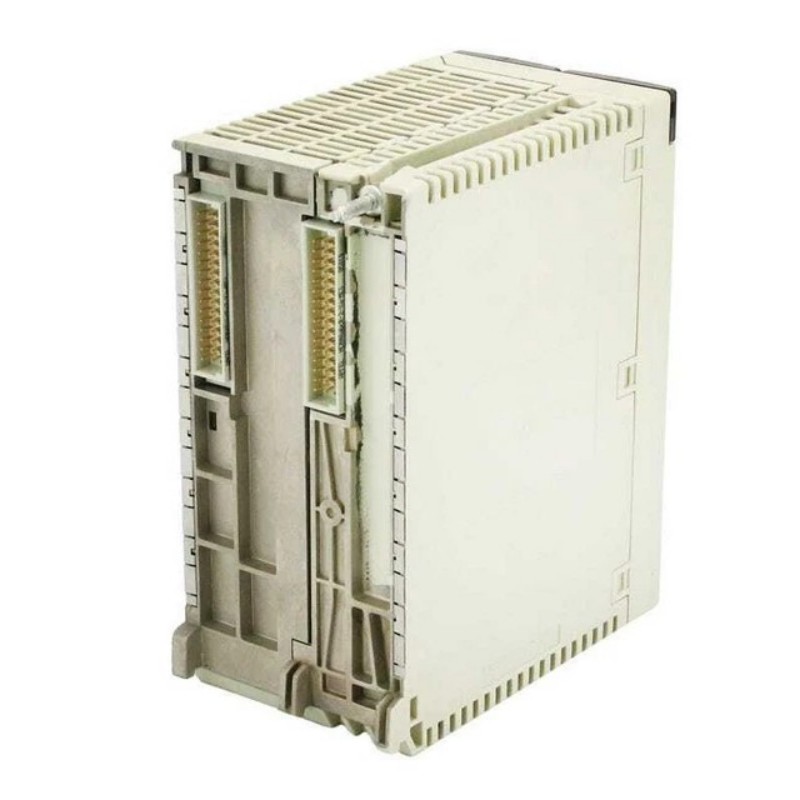
| Mounting | DIN‑rail or panel mounting |
Typical Industrial Applications
TSXP573623 Fieldbus Modules are widely used in automation systems where high‑speed, deterministic communication is essential. In automotive manufacturing, these modules enable coordinated control across assembly lines and robotics.
In water and wastewater systems, they support remote station communication and distributed I/O integration. Utilities and power plants use them for substation automation and protection schemes. Chemical and process plants leverage fieldbus connectivity to interface intelligent transmitters, actuators, and safety devices—minimizing cabling and enhancing diagnostic visibility.
Core Advantages and Value Proposition
Built for industrial reliability, TSXP573623 modules deliver deterministic communication with fast response times and strong electrical isolation. By supporting widely adopted fieldbus standards—such as PROFIBUS DP and CANopen—they allow seamless integration of third‑party devices without custom interfacing.
Deterministic scheduling and error‑checked communication help reduce jitter and improve control stability, particularly in motion or safety‑critical applications. The modular form factor simplifies installation and reduces panel space, while rugged components ensure sustained performance in environments with temperature variation, vibration, and electrical noise.
Additionally, standardized fieldbus support enables future system expansions and remote I/O deployments with minimal engineering overhead—resulting in long‑term operational flexibility and lower total cost of ownership.
Technical FAQs
1. What is the primary function of TSXP573623 Fieldbus Modules?
They provide standardized fieldbus communication between the PLC and distributed devices.
2. Which fieldbus protocols are supported?
Typically PROFIBUS DP, with variants supporting Modbus and CANopen.
3. Can these modules handle remote I/O integration?
Yes, they facilitate communication with remote I/O networks.
4. How many nodes can be supported on PROFIBUS DP?
Up to 127 devices, depending on bus configuration.
5. What are typical baud rates?
Up to 12 Mbps on PROFIBUS DP.
6. Is electrical isolation provided?
Yes, with high isolation voltage to protect against surges.
7. Can they operate in harsh environments?
Yes, designed for industrial temperature, vibration, and electrical noise conditions.
8. How are they mounted?
DIN‑rail or panel mounted.
9. Are third‑party devices supported?
Yes, compliant with standard fieldbus protocols.
10. Do they require special configuration tools?
Typically configured within the controller’s development environment (Unity / PL7) or fieldbus diagnostic tools.
 A DCS Q Co., Ltd. - PLC and DCS Industrial Control Equipment Wholesale