Product Introduction
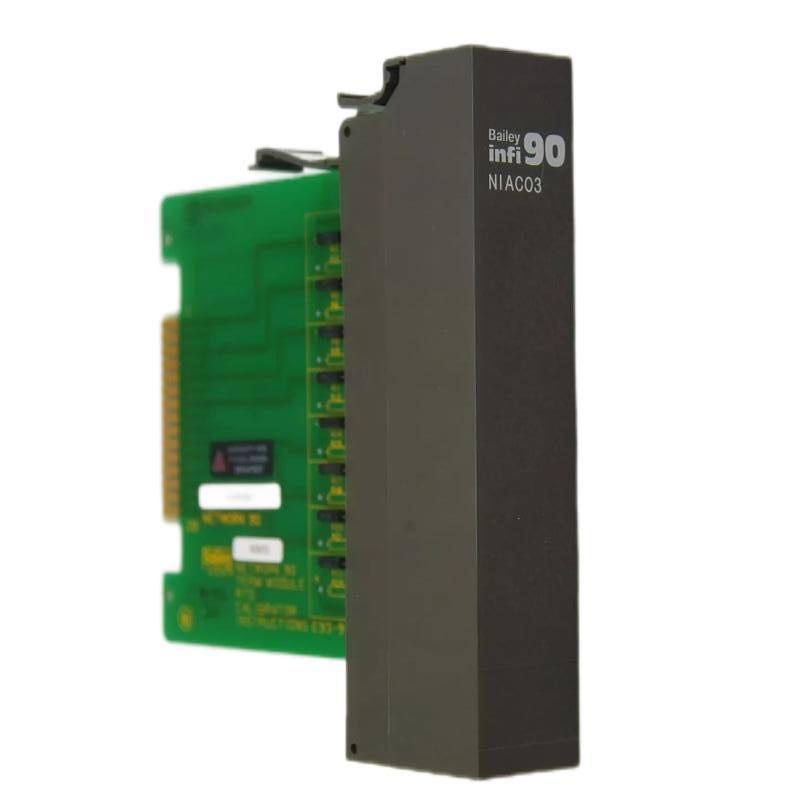
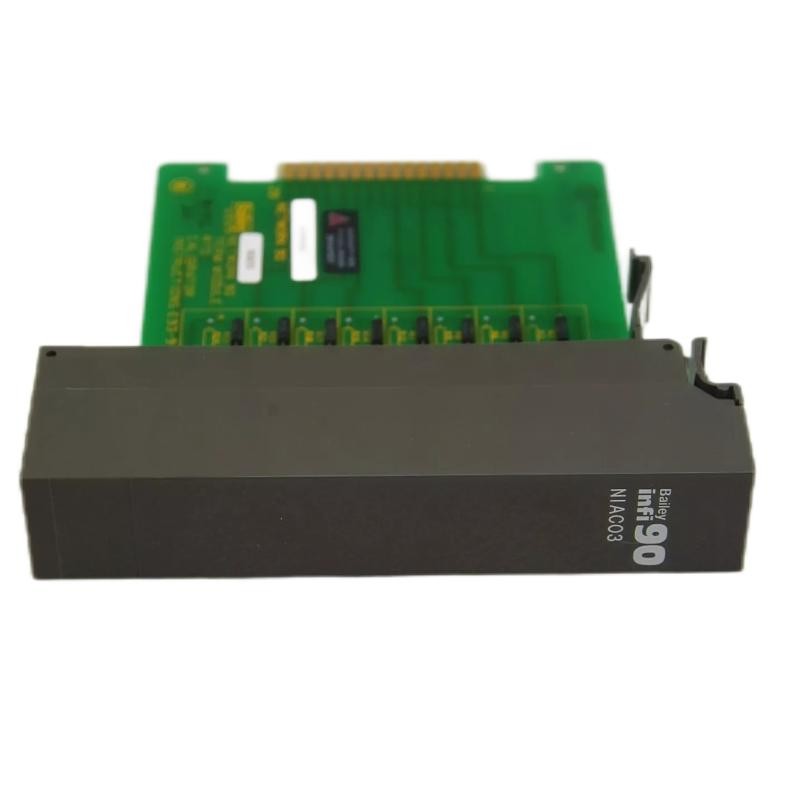
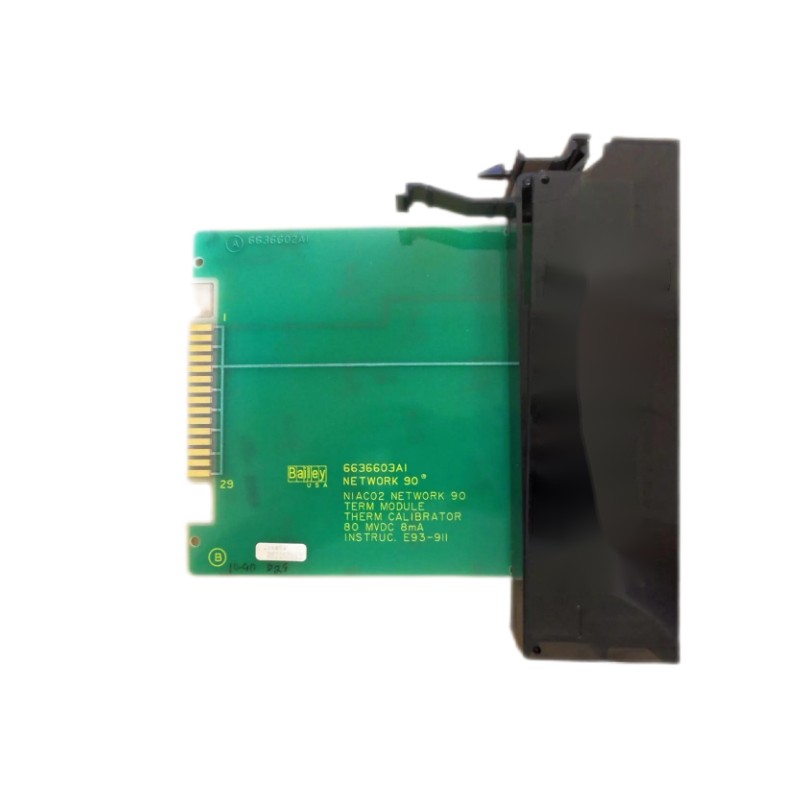
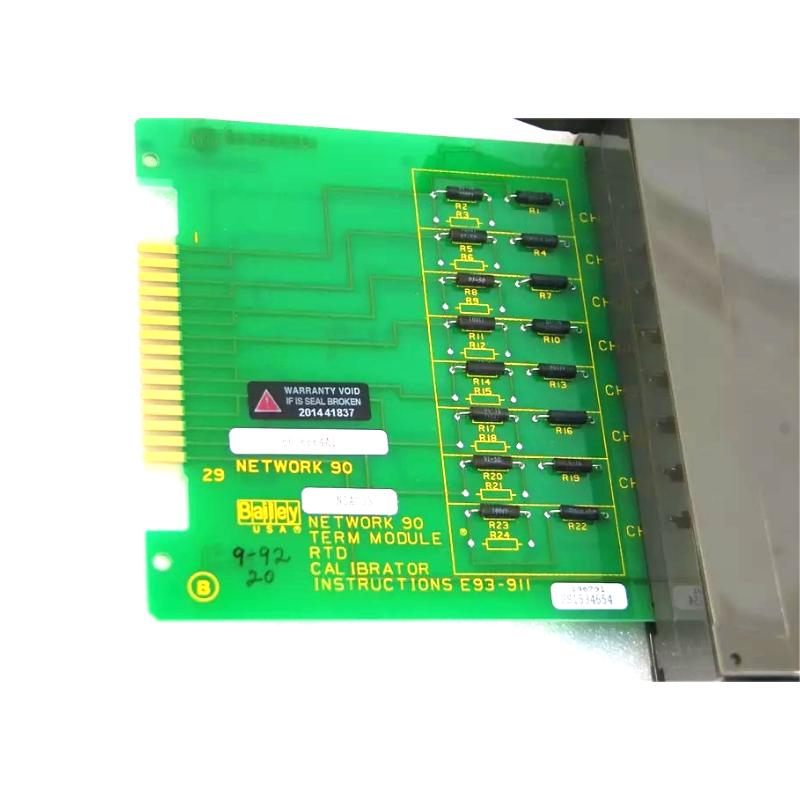
The ABB Bailey NIAC03 Analog Input Calibration Module is a specialized industrial instrument designed to provide precise calibration for analog input channels in distributed control systems. In industrial processes, accurate measurement of variables such as temperature, pressure, flow, and level is essential for process control and safety.
The module allows field engineers and technicians to simulate analog input signals and verify the accuracy of connected sensors and I/O modules. By maintaining proper calibration, it ensures that process control systems receive reliable and consistent data, supporting safe and efficient plant operations.
Its compact design allows easy integration into ABB Bailey DCS cabinets, providing an essential tool for maintenance, testing, and process validation in industrial automation systems.
Technical Specifications
| Parameter | Specification |
|---|
| Product Model | NIAC03 |
| Product Type | Analog Input Calibration Module |
| Manufacturer | ABB Bailey |
| Functional Role | Analog Signal Calibration and Verification |
| System Compatibility | ABB Bailey Distributed Control Systems |
| Installation Type | Control Cabinet / Instrumentation Rack |
| Dimensions | 120 × 80 × 40 mm |
| Weight | 0.5 kg (1.102 lb) |
Industrial Process Measurement Applications
The ABB Bailey NIAC03 Analog Input Calibration Module is designed for precise calibration and signal verification of analog input channels in distributed control systems (DCS) and industrial automation environments. Accurate calibration ensures that process variables such as temperature, pressure, flow, and level are correctly measured and transmitted to the control system.
This module allows engineers to simulate input signals and verify measurement accuracy without interrupting normal system operation, making it a critical component in process control and quality assurance.
Typical applications include:
-
Calibration of analog sensors in chemical and petrochemical plants
-
Verification of temperature, pressure, or flow signals in industrial automation systems
-
Field maintenance and testing of ABB Bailey distributed control systems
-
Quality control in manufacturing processes requiring precise signal monitoring
-
Industrial instrumentation troubleshooting and validation
By enabling precise calibration, the NIAC03 module ensures reliable process measurement and optimized control performance.
Operational Advantages
Accurate Signal Simulation
Generates precise analog input signals for calibration, testing, and validation.
Simplifies Maintenance and Troubleshooting
Allows verification of I/O modules and sensors without process interruption.
Compact, Rack-Compatible Design
Easily integrates into ABB Bailey control cabinets and instrumentation panels.
Ensures Measurement Reliability
Helps maintain accuracy and repeatability of process measurements across analog channels.
Industrial-Grade Construction
Built for reliable operation in harsh industrial environments.
Technical FAQs
1. What is the primary purpose of the NIAC03 module?
To calibrate and verify analog input channels in industrial control systems.
2. Which types of signals can the module simulate?
Voltage and current signals representing temperature, pressure, flow, or other process variables.
3. Where is the module installed?
Inside ABB Bailey DCS control cabinets or instrumentation racks.
4. Can it be used without disrupting process operations?
Yes, calibration can often be performed without shutting down the system.
5. How does it contribute to process reliability?
By ensuring that sensors and I/O channels report accurate and consistent measurements.
6. Which systems typically use this calibration module?
ABB Bailey distributed control systems and industrial automation platforms.
7. How does it simplify troubleshooting?
Engineers can inject test signals to verify module and sensor functionality without removing wiring.
8. Is the module suitable for long-term industrial use?
Yes, it is designed to withstand industrial operating conditions.
9. Can multiple analog channels be calibrated simultaneously?
Yes, the module supports multiple input channels depending on system configuration.
10. Why is analog input calibration critical in process industries?
Accurate process measurements are essential for safe, efficient, and optimized automation control.
 A DCS Q Co., Ltd. - PLC and DCS Industrial Control Equipment Wholesale