Product Introduction
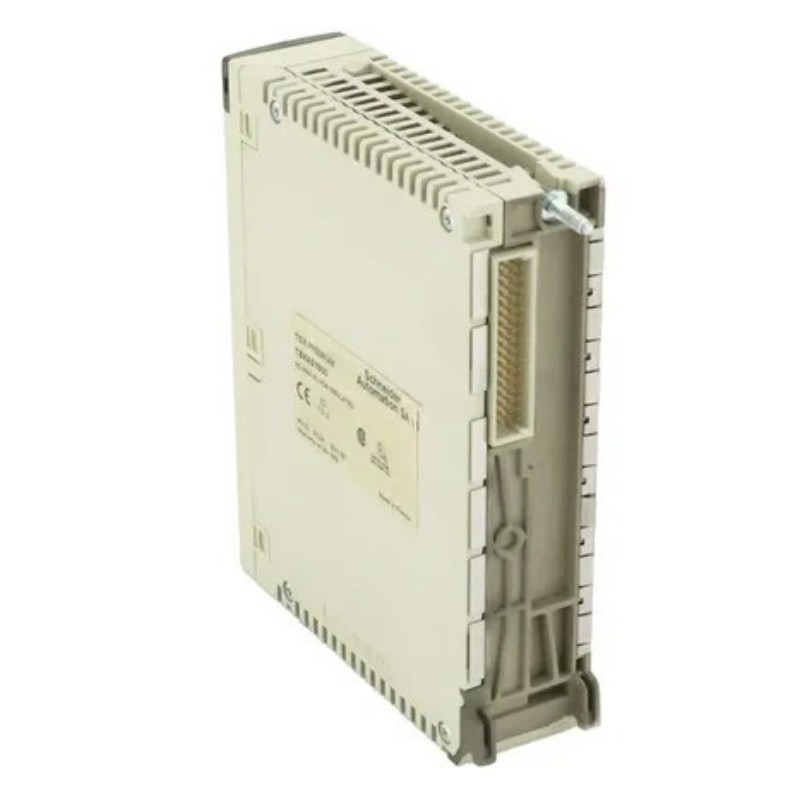
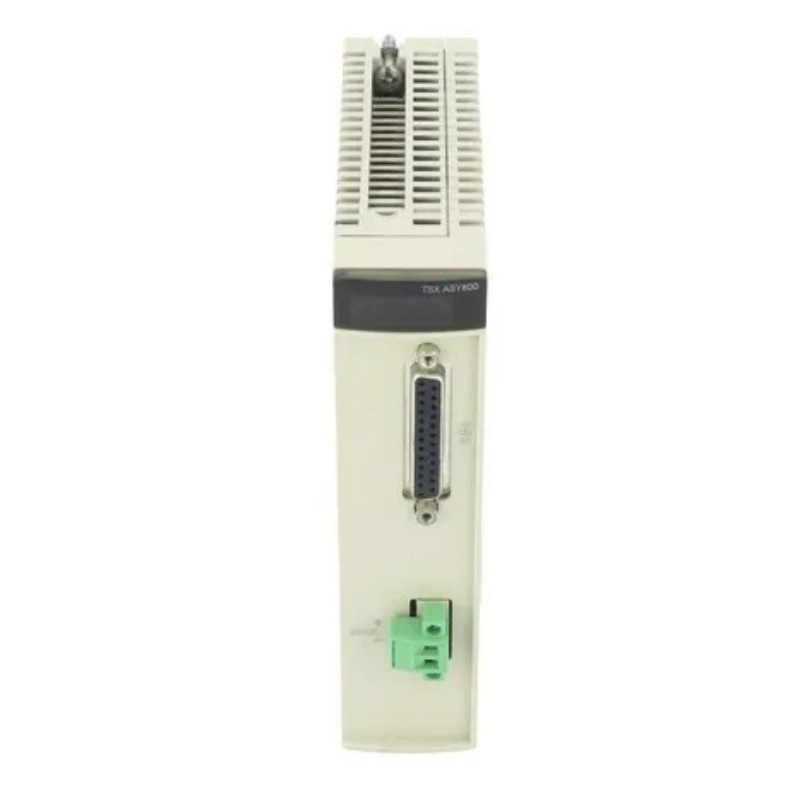
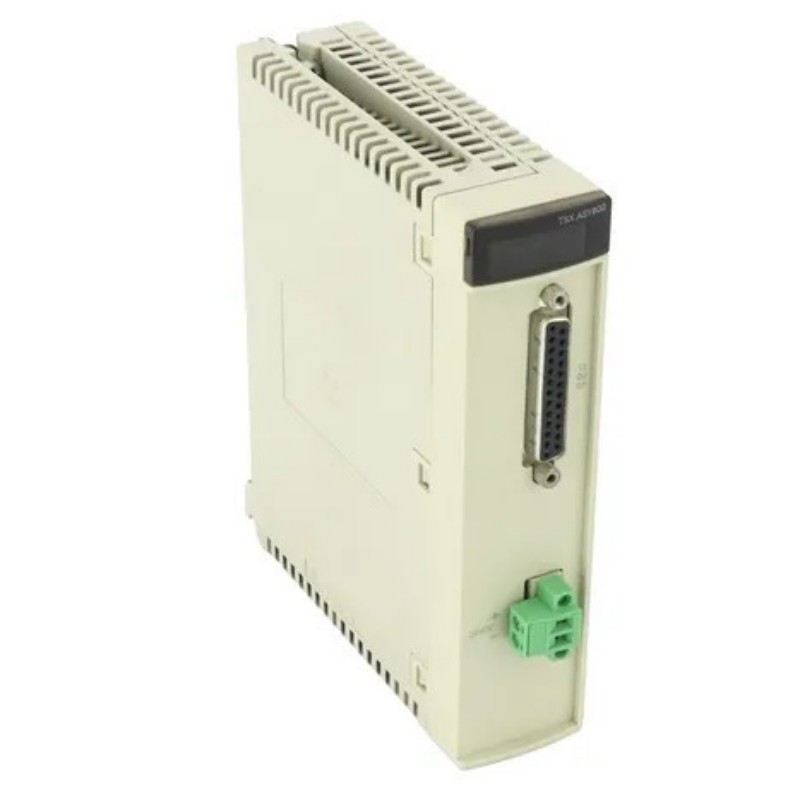
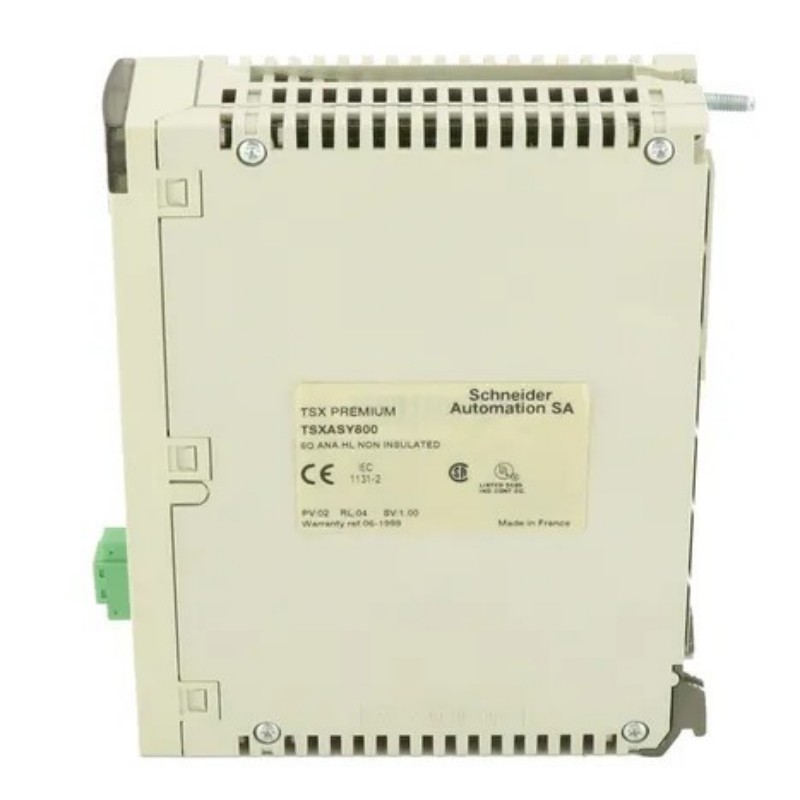
The Schneider TSXASY800 Analog Output Module is a robust industrial I/O component designed to deliver precise analog control signals in modular PLC systems. Engineered for use with Schneider Electric’s TSX/Modicon automation platforms, this module outputs real‑world analog values—such as voltage and current—directly to field devices including actuators, control valves, drives, and transducers.
With reliable signal conditioning, high resolution, and strong electrical integrity, the TSXASY800 enables accurate process control and feedback in industrial environments. Its scalable design and seamless integration with TSX PLC racks make it a preferred choice for applications requiring high‑quality analog outputs that support smooth system operation and fine‑tuned control performance.
Technical Specifications
| Specification | Details |
|---|
| Manufacturer | Schneider Electric |
| Model Number | TSXASY800 |
| Module Type | Analog Output Module |
| Output Channels | 8 analog outputs |
| Supported Output Types | Voltage and Current |
| Voltage Output Range | 0–10 V (configurable) |
| Current Output Range | 0–20 mA / 4–20 mA |
| Resolution | 12‑bit or higher |
| Output Update Rate | System dependent |
| Isolation | Channel‑to‑bus isolation |
| Communication Interface | Backplane connection to TSX PLC rack |
| Operating Temperature | 0°C to +55°C |
| Storage Temperature | −25°C to +70°C |
| Relative Humidity | 5% – 95% (non‑condensing) |
| Dimensions | Standard TSX module form factor |
| Weight | Approx. 0.3 kg |
Industrial Applications
The TSXASY800 Analog Output Module is designed for applications where precise analog control signals are required as part of an automation system. Typical use cases include:
-
Control valve positioning in process plants
-
Drive and motor speed control feedback
-
Analog actuator control in HVAC systems
-
Process variable tuning in chemical and petrochemical operations
-
Energy management and utilities automation
-
Machine performance optimization systems
By providing reliable analog outputs, this module enables PLC systems to interact directly with field devices that require proportional control signals.
Key Advantages
Multi‑Channel Analog Output
With 8 analog outputs, the module supports simultaneous control of multiple external devices, reducing the need for additional hardware.
Flexibility in Signal Types
Supports both voltage and current output ranges, ensuring compatibility with a wide range of industrial actuators and control elements.
High Resolution and Stability
High‑resolution output ensures smooth and precise signal transitions essential for accurate control and fine‑tuning of process variables.
Modular Scalability
Designed for TSX/Modicon PLC racks, the module supports system expansion without redesigning the controller architecture.
Industrial‑Grade Reliability
Built with robust components and signal conditioning to ensure dependable performance in demanding automation environments.
Technical FAQs
1. How many analog output channels does the TSXASY800 provide?
It offers 8 analog output channels.
2. What types of signals can it generate?
It supports both voltage (0–10 V) and current (0–20 mA / 4–20 mA) outputs.
3. What is the resolution of the outputs?
Outputs are typically delivered with 12‑bit resolution or higher for precise control.
4. Does this module support channel isolation?
Yes, it includes channel‑to‑bus isolation to improve signal integrity and reduce noise.
5. What PLC systems is it compatible with?
It is designed for use with TSX/Modicon PLC racks and backplane communication.
6. What programming software is used?
Common Schneider Electric tools such as Unity Pro or SoMachine are used for configuration and logic programming.
7. What is the operating temperature range?
Rated for continuous operation between 0°C and +55°C.
8. Can it interface with analog transmitters?
Yes, it can drive analog transmitters requiring voltage or current input.
9. Is hot‑swap supported?
Hot‑swap capability depends on the PLC rack and system configuration.
10. What maintenance is recommended?
Periodic inspection of connections and verification of output signals via software diagnostics is recommended.
 A DCS Q Co., Ltd. - PLC and DCS Industrial Control Equipment Wholesale











