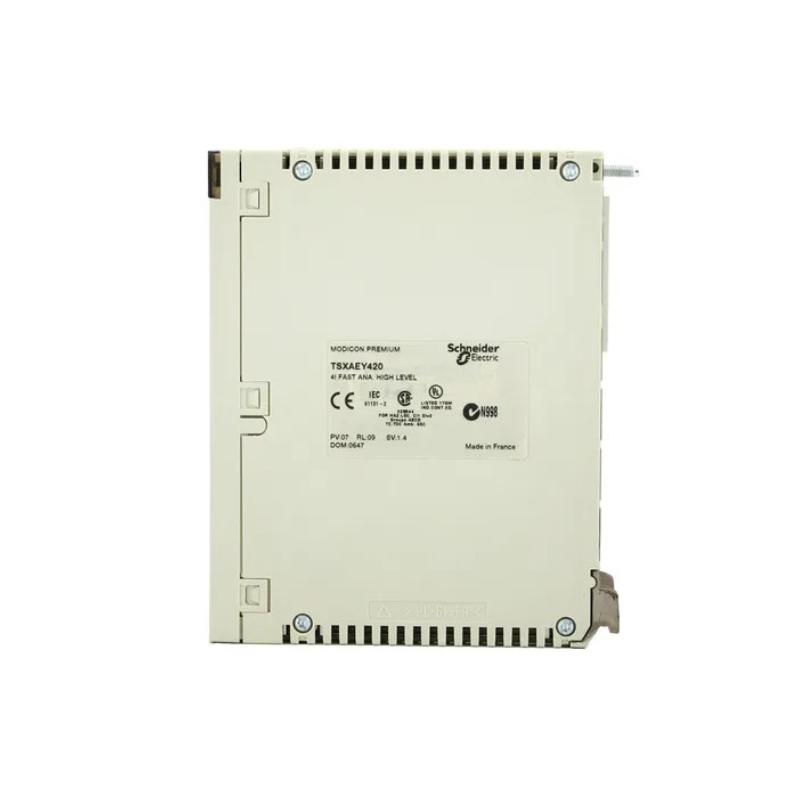
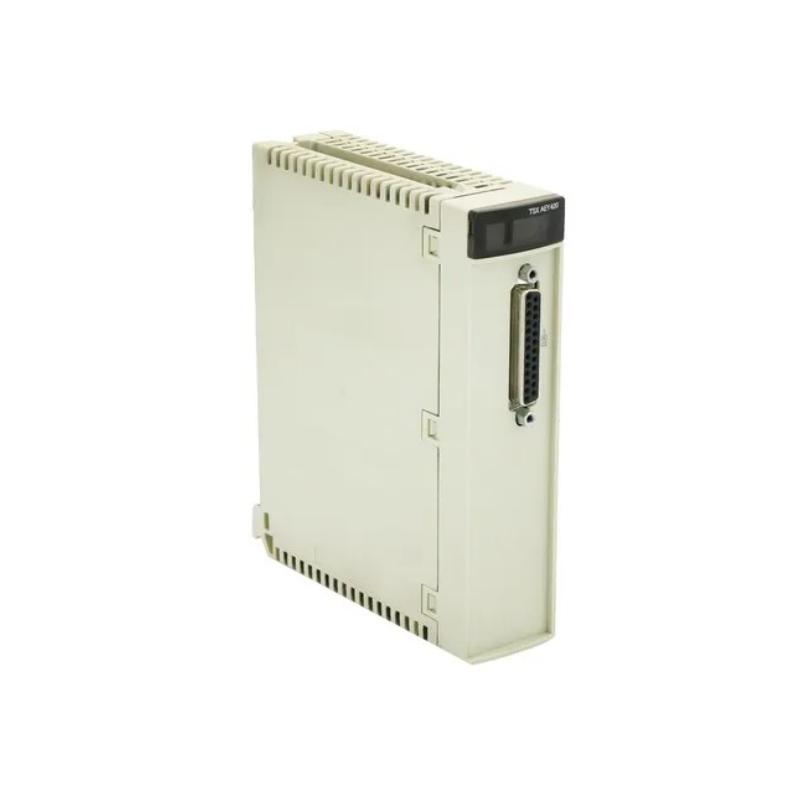
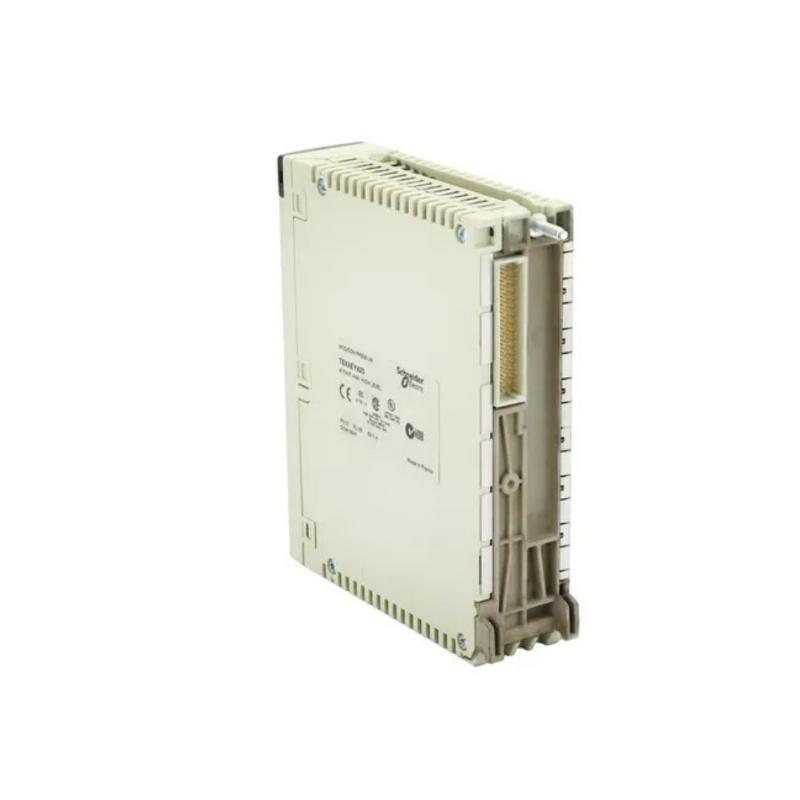
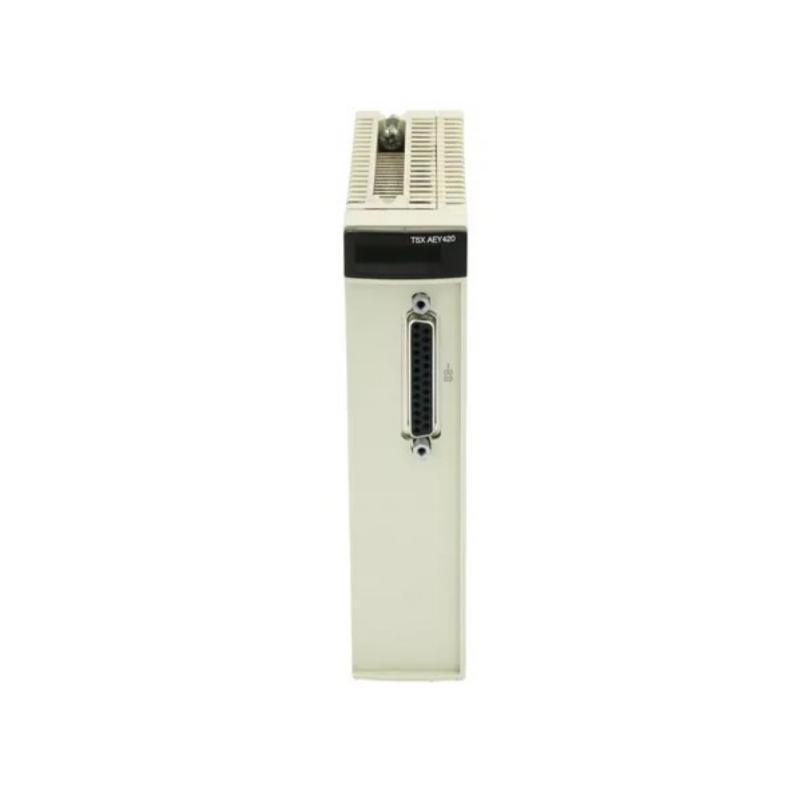
Product Introduction
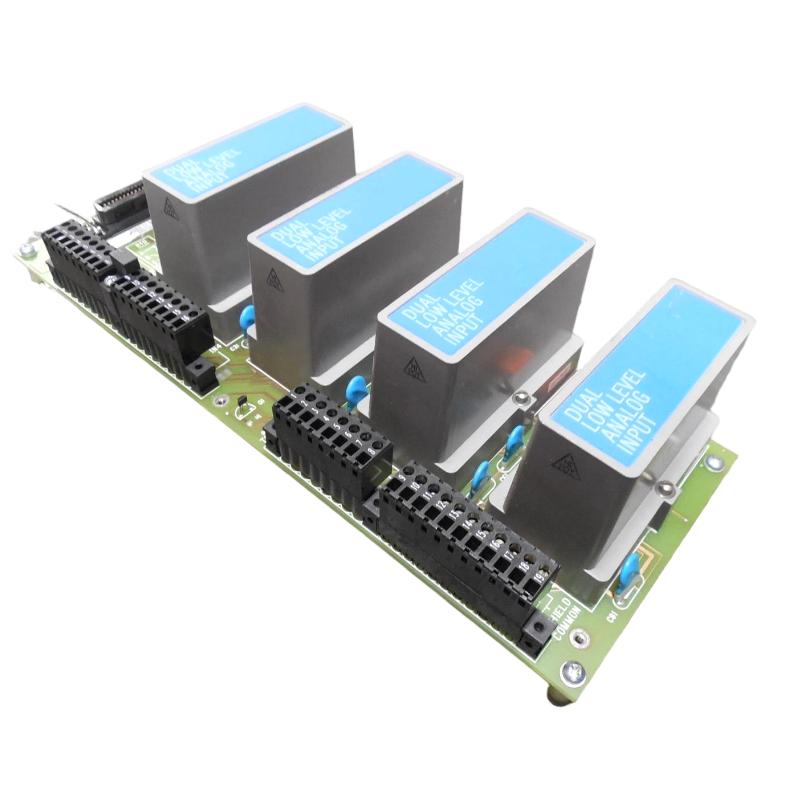
The Schneider TSXAEY420 Analog Input Module is a high‑performance input interface designed for use in modular PLC automation solutions. As part of the Schneider Electric TSX/Modicon I/O family, this module provides reliable, industrial‑grade analog signal acquisition, enabling accurate monitoring of real‑world process variables such as voltage, current, temperature, and sensor outputs.
With its robust signal conditioning and versatile input support, the TSXAEY420 simplifies integration of multiple analog sensors into automation systems. It’s an ideal choice for applications that require precise data capture from field devices and seamless communication with the main PLC controller.
Technical Specifications
| Specification | Details |
|---|
| Manufacturer | Schneider Electric |
| Model Number | TSXAEY420 |
| Module Type | Analog Input Module |
| Input Channels | 8 Analog Inputs |
| Supported Signal Types | Voltage & Current |
| Voltage Input Range | ±10 V (configurable) |
| Current Input Range | 0–20 mA / 4–20 mA |
| Resolution | 12‑bit or better |
| Sampling Rate | Up to 10 kHz per channel (system dependent) |
| Isolation | Channel‑to‑bus isolation |
| Communication Interface | Backplane connection to TSX PLC rack |
| Operating Temperature | 0°C to +55°C |
| Storage Temperature | −25°C to +70°C |
| Relative Humidity | 5% – 95% (non‑condensing) |
| Dimensions | Standard TSX module form factor |
| Weight | Approx. 0.3 kg |
Industrial Applications
The TSXAEY420 Analog Input Module is widely used in systems requiring accurate and simultaneous acquisition of multiple analog signals. Typical applications include:
-
Process control in chemical and petrochemical plants
-
Monitoring of pressure, flow, and temperature
-
Energy management and utilities automation
-
Food and beverage production instrumentation
-
HVAC and environmental systems control
-
Machine performance and diagnostics systems
By providing high‑resolution input channels and flexible signal range support, this module helps PLC systems make precise control decisions based on real‑world sensor data.
Key Advantages
High Channel Count
With 8 analog input channels, the module captures data from multiple sensors simultaneously, reducing the need for additional cards.
Flexible Signal Support
Handles both voltage (±10 V) and current (0–20 mA / 4–20 mA) inputs, making it compatible with a broad range of industrial sensors and transducers.
Reliable Signal Integrity
Built‑in signal conditioning and channel‑to‑bus isolation improve measurement accuracy and protect against electrical noise.
Modular Scalability
Designed for TSX/Modicon PLC racks, the module supports system expansion without redesigning the controller.
Industrial‑Grade Reliability
Robust hardware construction ensures stable operation in demanding environments, with wide temperature and humidity tolerance.
Technical FAQs
1. How many analog inputs does the TSXAEY420 provide?
It offers 8 analog input channels for voltage and current signal acquisition.
2. What types of signals can this module measure?
It supports both voltage (±10 V) and current (0–20 mA / 4–20 mA) signals.
3. What is the resolution of the inputs?
Inputs are typically captured with 12‑bit resolution or better, depending on system configuration.
4. Does this module include isolation?
Yes, it includes channel‑to‑bus isolation to enhance signal integrity.
5. What PLC systems is it compatible with?
It is designed for TSX/Modicon PLC racks with backplane communication.
6. What programming tools are used?
Schneider Electric automation tools such as Unity Pro or SoMachine are commonly used.
7. What is the operating temperature range?
Rated for operation from 0°C to +55°C.
8. Can it measure thermocouple or RTD signals directly?
Direct temperature input support depends on PLC configuration and additional signal conditioning; consult system documentation.
9. Is hot‑swap supported?
Hot‑swap capability depends on the specific PLC rack and system support.
10. What maintenance is recommended?
Periodic inspection of connectors and signal integrity checks via software diagnostics are advised.
 A DCS Q Co., Ltd. - PLC and DCS Industrial Control Equipment Wholesale