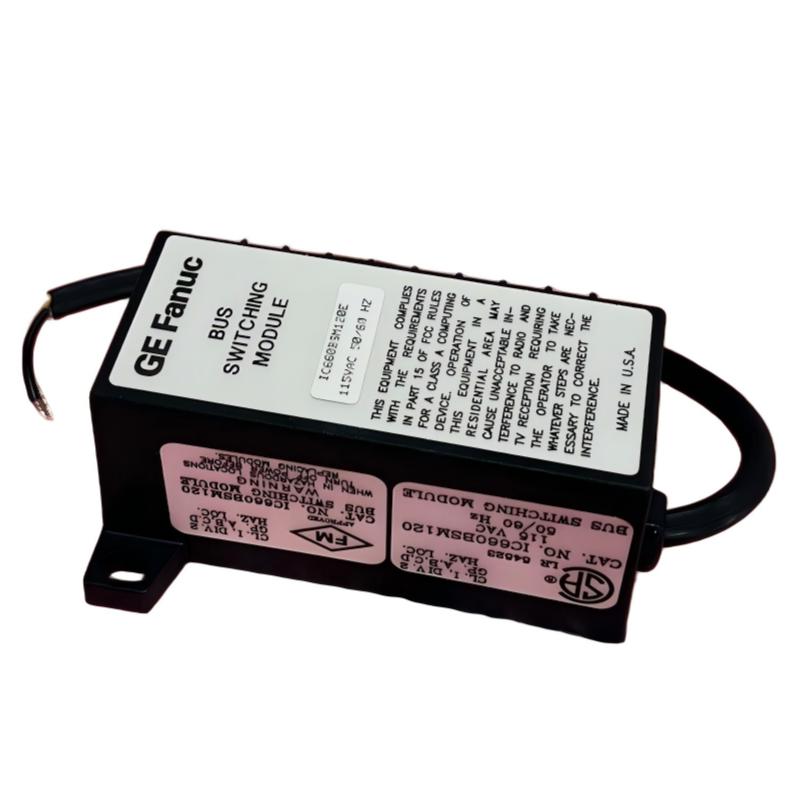
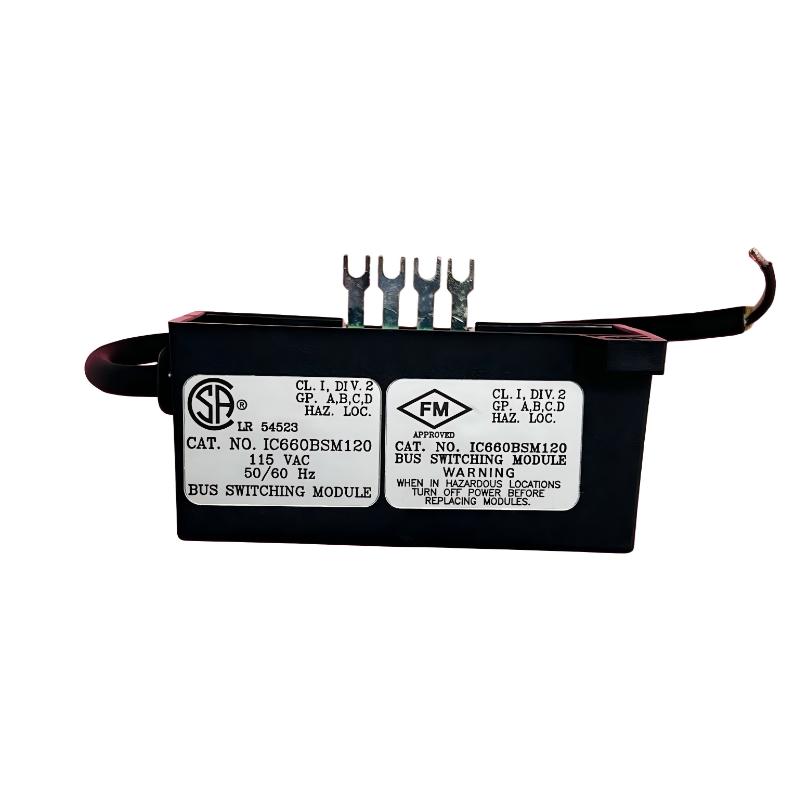
Technical Perspective and Design Overview (Introduction)
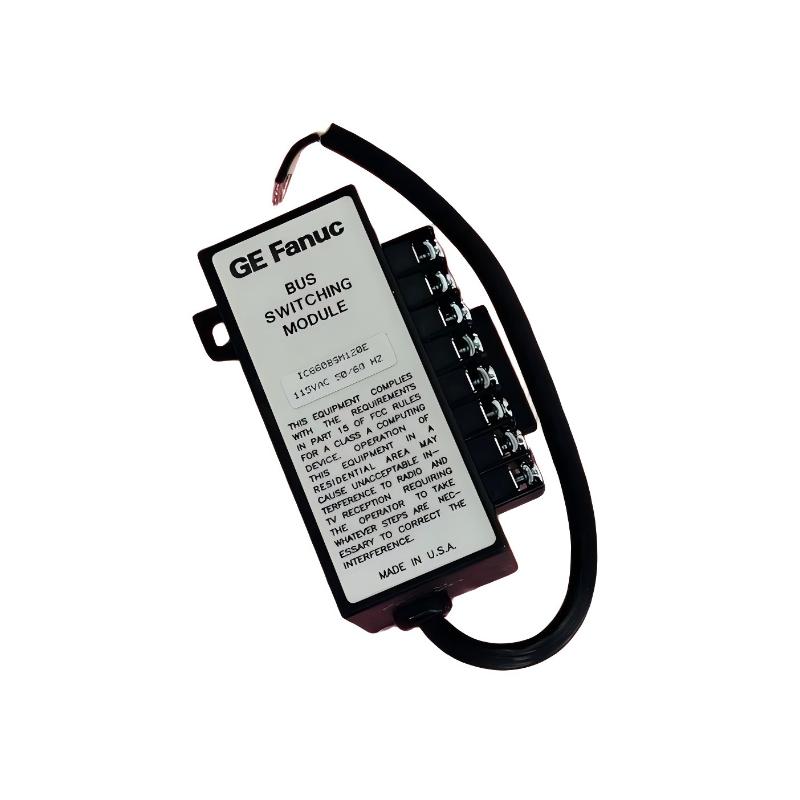
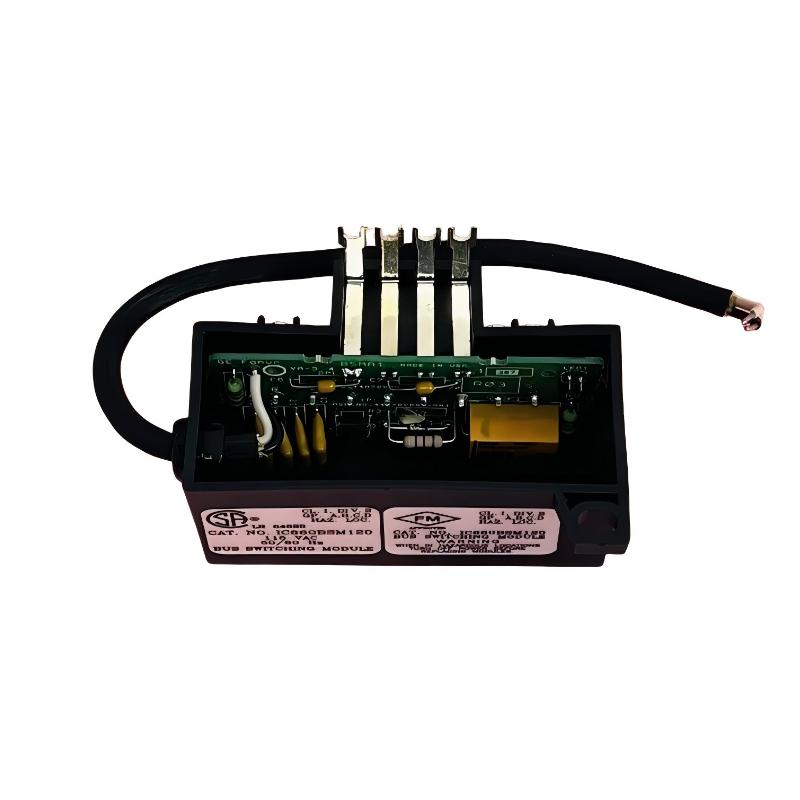
The GE IC660BSM120 Bus Switching Module is a key component for managing communication flow within industrial PLC networks. It allows engineers to design flexible and fault-tolerant systems by enabling controlled switching between bus segments.
Its robust construction ensures reliable performance in demanding environments, while its compatibility with GE IC660 systems allows seamless integration into existing architectures. The module enhances communication resilience, reduces downtime, and supports scalable automation solutions.
With its focus on network stability and redundancy, the IC660BSM120 is well-suited for modern industrial systems that require continuous and reliable data exchange.
Technical Specifications
| Specification | Details |
|---|
| Manufacturer | GE |
| Model Number | IC660BSM120 |
| Module Type | Bus Switching Module |
| Function | Communication Bus Switching and Control |
| System Compatibility | GE Fanuc IC660 PLC Systems |
| Installation | Rack or Communication Interface Mount |
| Communication Role | Bus Segment Switching |
| Operating Temperature | 0°C to 60°C |
| Storage Temperature | -40°C to 85°C |
| Dimensions | 224.4 mm × 88.9 mm × 100 mm |
| Weight | 0.5 kg (1.10 lb) |
Industrial Use Scenarios and Integration (Applications)
The GE IC660BSM120 Bus Switching Module is designed to control and manage communication pathways within GE IC660 PLC networks. It enables dynamic switching between bus segments, supporting redundancy strategies and improving the resilience of distributed I/O systems.
Typical applications include:
-
Redundant PLC communication networks in oil & gas facilities
-
Large-scale manufacturing systems with segmented I/O architecture
-
Power generation plants requiring uninterrupted communication
-
Chemical processing plants with safety-critical network design
-
Water and wastewater systems with distributed monitoring points
-
Industrial automation systems needing flexible communication routing
This module plays a critical role in maintaining stable and continuous data exchange across complex automation systems.
System-Level Benefits and Strengths (Advantages)
Dynamic Bus Switching Capability
Enables controlled switching between communication segments for optimized data flow.
Improved Network Redundancy
Supports failover strategies, reducing downtime caused by communication faults.
Enhanced Fault Isolation
Allows isolation of faulty segments without disrupting the entire system.
Robust Industrial Design
Ensures consistent performance in environments with electrical noise and temperature fluctuations.
Scalable System Integration
Facilitates expansion of PLC networks without compromising communication reliability.
Technical FAQs (Technical FAQs)
1. What is the main function of the IC660BSM120 module?
It manages switching between PLC communication bus segments.
2. Which systems is it compatible with?
Designed for GE Fanuc IC660 PLC systems.
3. How does it improve communication reliability?
By enabling redundancy and alternative communication paths.
4. Can it be used in distributed I/O systems?
Yes. It is ideal for large distributed automation architectures.
5. Does it support fault isolation?
Yes. It allows segmentation of faulty network sections.
6. Is it suitable for harsh industrial environments?
Yes. Built for stable operation under electrical noise and temperature variations.
7. How is it installed?
Mounted in a GE IC660 rack or communication interface location.
8. Does it introduce communication delays?
It is designed to minimize latency and maintain efficient data transmission.
9. What is the advantage of bus switching in PLC systems?
Provides flexibility, redundancy, and improved uptime.
10. Which industries typically use this module?
Oil & gas, manufacturing, chemical processing, power generation, and water treatment industries.
 A DCS Q Co., Ltd. - PLC and DCS Industrial Control Equipment Wholesale