Industrial Signal Acquisition Applications (Applications)
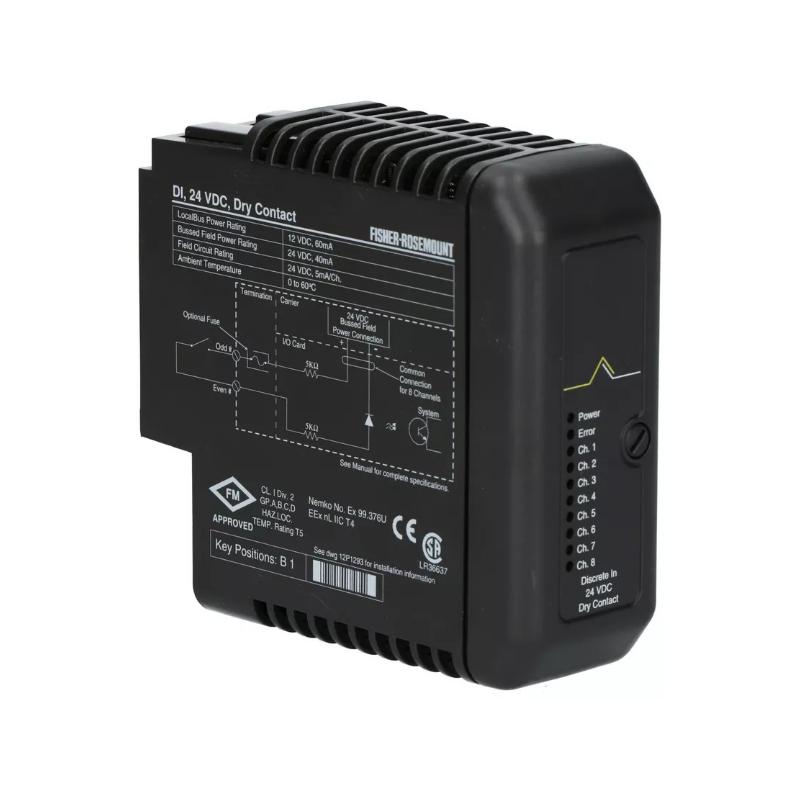
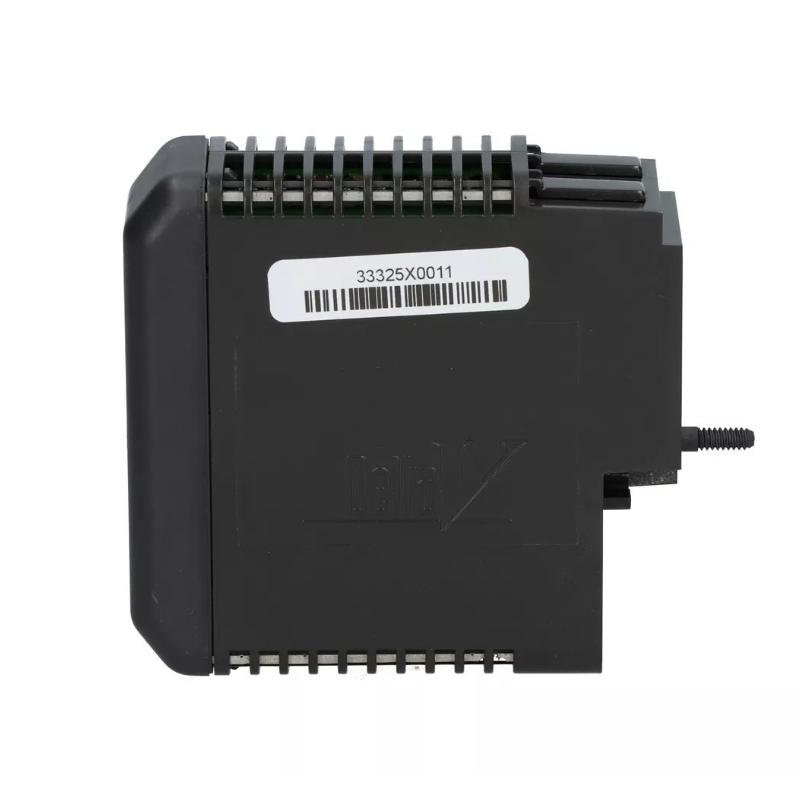
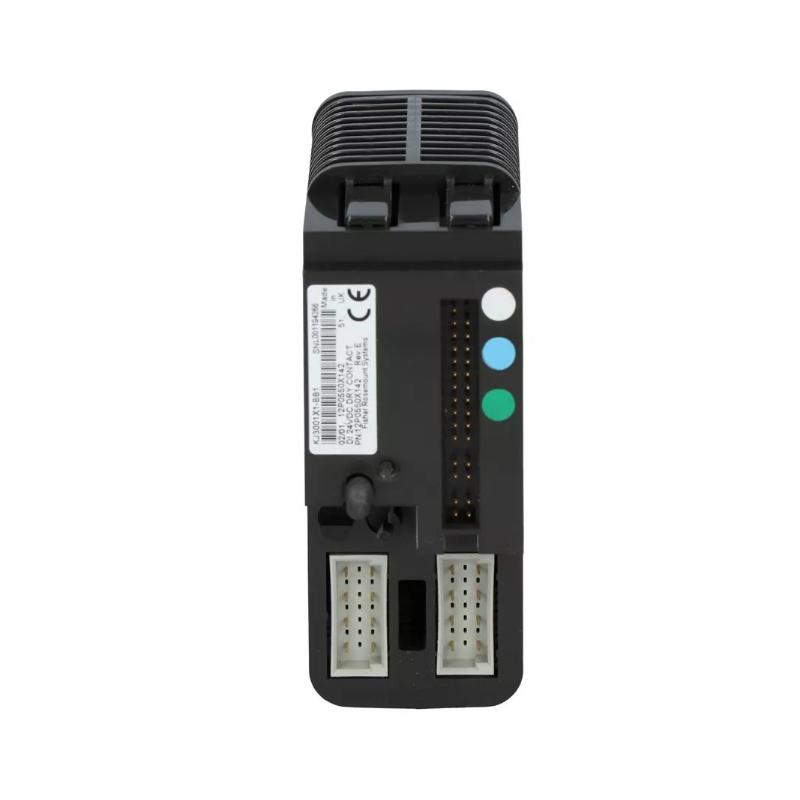
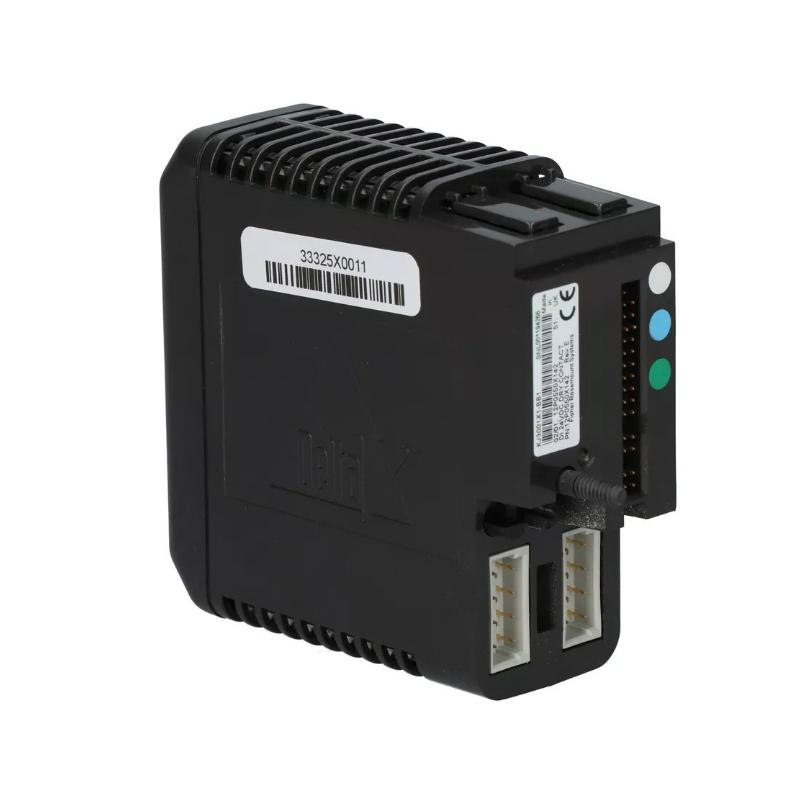
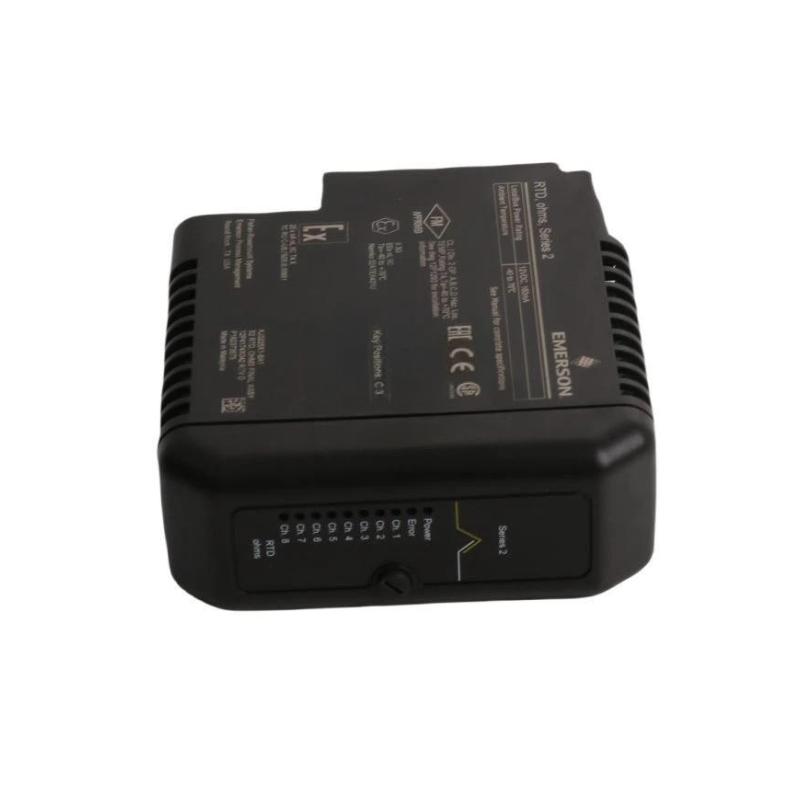
The Emerson KJ3001X1-BB1 12P0550X142 Discrete Input Module is engineered to capture digital input signals from field devices and transmit them to distributed control systems for monitoring and automation. It is commonly deployed in environments that require reliable detection of on/off or status signals.
Typical applications include:
-
Oil & gas plants for monitoring valve positions and safety interlocks
-
Chemical processing facilities for pump and equipment status signals
-
Power generation and distribution systems for breaker and relay status
-
Manufacturing lines for limit switches and machine operation feedback
-
Water and wastewater treatment plants for level and flow switch monitoring
-
Refinery and process control systems with extensive digital input requirements
By accurately detecting discrete signals, the module enables control systems to respond promptly to process changes and maintain safe operation.
Operational Advantages (Advantages)
High Reliability in Industrial Environments
The module is designed to operate continuously in conditions with electrical noise and temperature variations, ensuring consistent signal acquisition.
Seamless Integration with Emerson Systems
It works efficiently within Emerson distributed control architectures, allowing coordinated system operation.
Real-Time Monitoring Capability
Supports continuous detection of digital signals, enabling timely control actions and process monitoring.
Compact Form Factor
Its compact dimensions allow for efficient installation in control panels and system racks.
Scalable System Integration
Multiple modules can be deployed to monitor extensive field instrumentation while maintaining system reliability.
Engineering Technical FAQs (Technical FAQs)
1. What is the primary function of the KJ3001X1-BB1 module?
It acts as a discrete input module, capturing binary signals from field devices for the control system.
2. What type of signals does it handle?
It processes on/off or open/closed digital input signals.
3. Which systems is this module compatible with?
It is designed for Emerson distributed control systems.
4. How does it communicate with the control system?
Signals are transmitted through the system backplane or communication interface to the controller.
5. Can it be used in safety-critical applications?
Yes. It can monitor interlock and safety-related digital inputs.
6. What industries commonly use this module?
Oil & gas, chemical, power generation, water treatment, and manufacturing industries.
7. Is the module designed for continuous operation?
Yes. It is engineered for 24/7 industrial signal monitoring.
8. Does the module include diagnostics?
Yes. Built-in diagnostic capabilities help identify signal faults or communication issues.
9. How is it installed?
It is mounted in a control system rack or carrier, integrated into the automation architecture.
10. What is the advantage of using discrete input modules?
They provide accurate, reliable signal acquisition for control and safety monitoring, improving overall system performance.
 A DCS Q Co., Ltd. - PLC and DCS Industrial Control Equipment Wholesale