System Integration Overview (Introduction)
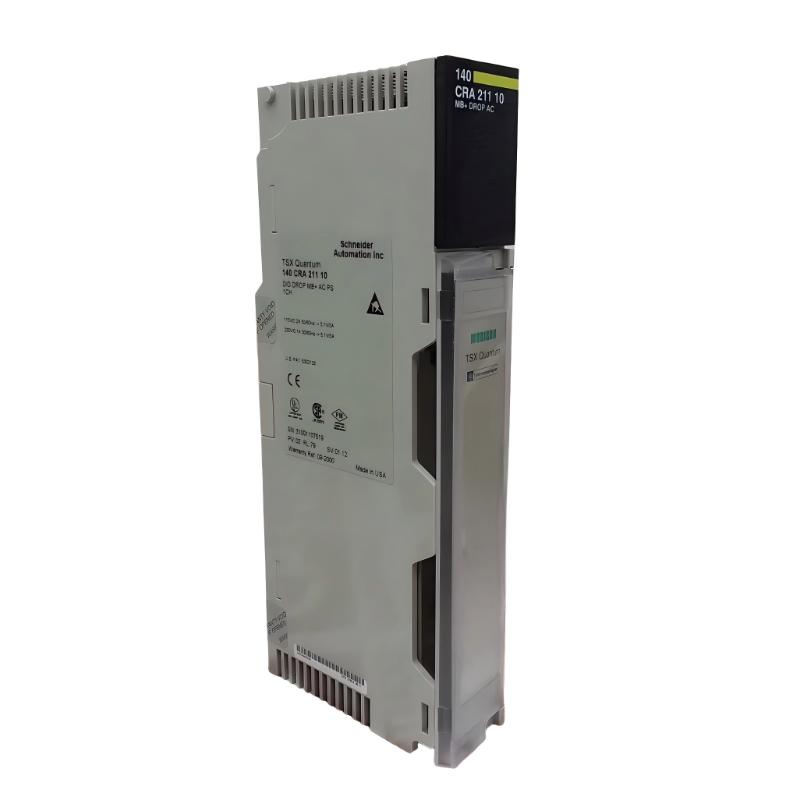
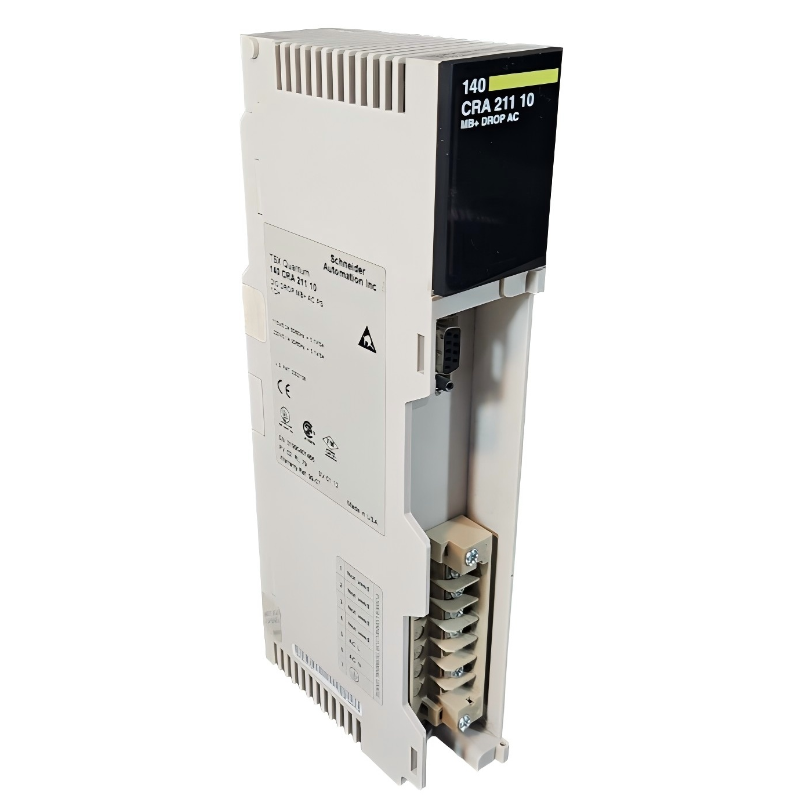
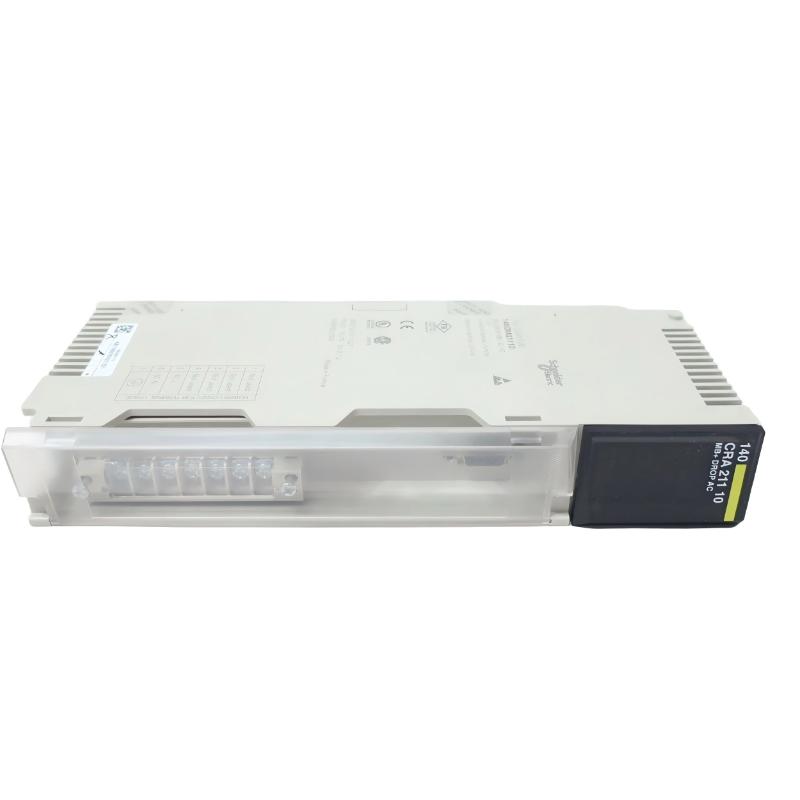
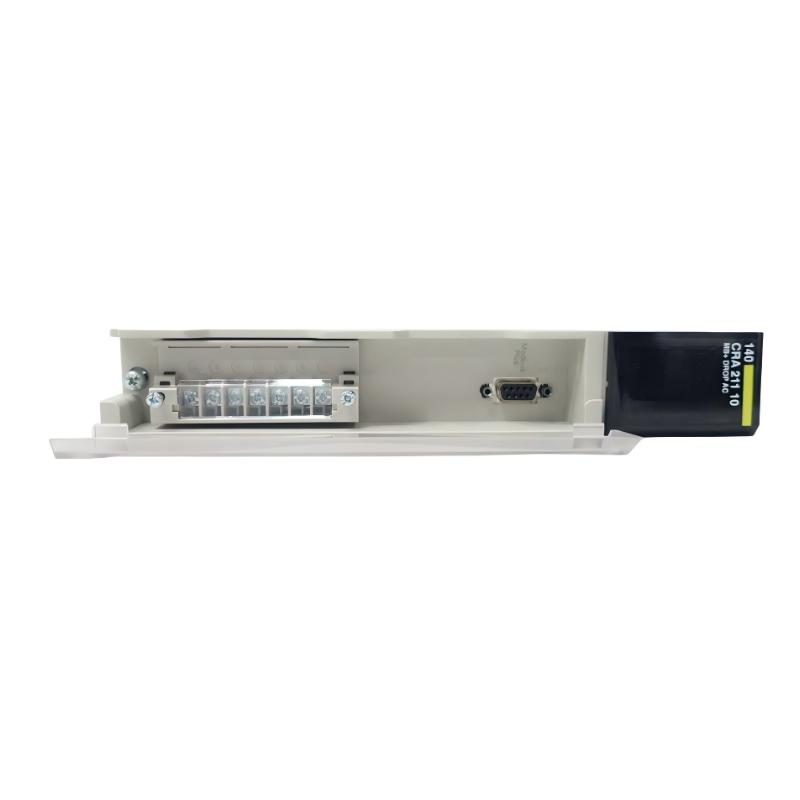
The Schneider 140CRA21110-1 DIO Sub-Interface Module is a key component in the Modicon Quantum distributed I/O architecture, designed to facilitate communication between remote I/O racks and the central PLC system.
In modern industrial automation, distributed I/O systems are widely used to reduce wiring complexity and improve system scalability. This module enables such architectures by acting as a communication bridge, allowing remote field devices to interact with the main control system efficiently.
The module does not process I/O signals directly; instead, it ensures that data from remote modules is transmitted accurately and reliably to the central processor. This capability is essential in large facilities where equipment is spread across wide areas.
By supporting stable communication and system expansion, the 140CRA21110-1 module contributes to building flexible and efficient industrial automation networks.
Engineering Specification Summary (Technical Specifications)
| Specification | Details |
|---|
| Manufacturer | Schneider Electric |
| Model Number | 140CRA21110-1 |
| Module Type | DIO Sub-Interface Module |
| Platform | Modicon Quantum PLC |
| Function | Distributed I/O Communication Interface |
| Installation | Quantum Remote I/O Rack |
| Communication | Distributed I/O Network Interface |
| Operating Temperature | 0°C to 60°C |
| Storage Temperature | -40°C to 85°C |
| Package Dimensions | 50 mm × 165 mm × 315 mm |
| Package Weight | 0.689 kg (1.52 lb) |
Field Integration Scenarios (Applications)
The Schneider 140CRA21110-1 DIO Sub-Interface Module is designed to serve as a communication interface within Modicon Quantum distributed I/O systems. It plays a critical role in connecting remote I/O racks to the main PLC system, enabling seamless data exchange between field devices and the central controller.
This module is commonly used in:
-
Distributed automation systems across large industrial plants
-
Water treatment facilities with remote monitoring stations
-
Oil & gas pipelines requiring decentralized I/O control
-
Manufacturing plants with segmented production lines
-
Power generation systems with remote equipment monitoring
-
Infrastructure automation systems with geographically dispersed assets
Its primary function is to ensure reliable communication between remote I/O modules and the central PLC, supporting efficient data acquisition and control.
Functional Strengths in Distributed Systems (Advantages)
Efficient Remote I/O Communication
The module enables stable communication between distributed I/O racks and the main PLC, ensuring accurate and timely data transfer.
Designed for Quantum Distributed Architecture
Fully compatible with Modicon Quantum systems, it integrates easily into existing automation infrastructure.
Supports Scalable System Design
Engineers can expand automation systems by adding remote I/O stations without compromising communication performance.
Reliable Data Transmission
The module ensures consistent signal exchange even in environments with electrical noise or long communication distances.
Industrial-Grade Durability
Built to operate in harsh industrial environments, it maintains reliable performance under continuous operation.
Technical Clarifications for Engineers (Technical FAQs)
1. What is the main function of the 140CRA21110-1 module?
It acts as a distributed I/O sub-interface, enabling communication between remote I/O racks and the central PLC.
2. Which platform supports this module?
It is designed for use within the Schneider Modicon Quantum PLC system.
3. Does this module handle direct I/O processing?
No. It functions as a communication interface, not as a direct I/O processing module.
4. How does the module communicate with the PLC?
Communication is achieved through the Quantum distributed I/O network architecture.
5. Can this module be used in large-scale automation systems?
Yes. It is ideal for distributed systems with multiple remote I/O locations.
6. What industries typically use this module?
Industries such as energy, water management, manufacturing, and infrastructure commonly deploy it.
7. Does the module support system diagnostics?
Yes. It includes diagnostic features to monitor communication status and identify faults.
8. How is the module installed?
It is installed in a Quantum remote I/O rack, connecting to other modules via the backplane.
9. Is the module suitable for long-distance communication?
Yes. It supports reliable communication across distributed industrial systems.
10. What is the benefit of using distributed I/O architecture?
It allows flexible system design, reduced wiring complexity, and improved scalability.
 A DCS Q Co., Ltd. - PLC and DCS Industrial Control Equipment Wholesale