Processor Architecture Overview (Introduction)
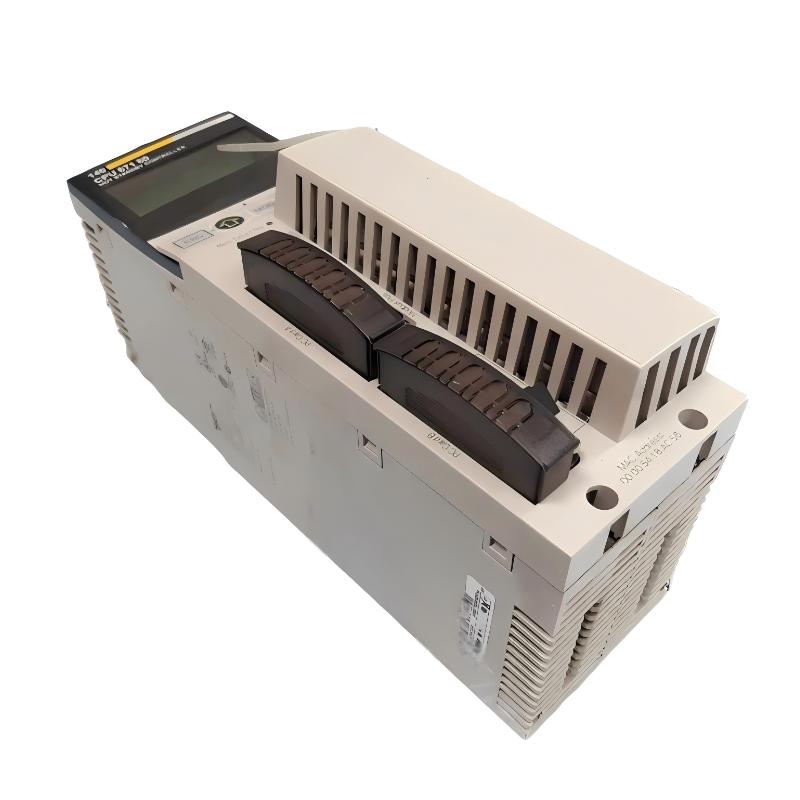
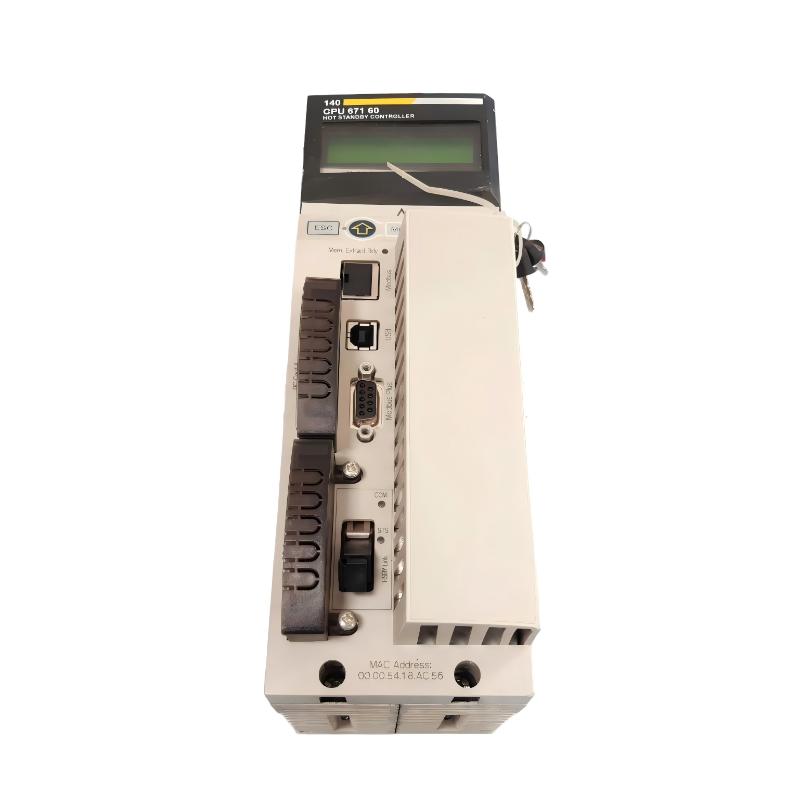
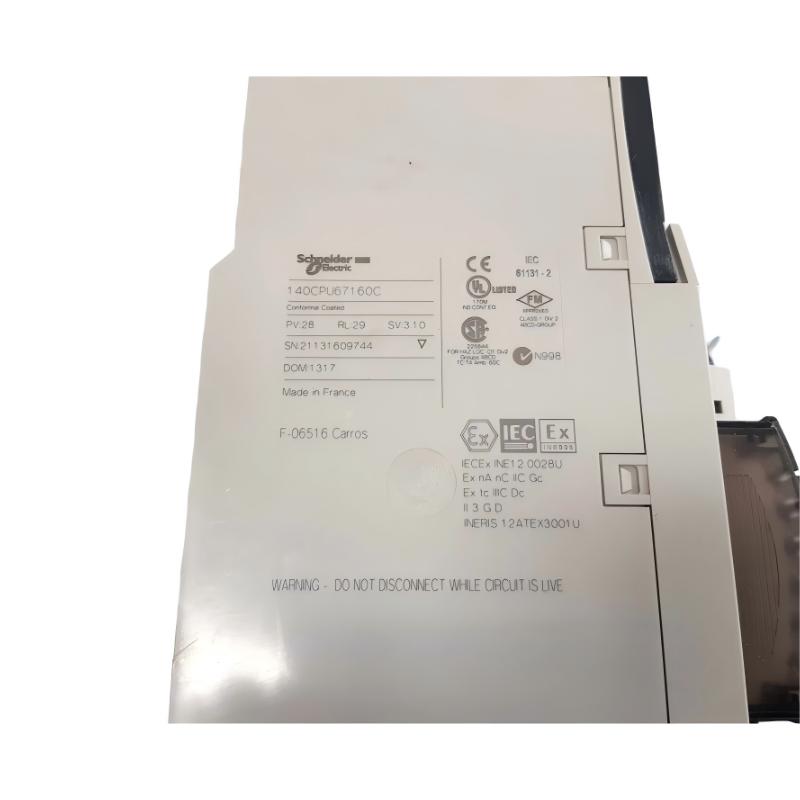
The Schneider 140CPU67160C Unity Processor is a programmable logic controller CPU designed for use within the Modicon Quantum PLC platform. Acting as the core controller of the automation system, it executes control programs, processes field data, and coordinates communication between system modules.
Modern industrial automation environments require processors capable of managing large volumes of I/O data while maintaining reliable control cycles. The 140CPU67160C processor provides this capability by combining stable processing performance with compatibility across the Quantum automation architecture.
By integrating with the Unity engineering environment, the processor allows engineers to develop complex control strategies and maintain automation infrastructure efficiently. The modular design of the Quantum platform also allows additional I/O modules and communication interfaces to be integrated as system requirements evolve.
With its scalable architecture and dependable processing capabilities, the processor plays an essential role in maintaining stable industrial automation operations.
Equipment Technical Data (Technical Specifications)
| Specification | Details |
|---|
| Manufacturer | Schneider Electric |
| Model Number | 140CPU67160C |
| Module Type | Unity Processor |
| Platform | Modicon Quantum PLC |
| Programming Environment | Unity |
| Installation | Quantum Rack Mount |
| Communication | Backplane Communication with I/O and Network Modules |
| Operating Temperature | 0°C to 60°C |
| Storage Temperature | -40°C to 85°C |
| Package Dimensions | 110 mm × 190 mm × 325 mm |
| Package Weight | 1.412 kg (3.11 lb) |
Deployment Context in Industrial Automation (Applications)
The Schneider 140CPU67160C Unity Processor is engineered to serve as the central control processor in Modicon Quantum PLC systems. It executes control programs, manages I/O communications, and coordinates industrial processes that require reliable automation control.
This processor is commonly implemented in environments where large-scale automation systems must operate continuously and maintain stable communication with numerous field devices.
Typical application areas include:
-
Large industrial manufacturing facilities
-
Power generation and energy management systems
-
Oil and gas production automation
-
Municipal water treatment and pumping stations
-
Mining operations with centralized PLC supervision
-
Industrial process plants requiring high-performance control
In these applications, the processor ensures consistent control logic execution and supports efficient communication across automation networks.
Key Operational Benefits for Engineers (Advantages)
Unity Programming Platform Compatibility
The processor operates within the Unity automation engineering environment, enabling structured development and maintenance of PLC programs.
Reliable PLC Control Processing
Industrial automation systems benefit from the processor’s ability to execute control logic consistently while maintaining stable PLC scan cycles.
Designed for Quantum Automation Architecture
The processor integrates seamlessly with Modicon Quantum racks and associated I/O modules, simplifying system design and expansion.
Efficient Communication Infrastructure
The processor communicates with connected modules through the Quantum backplane, enabling reliable data exchange between system components.
Scalable System Configuration
Automation engineers can expand system functionality by adding I/O modules or communication interfaces without replacing the processor.
Practical Technical Questions (Technical FAQs)
1. What role does the 140CPU67160C processor play in an automation system?
It functions as the central PLC processor, executing automation programs and managing communication across system modules.
2. Which PLC platform supports this processor?
The module is designed for the Schneider Modicon Quantum PLC platform.
3. What programming environment is used with this processor?
Automation logic is developed using the Unity engineering environment.
4. How does the processor communicate with other modules?
Communication occurs through the Quantum backplane bus, allowing real-time data exchange.
5. Can the processor support distributed I/O systems?
Yes. When paired with appropriate communication modules, it can coordinate remote I/O networks and distributed automation systems.
6. What industries commonly utilize this processor?
Industries such as energy production, manufacturing, mining, and infrastructure automation frequently deploy this CPU.
7. Does the processor provide system diagnostics?
Yes. Built-in diagnostic capabilities allow engineers to monitor operational status and detect faults.
8. How is the processor installed within the PLC system?
The module installs into a Modicon Quantum rack, connecting through the system backplane.
9. Is this processor suitable for complex automation architectures?
Yes. It is designed to support large automation systems with multiple I/O modules and communication networks.
10. What advantage does Unity-based programming provide?
Unity programming enables structured automation development and efficient system maintenance.
 A DCS Q Co., Ltd. - PLC and DCS Industrial Control Equipment Wholesale