Typical Industrial Implementations
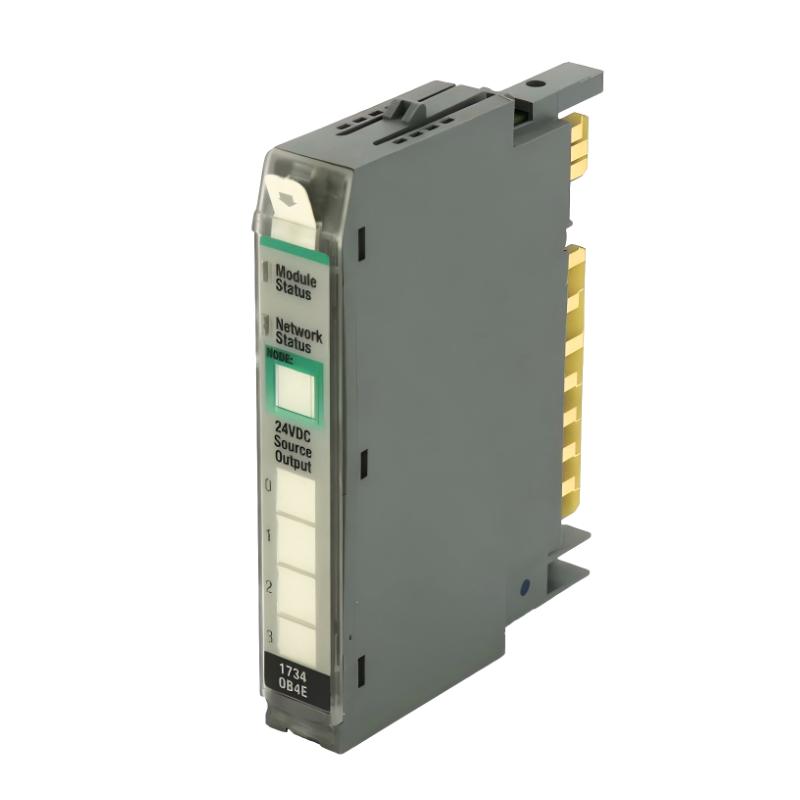
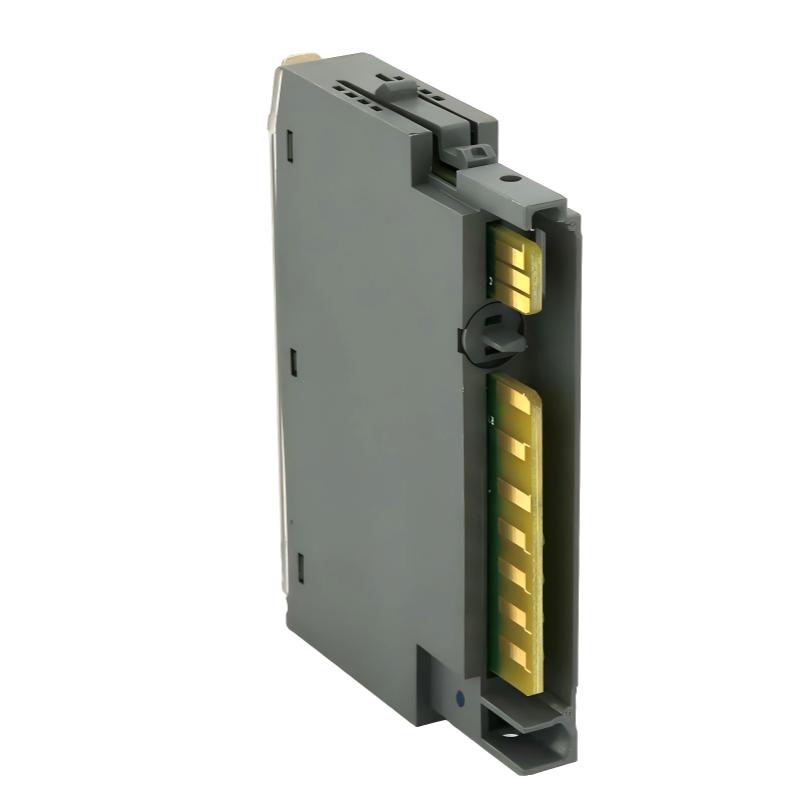
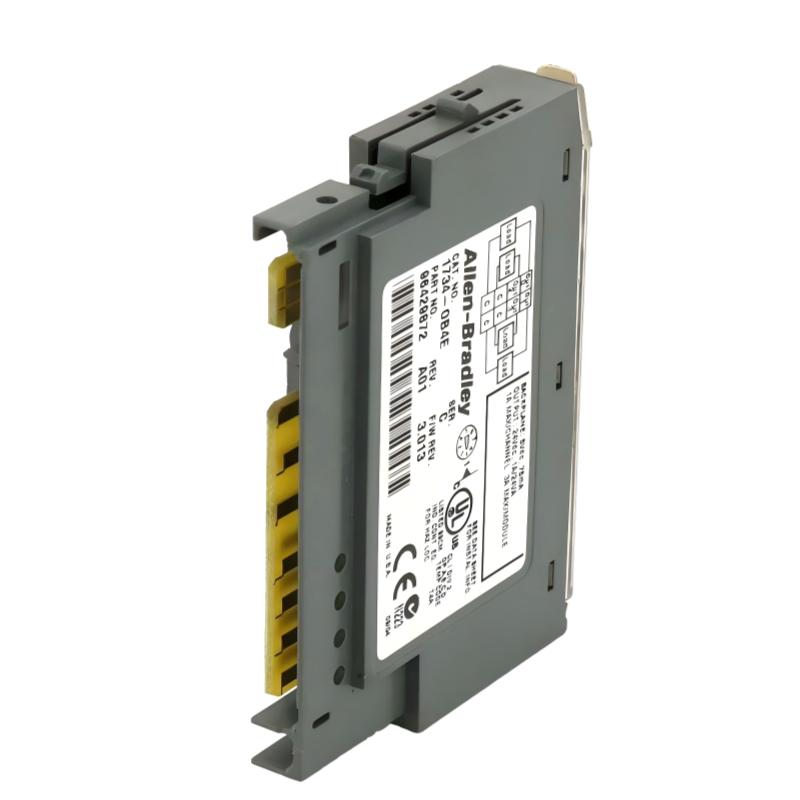
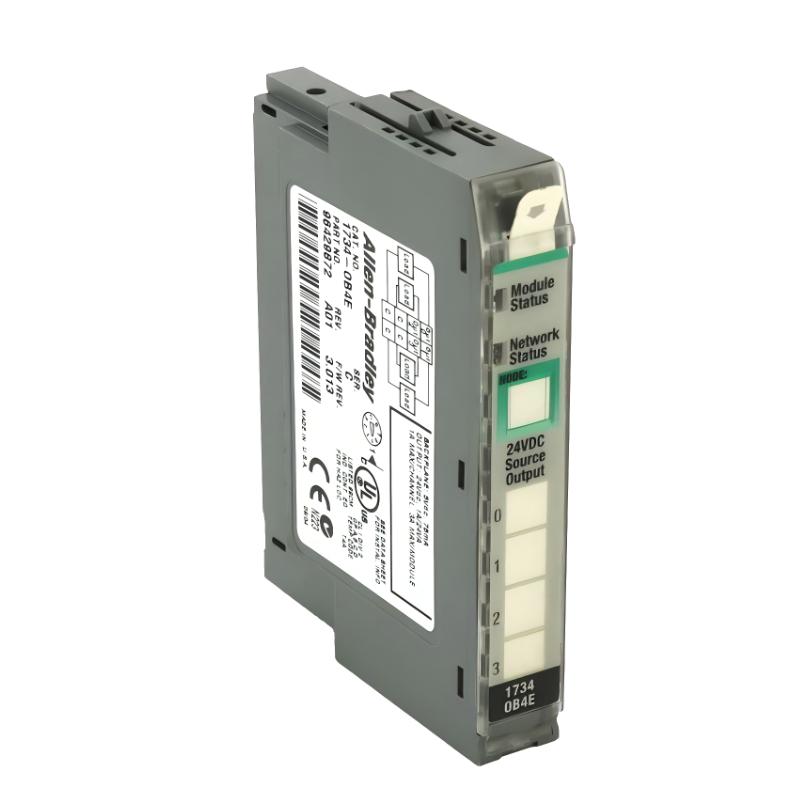
The Allen-Bradley 1734-OB4E Digital Output Module is designed for distributed automation environments where reliable digital signal control is required close to field equipment. As a member of the POINT I/O product line, the module allows engineers to build modular I/O stations that reduce centralized wiring and simplify machine architecture.
Common application environments include:
-
Packaging machines controlling pneumatic valves and signal towers
-
Automated conveyor systems requiring distributed discrete output signals
-
Assembly stations with localized control for relays and actuators
-
Food and beverage production equipment using modular control cabinets
-
Small machine cells requiring compact remote I/O interfaces
By supporting decentralized I/O deployment, the module helps improve machine flexibility and simplifies installation within modern industrial automation systems.
Engineering Advantages
This module provides several technical benefits that make it suitable for machine-level control and distributed automation architectures.
Electronic Output Protection
Each output channel includes built-in electronic protection, helping prevent damage caused by short circuits or overload conditions.
Compact Modular Structure
The narrow housing allows multiple modules to be installed in tight panel spaces, supporting high-density distributed I/O configurations.
Efficient Machine Integration
With four digital outputs, the module can control multiple field devices such as relays, solenoid valves, and indicator lights.
Reduced Installation Complexity
POINT I/O architecture allows modules to be placed close to field equipment, minimizing cable lengths and reducing installation costs.
Flexible Automation Expansion
The modular structure allows additional I/O modules to be easily added as production systems expand.
Technical FAQs
1. What type of digital outputs are provided by the 1734-OB4E module?
The module provides four electronically protected 24V DC digital outputs designed for industrial control applications.
2. How is the module integrated into a control system?
It operates within a POINT I/O rack connected to a PLC via a communication adapter supporting industrial network protocols.
3. What types of devices can the outputs control?
Typical devices include relays, contactors, solenoid valves, indicator lights, and other discrete control components.
4. Does the module provide protection against electrical faults?
Yes. The electronic output protection helps prevent damage from short circuits and overload conditions.
5. Is the module compatible with ControlLogix and CompactLogix systems?
Yes. Through POINT I/O adapters, it can communicate with both controller platforms.
6. Can the module be used in distributed control cabinets?
Yes. Its compact design makes it well suited for machine-mounted or remote I/O stations.
7. How are output diagnostics handled?
Diagnostic information can be transmitted to the controller through the POINT I/O communication adapter.
8. Are inductive loads supported by the output channels?
Yes. However, suppression devices such as flyback diodes are recommended when controlling inductive loads.
9. Does the module support system expansion?
Yes. Additional POINT I/O modules can be added to expand system I/O capacity.
10. Is the module suitable for continuous industrial operation?
Yes. It is designed for stable operation in demanding industrial environments.
 A DCS Q Co., Ltd. - PLC and DCS Industrial Control Equipment Wholesale