Typical Deployment Environments
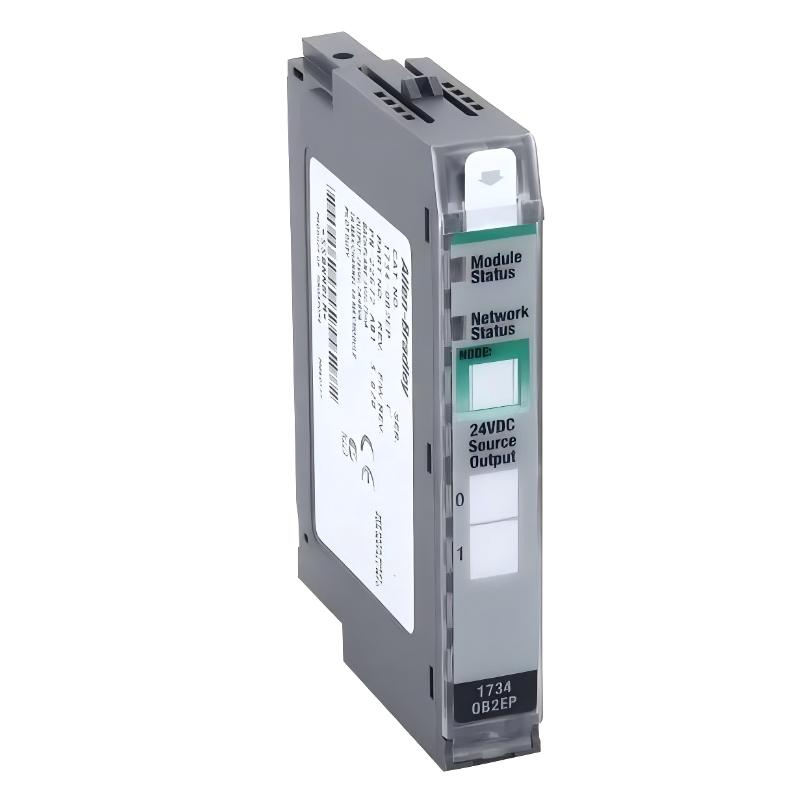
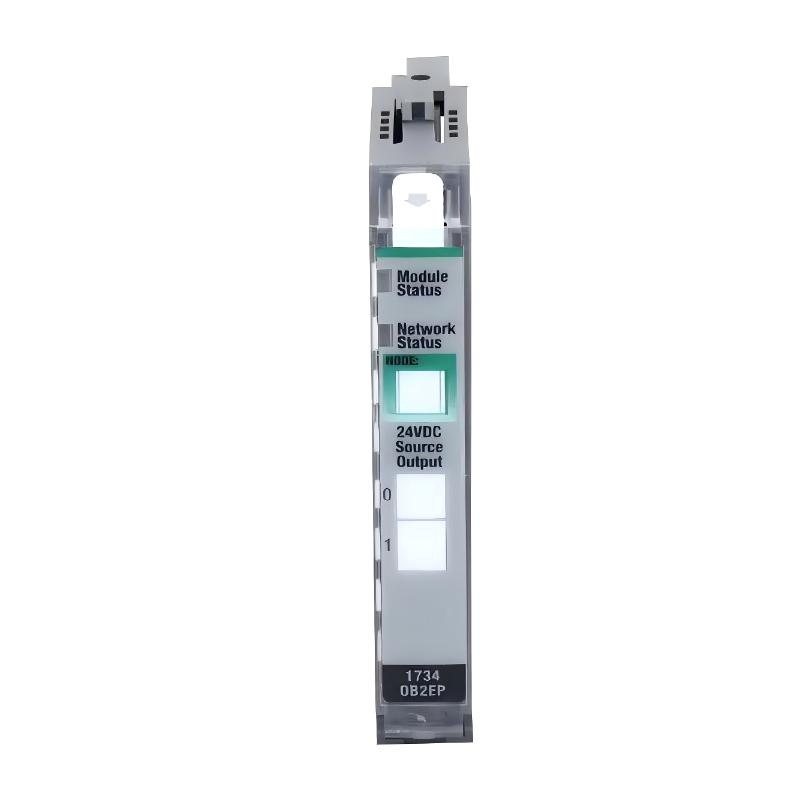
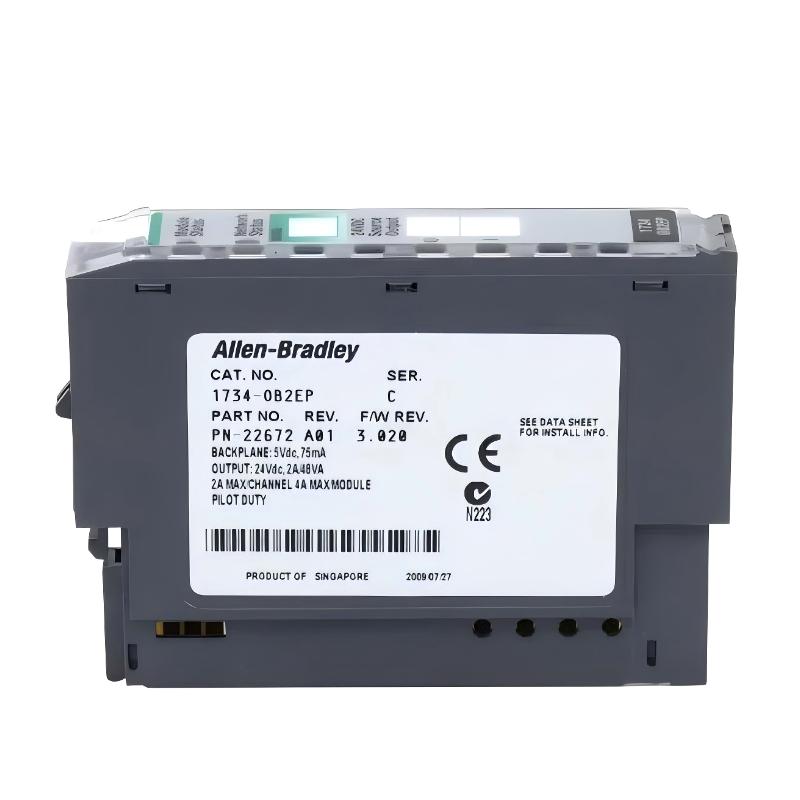
The Allen-Bradley 1734-OB2EP Digital Output Module is designed for compact distributed I/O systems where precise and reliable control of field devices is required. As part of the POINT I/O family, this module is commonly installed in space-constrained control cabinets or machine-level control architectures.
Common industrial applications include:
-
Packaging machinery controlling solenoids and actuators
-
Conveyor and material handling systems requiring localized output control
-
Food and beverage processing equipment with modular I/O layouts
-
Machine automation cells integrating distributed field devices
-
Assembly equipment requiring fast digital switching operations
Its compact footprint and integration with POINT I/O systems make it especially useful for decentralized automation architectures where multiple small I/O stations are distributed across production equipment.
Performance Advantages
The module offers several practical advantages for engineers designing modern distributed control systems.
Compact Distributed I/O Design
The slim POINT I/O form factor allows installation in tight control panels while still supporting reliable digital output control.
Efficient Machine-Level Control
With two electronic protected outputs, the module can directly control industrial devices such as valves, relays, and indicator systems.
Reduced Wiring Complexity
Distributed I/O architecture allows the module to be mounted closer to field devices, significantly reducing wiring length and installation effort.
Seamless System Integration
It integrates smoothly with POINT I/O adapters and controllers within Logix-based automation platforms.
Industrial Reliability
Designed for demanding environments, the module provides stable output switching performance even in electrically noisy industrial conditions.
Technical FAQs
1. What type of outputs does the 1734-OB2EP module provide?
It provides two electronically protected 24V DC digital outputs designed for controlling industrial loads such as relays, solenoids, and indicator devices.
2. How is the module integrated into a control system?
It operates within a POINT I/O system connected through a communication adapter that links the I/O rack to a PLC or PAC controller.
3. Does the module provide short-circuit protection?
Yes. The electronic protection design helps safeguard outputs from short circuits and overload conditions.
4. Can this module be used with ControlLogix or CompactLogix controllers?
Yes. Through POINT I/O communication adapters, it can communicate with both ControlLogix and CompactLogix systems.
5. What is the typical switching response of the digital outputs?
The module supports fast switching suitable for most machine automation and discrete control tasks.
6. Is hot-swapping supported in POINT I/O systems?
Yes. Many POINT I/O modules, including this one, support removal and replacement without shutting down the entire system when configured properly.
7. Can the outputs drive inductive loads directly?
Yes, but external suppression components such as flyback diodes are recommended when controlling inductive devices.
8. How does the module report output faults?
Diagnostic information is communicated to the controller through the I/O adapter, allowing monitoring within the control program.
9. Is the module suitable for distributed control cabinets?
Yes. The small size and modular design make it ideal for decentralized control panel installations.
10. Can the module operate in high-vibration environments?
When installed properly within the POINT I/O mounting system, it can operate reliably in typical industrial machine environments.
 A DCS Q Co., Ltd. - PLC and DCS Industrial Control Equipment Wholesale