Field Device Switching in Distributed Control Systems
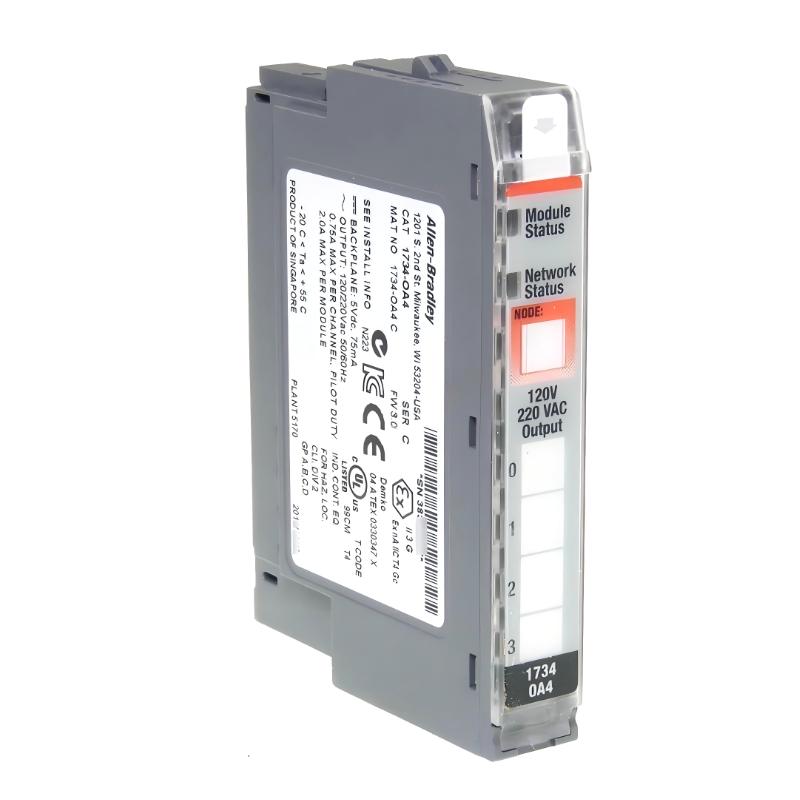
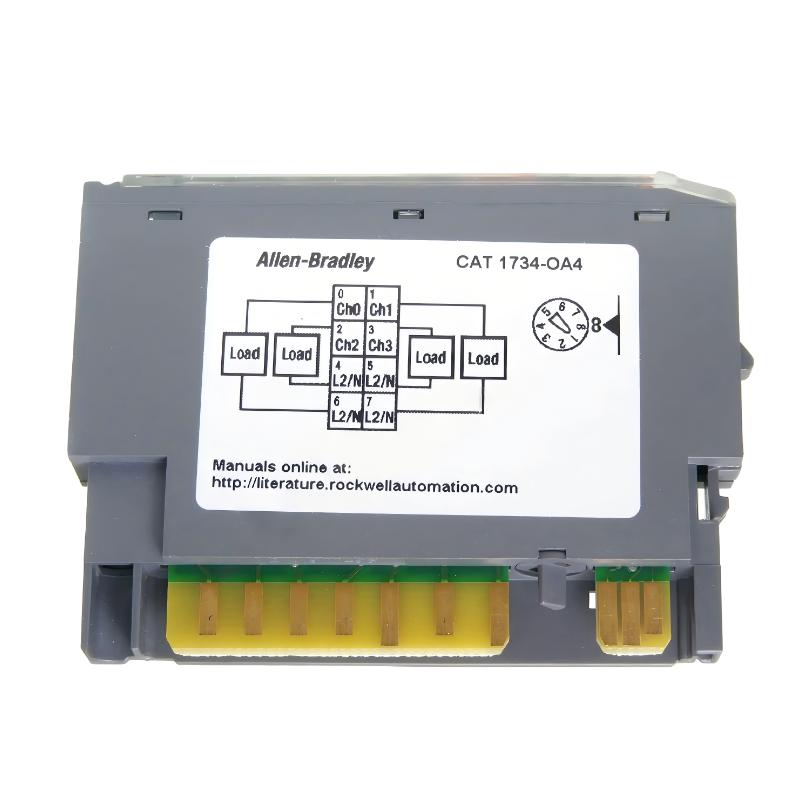
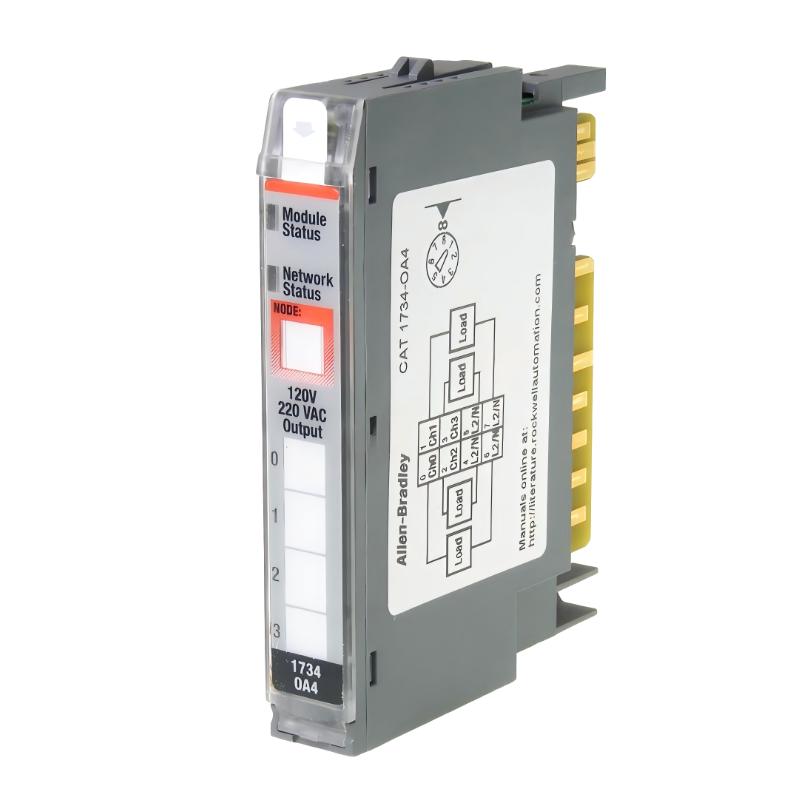
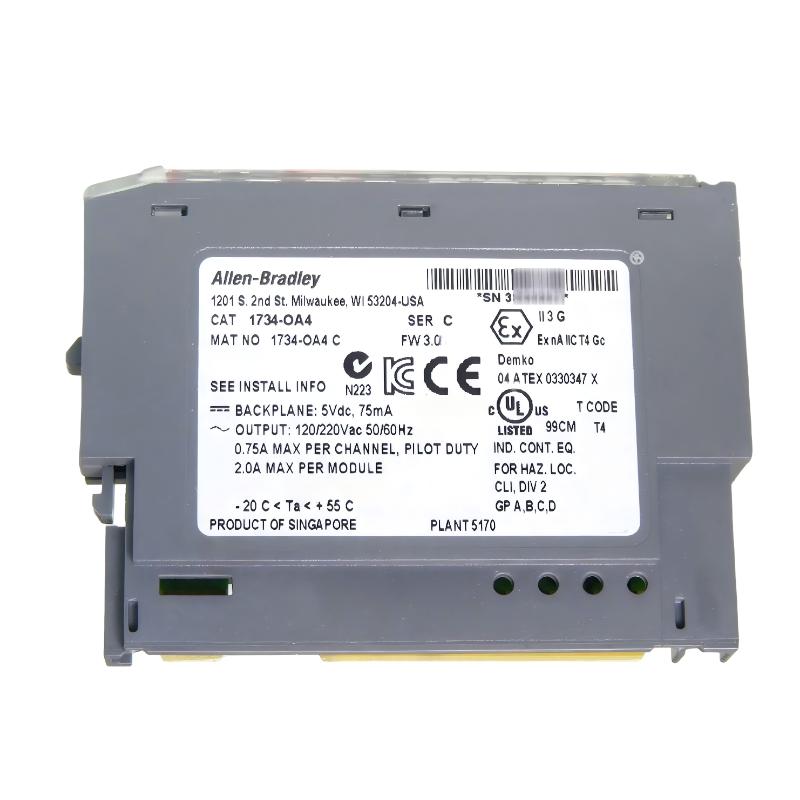
The Allen Bradley 1734-OA4 Digital Output Module is designed to provide discrete output control within POINT I/O distributed automation systems. This module allows a programmable controller to send switching commands to field devices such as relays, pilot lights, alarms, and solenoid valves.
Digital output modules form the operational link between software-based control logic and real-world equipment actions. When a PLC program activates an output signal, the module switches the corresponding output channel, triggering the connected device to perform its intended function.
With four independent output channels, the module allows multiple devices to be controlled simultaneously, supporting efficient machine operation and process automation.
Common application scenarios include:
-
Switching relay coils and contactors in industrial control circuits
-
Activating indicator lights and alarm signals on production equipment
-
Driving solenoid valves in pneumatic and hydraulic systems
-
Controlling auxiliary devices in packaging and assembly machines
-
Providing discrete output control in modular automation platforms
-
Integrating actuator commands within distributed PLC systems
By enabling reliable switching of field equipment, the module supports precise and responsive control in industrial automation environments.
Performance Advantages
Four Discrete Output Channels
Allows a single module to control multiple field devices simultaneously.
POINT I/O Modular Architecture
Designed to integrate seamlessly within distributed POINT I/O assemblies.
Compact High-Density Design
The narrow module width enables efficient use of control cabinet space.
Reliable Signal Switching
Ensures accurate command execution from the controller to connected devices.
Flexible System Expansion
Additional modules can be easily added as automation systems grow.
Technical FAQs
1. What is the primary function of the 1734-OA4 module?
It provides digital output switching signals for controlling field devices.
2. How many output channels are available on this module?
The module includes four digital output channels.
3. What types of devices are typically connected to the outputs?
Relays, solenoid valves, indicator lamps, alarm systems, and contactors.
4. How does the module receive control commands?
Commands are transmitted from a PLC through the POINT I/O network architecture.
5. What role does a digital output module play in automation systems?
It translates control logic into physical equipment actions.
6. Where is the module typically installed?
Within POINT I/O racks or distributed I/O assemblies in industrial control panels.
7. Can this module be used in distributed control architectures?
Yes, it is specifically designed for distributed I/O systems.
8. What industries commonly use digital output modules?
Manufacturing automation, robotics, packaging equipment, and process control systems.
9. How does the module support automation scalability?
Multiple modules can be installed together to increase the number of controllable output devices.
10. What happens if an output channel fails?
The connected field device may not activate as expected, affecting machine operation or process control.
 A DCS Q Co., Ltd. - PLC and DCS Industrial Control Equipment Wholesale