Introduction
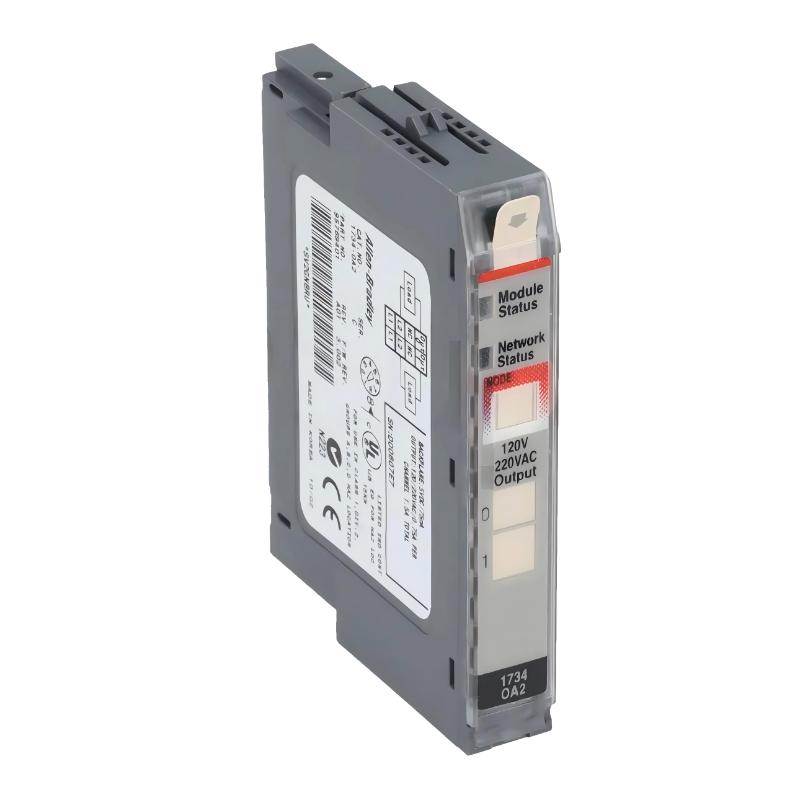
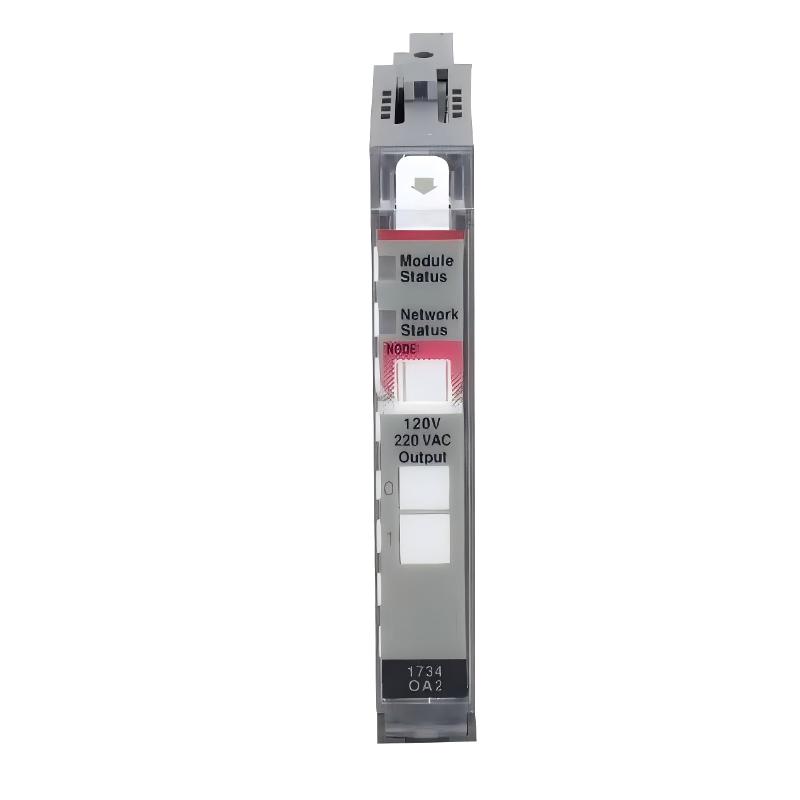
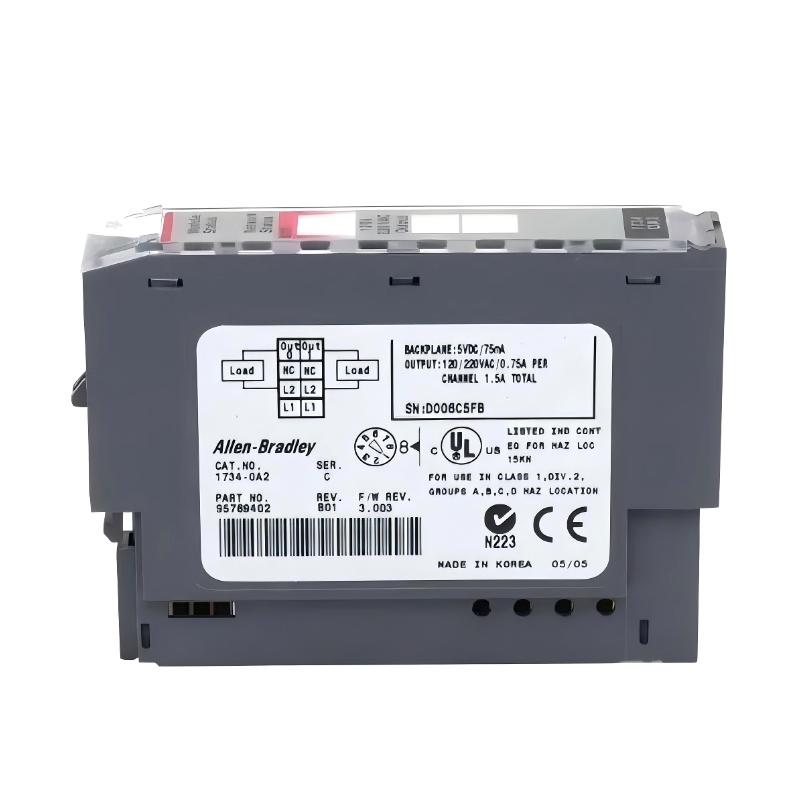
The Allen Bradley 1734-OA2 Digital Output Module is part of the POINT I/O distributed I/O platform used in modern industrial automation systems. In automated equipment, controllers must send commands to external devices such as relays, valves, and indicators. Output modules provide the interface that enables these commands to be executed.
This module offers two digital output channels that allow PLC systems to switch connected devices based on programmed control logic. Its compact form factor allows multiple modules to be installed within a POINT I/O assembly, supporting scalable automation designs.
Because distributed I/O architectures allow signals to be processed closer to field equipment, the 1734-OA2 module helps reduce wiring complexity and improve system flexibility in machine control and industrial automation environments.
Technical Specifications
| Parameter | Specification |
|---|
| Manufacturer | Allen Bradley |
| Model | 1734-OA2 |
| Module Type | Digital Output Module |
| Function | Discrete control of external field devices |
| Output Channels | 2 Digital Outputs |
| Application | Distributed industrial automation systems |
| System Platform | POINT I/O |
| Installation | Control cabinet / distributed I/O rack |
| Operating Mode | Continuous industrial operation |
| Dimensions | 56 × 12 × 75.5 mm |
| Weight | 0.031 kg (0.07 lb) |
Control Applications in Distributed Automation
The Allen Bradley 1734-OA2 Digital Output Module is designed to provide discrete output control within distributed I/O systems. As part of the POINT I/O platform, this module enables a control system to send digital commands to field devices such as relays, contactors, indicator lights, and small actuators.
Digital output modules play a vital role in automation architectures because they translate PLC control logic into physical actions within industrial equipment. When the controller activates an output signal, the module switches the corresponding field device, allowing machinery and processes to operate according to programmed instructions.
Typical applications include:
-
Activating relays and contactors in machine control circuits
-
Switching indicator lights and alarms in operator panels
-
Controlling small actuators and solenoid valves
-
Triggering status signals in automated production equipment
-
Distributed machine control in modular automation systems
-
Output signal distribution in packaging and assembly machines
By providing reliable digital switching capabilities, the module helps ensure precise control of field equipment within industrial automation networks.
Key Functional Advantages
Discrete Output Control
Allows PLC controllers to activate field devices through digital switching signals.
Compact POINT I/O Design
Small module footprint supports high-density installation in distributed I/O assemblies.
Efficient Signal Transmission
Ensures reliable command delivery between controllers and output devices.
Flexible Automation Integration
Designed for seamless operation within POINT I/O distributed control architectures.
Industrial-Grade Reliability
Built for continuous operation in factory automation and machine control environments.
Technical FAQs
1. What is the main function of the 1734-OA2 module?
It provides digital output signals that control external field devices.
2. How many output channels are available?
The module includes 2 discrete digital output channels.
3. What types of devices are typically connected to this module?
Relays, contactors, solenoid valves, indicator lights, and alarm systems.
4. How does the module interact with the PLC?
The PLC sends control commands to the module, which switches the connected output devices accordingly.
5. What role do digital output modules play in automation systems?
They convert control logic into physical machine actions.
6. Where is the module typically installed?
Within POINT I/O distributed I/O assemblies inside industrial control cabinets.
7. Can the module operate continuously in industrial environments?
Yes, it is designed for continuous operation in automation systems.
8. What industries commonly use digital output modules?
Manufacturing automation, packaging equipment, robotics, and process control systems.
9. Why are distributed output modules useful in automation architecture?
They allow control signals to be distributed closer to machinery, reducing wiring complexity.
10. What could happen if output modules malfunction?
Field devices may fail to activate or deactivate correctly, potentially affecting machine operation.
 A DCS Q Co., Ltd. - PLC and DCS Industrial Control Equipment Wholesale