Introduction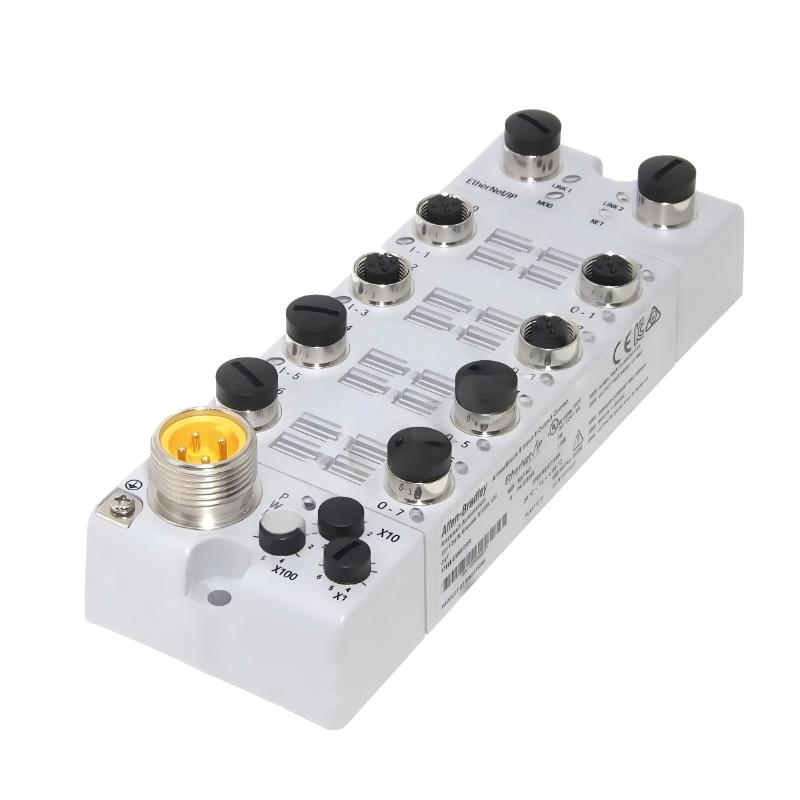
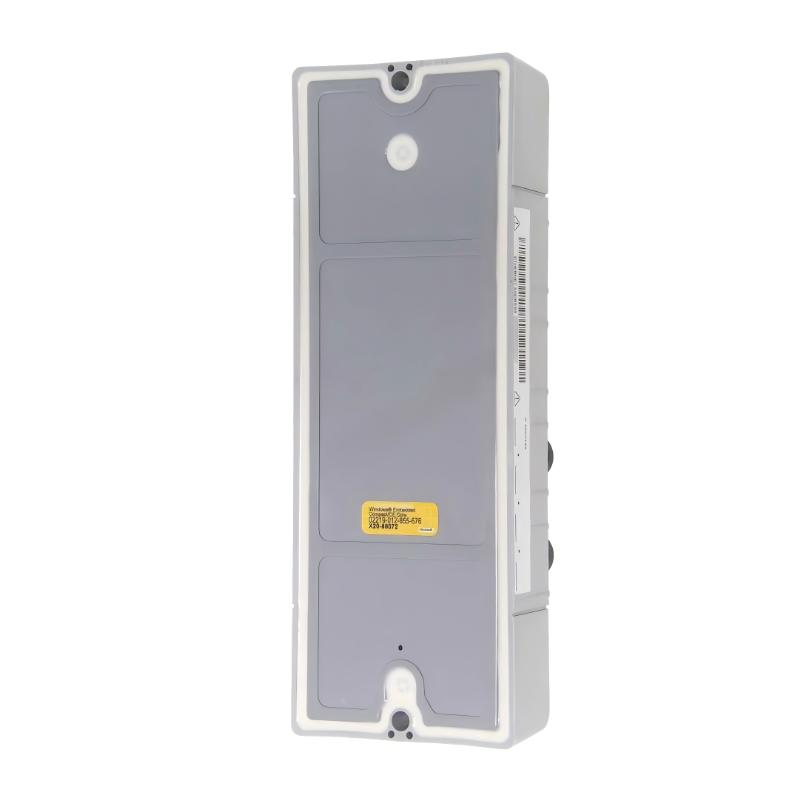
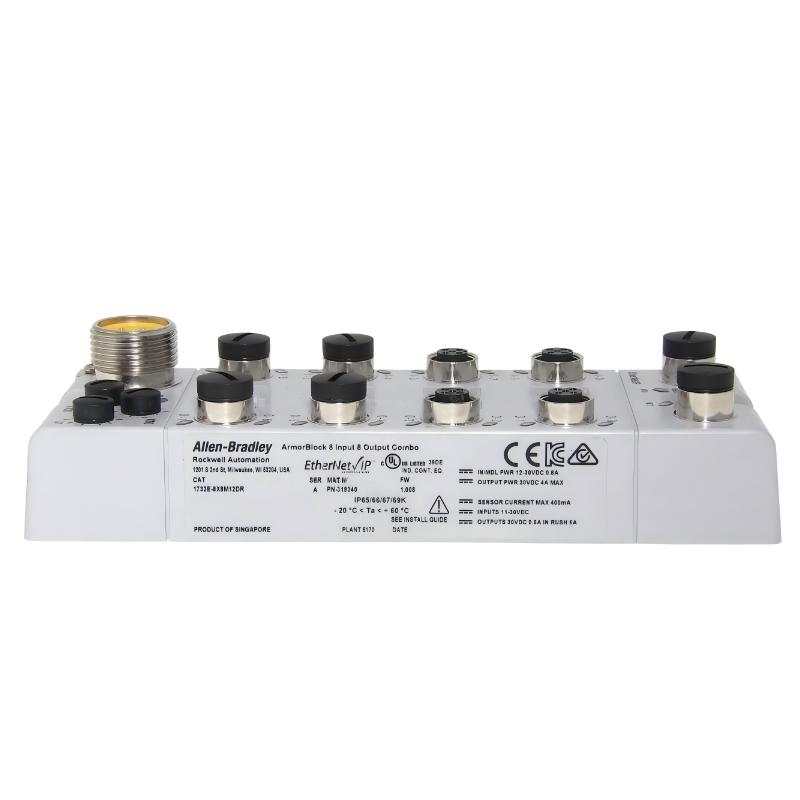
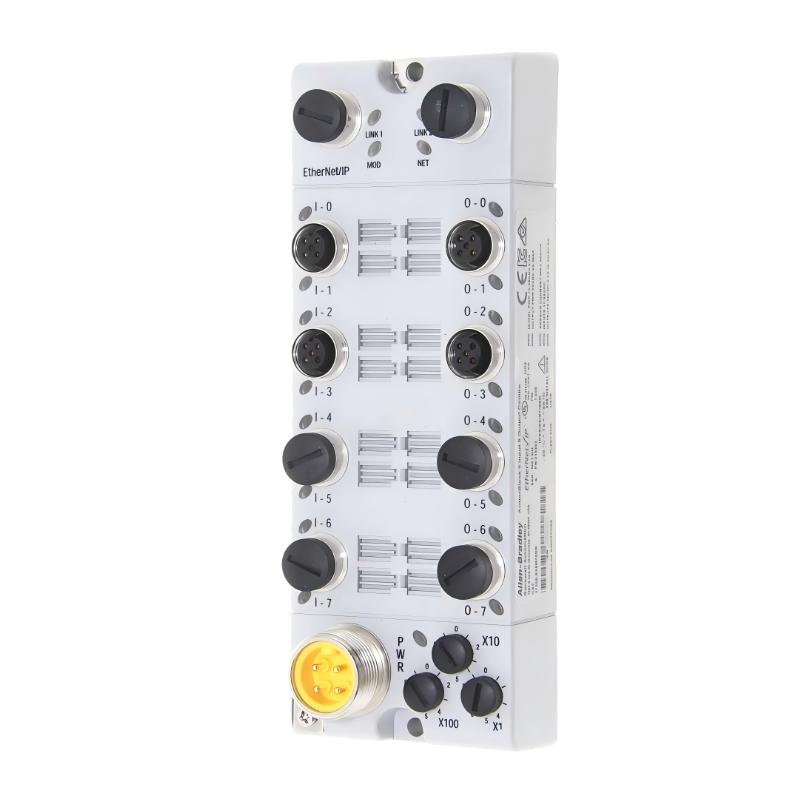
The Allen Bradley 1732E-8X8M12DR I/O Module is a distributed automation component designed to connect sensors and actuators directly to an industrial Ethernet network. In modern machine architectures, decentralized I/O solutions reduce wiring complexity and allow equipment to be installed closer to the point of operation.
This module integrates both digital inputs and outputs within a single rugged unit, making it suitable for machine-mounted applications. Its M12 connector interface simplifies installation and improves system modularity, enabling faster deployment and easier maintenance.
By allowing field devices to communicate directly with PLC controllers through a network infrastructure, the 1732E-8X8M12DR module helps streamline industrial automation systems and improve operational efficiency.
Technical Specifications
| Parameter | Specification |
|---|
| Manufacturer | Allen Bradley |
| Model | 1732E-8X8M12DR |
| Module Type | Distributed I/O Module |
| Function | Machine-level digital input and output interface |
| I/O Channels | 8 Digital Inputs / 8 Digital Outputs |
| Connector Type | M12 Industrial Connectors |
| Application | Machine automation and distributed I/O systems |
| Installation | Machine-mounted / field installation |
| Operating Mode | Continuous industrial operation |
| Dimensions | 179 × 65 × 43.25 mm |
| Weight | 0.34 kg (0.75 lb) |
Distributed Machine-Level Connectivity
The Allen Bradley 1732E-8X8M12DR I/O Module is designed for machine-level distributed I/O applications where field devices must be connected directly to an industrial Ethernet network. As part of the ArmorBlock I/O family, this module allows sensors and actuators to communicate with a control system without requiring traditional control cabinet wiring.
Featuring both input and output channels with integrated M12 connectors, the module enables quick connection of field devices such as proximity sensors, solenoid valves, and indicator lights. Its rugged enclosure allows it to be installed close to machinery on the factory floor, reducing wiring complexity and improving installation efficiency.
Typical deployment scenarios include:
-
Machine-level automation on assembly and packaging lines
-
Distributed sensor and actuator integration in manufacturing systems
-
Industrial robotics and motion control platforms
-
Conveyor and material handling equipment
-
Automotive production systems and robotic work cells
-
Modular machine automation where decentralized I/O is required
By enabling direct field connectivity through Ethernet networks, the module simplifies system architecture and supports faster machine deployment.
Functional Advantages
Integrated Distributed I/O Architecture
Combines digital inputs and outputs within a single field-mounted module.
M12 Quick-Connect Interface
Standard M12 connectors simplify device installation and reduce wiring time.
Machine-Mounted Operation
Designed to be installed directly on machines, eliminating the need for large control cabinets.
Real-Time Ethernet Communication
Supports efficient communication between field devices and PLC controllers.
Rugged Industrial Design
Engineered to withstand vibration, dust, and demanding factory conditions.
Technical FAQs
1. What is the main function of the 1732E-8X8M12DR module?
It provides distributed digital input and output connectivity for sensors and actuators.
2. How many I/O channels are available on the module?
The module includes 8 digital inputs and 8 digital outputs.
3. What type of connectors are used for field device connections?
The module uses M12 connectors for quick and reliable field wiring.
4. Where is the module typically installed?
It is mounted directly on machinery or near field devices in distributed automation systems.
5. What network architecture does the module support?
It is designed for Ethernet-based industrial control networks.
6. Why are distributed I/O modules used in automation systems?
They reduce wiring complexity and allow field devices to connect closer to the control network.
7. What types of devices typically connect to this module?
Sensors, limit switches, solenoid valves, indicator lights, and other digital field devices.
8. How does the module improve installation efficiency?
With integrated connectors and decentralized placement, it reduces the need for large wiring harnesses.
9. What industries commonly use machine-mounted I/O modules?
Automotive manufacturing, packaging systems, robotics, and material handling automation.
10. How does distributed I/O benefit modern manufacturing systems?
It improves system scalability, reduces installation time, and simplifies maintenance.
 A DCS Q Co., Ltd. - PLC and DCS Industrial Control Equipment Wholesale