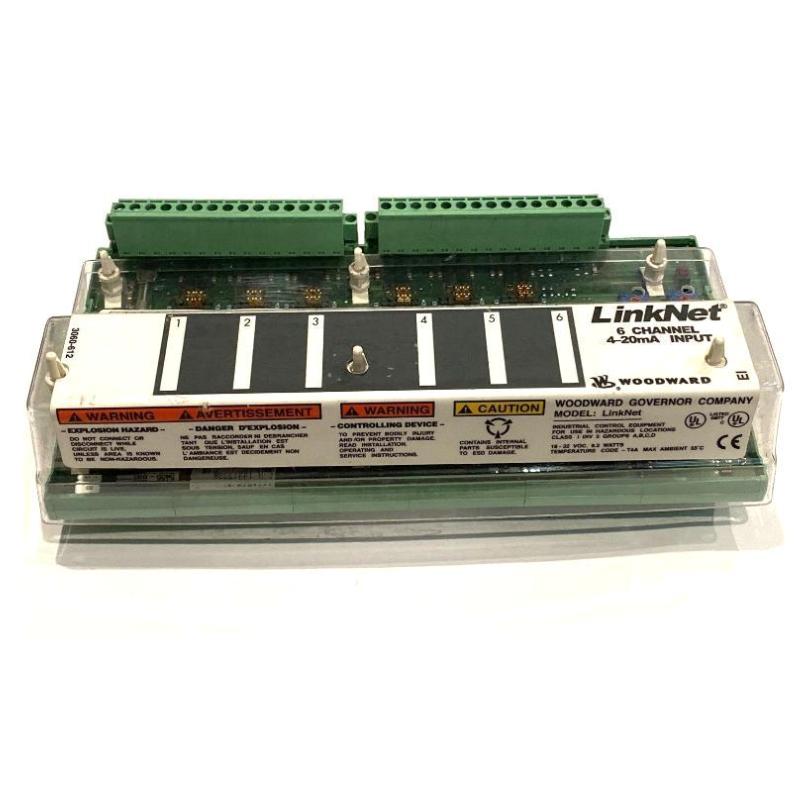
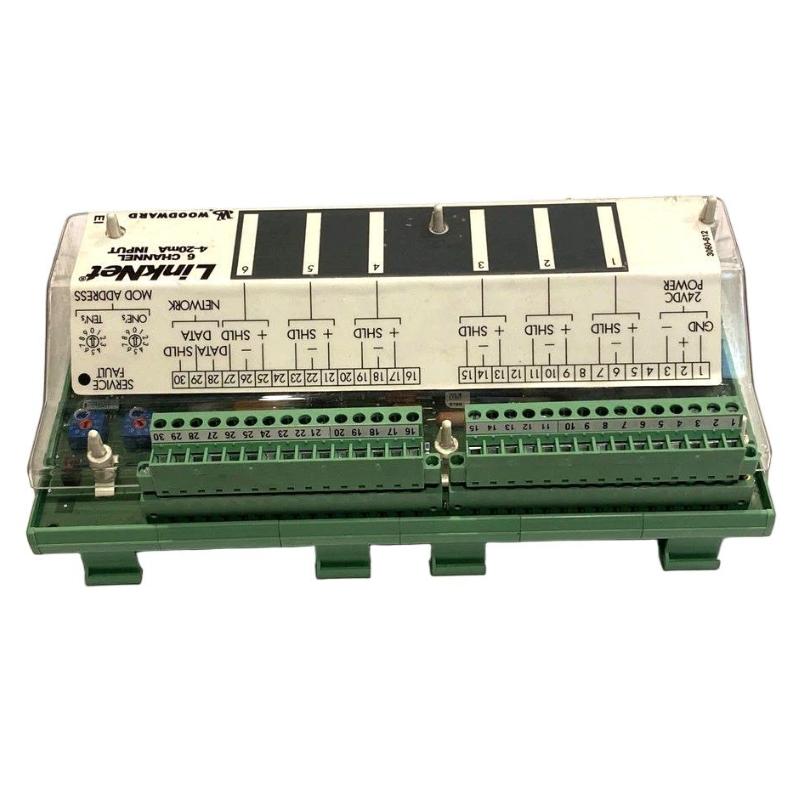
Product Overview
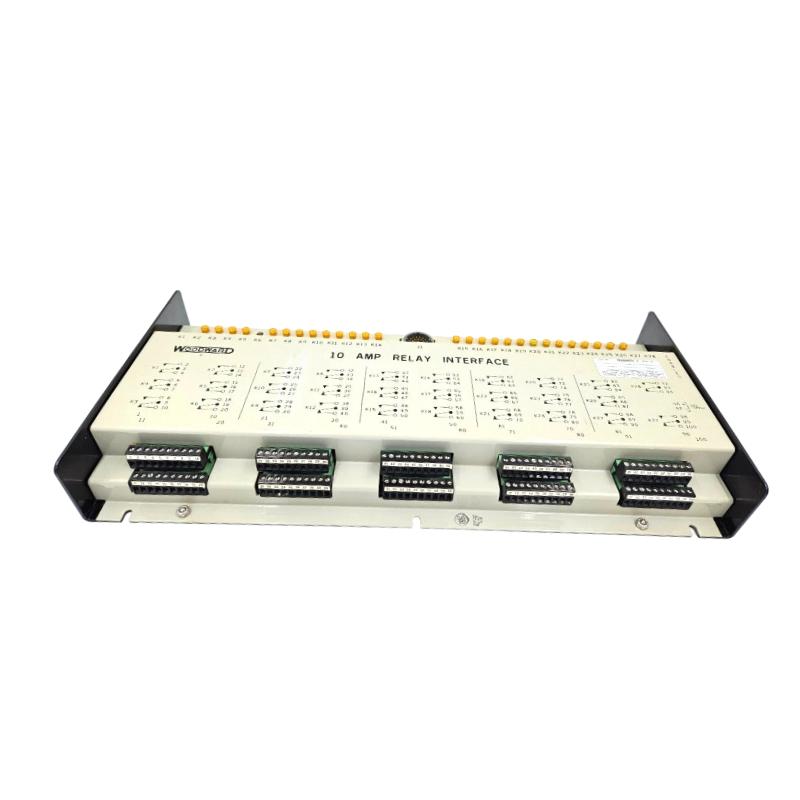
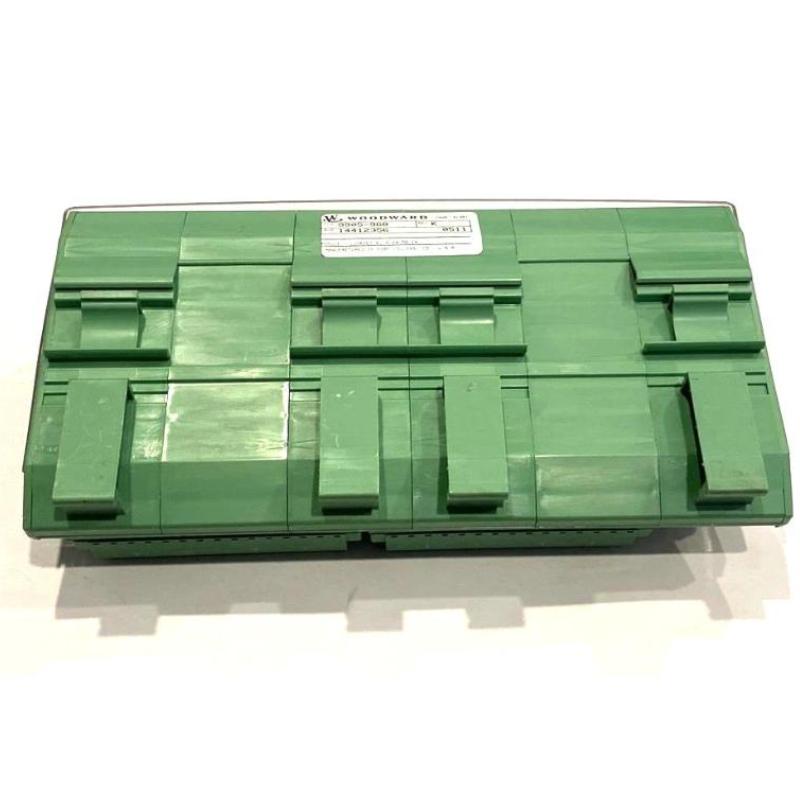
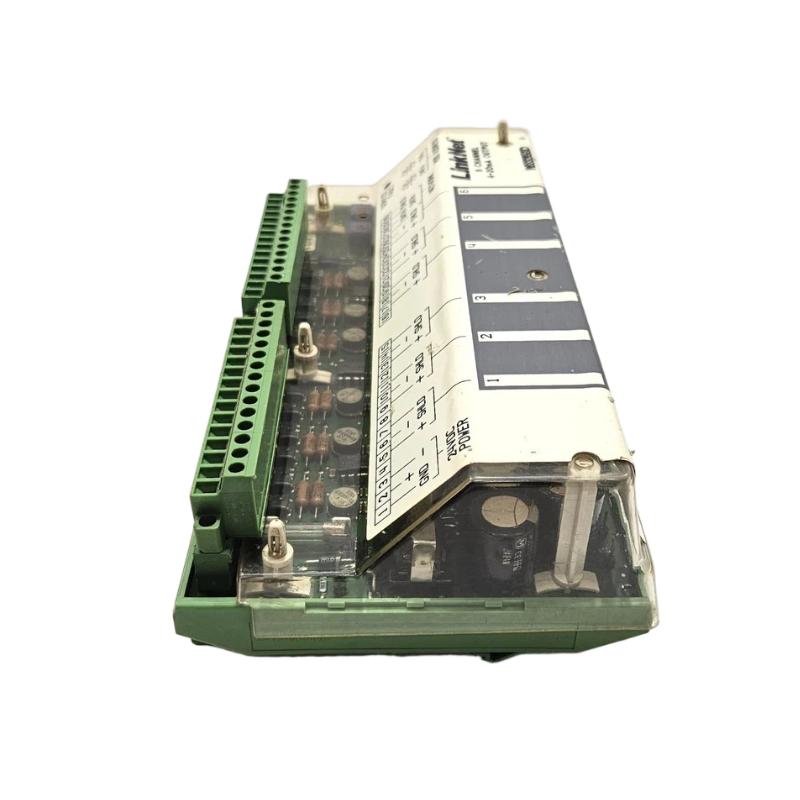
The Woodward 9905‑968 6‑Channel Output Module is a rugged industrial control module engineered to expand the output capabilities of Woodward control systems. Designed with six independent output channels, this module provides reliable signal switching and actuation for a wide range of applications in generator control panels, engine automation systems, and distributed power control architectures.
Built for high availability and long service life, the 9905‑968 delivers consistent performance in harsh industrial environments. Its compact footprint and flexible mounting options make it a preferred choice for engineers looking to enhance control logic systems without compromising reliability or introducing complexity. Whether used as part of a larger automated control network or as a discrete output expansion module, the 9905‑968 supports robust machine operation and precise output actuation.
Technical Specifications
| Parameter | Specification |
|---|
| Manufacturer | Woodward |
| Model | 9905‑968 |
| Product Type | 6‑Channel Output Module |
| Output Channels | 6 independent outputs |
| Output Type | Solid‑state / relay selectable |
| Load Capacity per Channel | Up to 2 A (dependent on design) |
| Total Load Capacity | Up to 10 A combined |
| Supply Voltage | 12 / 24 V DC |
| Operating Voltage Range | 8 – 36 V DC |
| Electrical Isolation | Channel isolation for noise immunity |
| Mounting | DIN‑rail or panel mount |
| Operating Temperature | −20 °C to +70 °C |
| Storage Temperature | −40 °C to +85 °C |
| Dimensions | 160 mm × 100 mm × 50 mm |
| Weight | Approx. 0.42 kg |
| Protection | Industrial‑grade housing |
Application Scenarios
The 9905‑968 6‑Channel Output Module is ideal for systems requiring expanded output control and reliable actuation.
Generator Control Panels
Provides supplementary output channels for breaker control, alarm signaling, and interlock actuation in genset systems.
Engine Automation Systems
Supports accurate control of solenoids, valves, and actuator devices in engine and powertrain applications.
Industrial Automation
Used in machine control cabinets to drive discrete output loads such as indicators, contactors, and relays.
Distributed Control Networks
Serves as an expansion interface for PLCs and embedded controllers requiring additional output capacity.
Key Advantages
Multi‑Channel Flexibility
Six independent output channels allow versatile control of multiple devices from a single module.
Configurable Output Types
Supports both solid‑state and relay actuation (depending on system setup) for adaptable control schemes.
Robust Industrial Design
Built to withstand temperature extremes, vibration, and electrical noise typical in industrial environments.
Electrical Isolation
Each channel features isolation to minimize interference and enhance signal clarity.
Easy Integration
Standard mounting formats and flexible voltage range simplify installation within existing systems.
Technical FAQs
1. What is the Woodward 9905‑968 mainly used for?
It is a six‑channel output expansion module used to provide additional actuator outputs in control systems.
2. How many output channels does it have?
The module has six independent output channels.
3. What types of outputs are supported?
Outputs can be configured as solid‑state or relay type, depending on the control system design.
4. What supply voltage is required?
It operates on a 12 V or 24 V DC supply within a range of 8 V to 36 V DC.
5. Can this module be mounted in a control cabinet?
Yes, it supports DIN‑rail and panel mounting.
6. What is the operating temperature range?
The module is rated for −20 °C to +70 °C.
7. Does it support electrical isolation?
Yes, each channel includes isolation features for noise immunity.
8. What kinds of actuators can be controlled?
It is suitable for solenoids, valves, indicators, and other discrete output devices.
9. Is it compatible with Woodward controllers?
Yes, it integrates with Woodward control systems for expanded output capability.
10. What environments is it suited for?
Designed for industrial automation, engine control, and power generation environments.
 A DCS Q Co., Ltd. - PLC and DCS Industrial Control Equipment Wholesale