Introduction
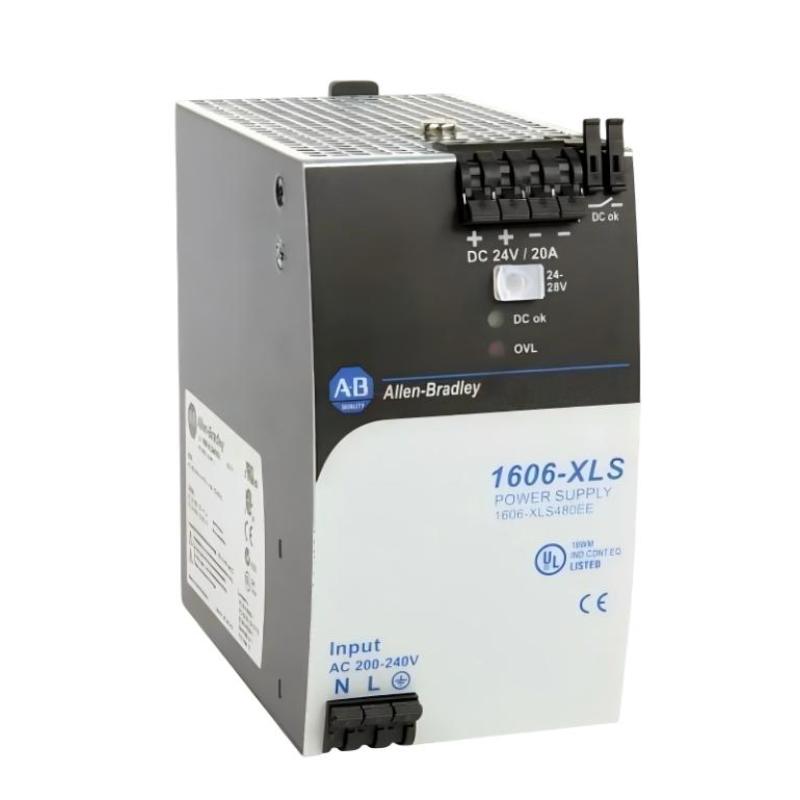
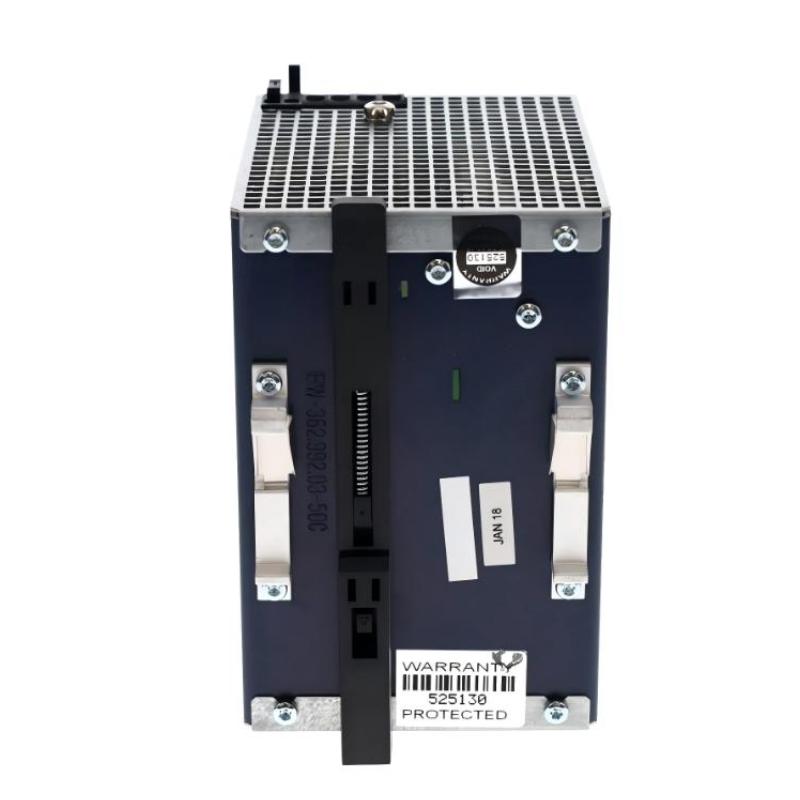
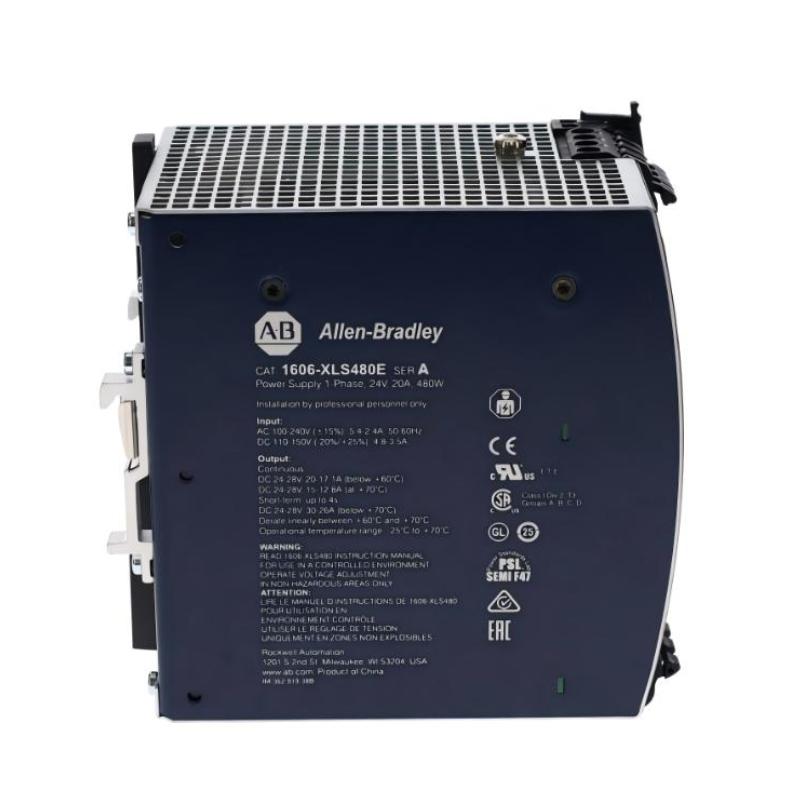
The Allen Bradley 1606-XLS480EE Power Supply Module is engineered to provide reliable DC power to industrial automation systems. Within a control cabinet, the power supply is responsible for converting incoming AC power into stable DC voltage required by controllers, communication modules, sensors, and other electronic devices.
Designed as part of the XLS high-performance series, this module offers strong output capability, high efficiency, and dependable operation in demanding environments. Its compact design allows engineers to integrate it into dense control panels without sacrificing performance or reliability.
Because modern automation systems rely heavily on stable electrical power, the 1606-XLS480EE module plays a crucial role in ensuring continuous operation and protecting sensitive control equipment from power fluctuations.
Technical Specifications
| Parameter | Specification |
|---|
| Manufacturer | Allen Bradley |
| Model | 1606-XLS480EE |
| Module Type | Power Supply Module |
| Function | AC to DC power conversion for automation systems |
| Application | PLC control panels, industrial automation, process control |
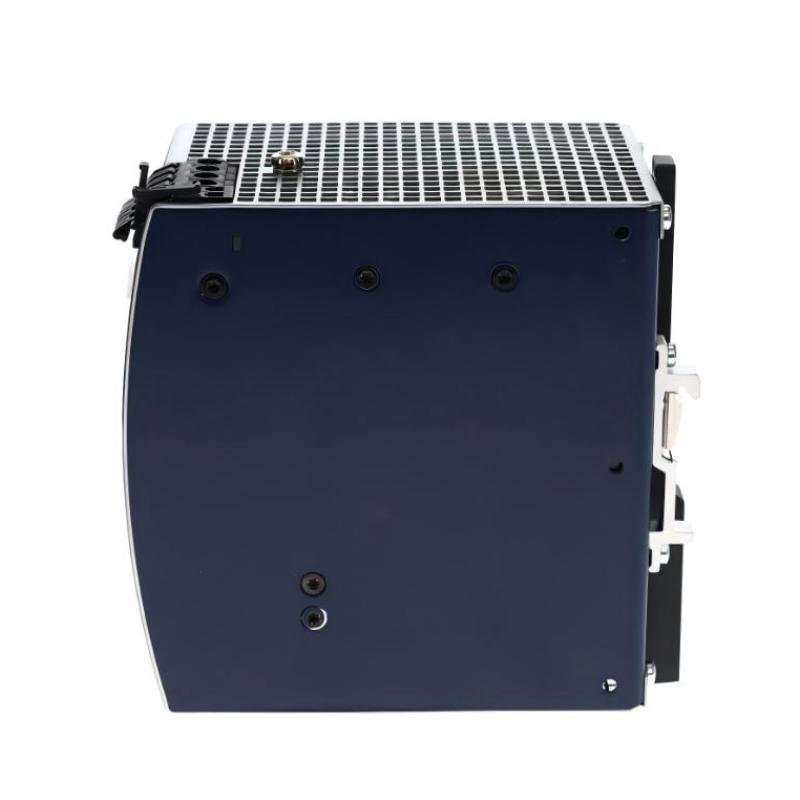
| Mounting Type | DIN-Rail Mount |
| Operating Mode | Continuous industrial operation |
| Cooling Method | Passive industrial cooling design |
| Dimensions | 70 × 124 × 127 mm |
| Weight | 0.88 kg (1.94 lb) |
Industrial Automation Power Applications
The Allen Bradley 1606-XLS480EE Power Supply Module is designed to deliver stable DC power for industrial control systems and automation equipment. As part of the high-performance XLS power supply series, it converts AC input voltage into regulated DC output to support PLC controllers, I/O modules, communication gateways, sensors, and other critical automation components.
In modern industrial control cabinets, a reliable power supply is essential for maintaining uninterrupted system operation. The 1606-XLS480EE module provides high output capacity and efficient energy conversion, helping ensure that connected devices receive consistent and clean electrical power.
Typical implementation environments include:
-
PLC control cabinets in manufacturing automation lines
-
Distributed control systems (DCS) in process industries
-
Industrial robotics and motion control platforms
-
Power generation monitoring and turbine control systems
-
Packaging and material handling automation equipment
-
SCADA infrastructure and remote monitoring systems
By maintaining a stable DC power source, this module contributes to the long-term reliability and performance of industrial automation networks.
Key System Advantages
High Output Power Capability
Supports demanding automation systems by providing sufficient power to multiple control devices.
Efficient Energy Conversion
Designed for high efficiency, helping reduce heat generation within control cabinets.
Stable Regulated Output
Delivers consistent DC voltage to sensitive electronic components such as PLC processors and communication modules.
Compact DIN-Rail Installation
The streamlined design allows easy integration into industrial control panels.
Industrial Reliability
Built to operate continuously in challenging environments such as factories, energy facilities, and process plants.
Technical FAQs
1. What is the main function of the 1606-XLS480EE module?
It converts AC input power into regulated DC output used by industrial automation equipment.
2. What devices typically rely on this power supply?
PLC controllers, I/O modules, industrial sensors, communication interfaces, and control system components.
3. How is the power supply installed?
It is designed for DIN-rail mounting within industrial control cabinets.
4. Why is a regulated DC output important in automation systems?
Stable voltage ensures that electronic control devices operate accurately and reliably.
5. Can the module operate continuously in industrial environments?
Yes, it is designed for continuous duty in automation and control applications.
6. What industries commonly use this type of power supply?
Manufacturing automation, oil and gas processing, power generation, and water treatment systems.
7. How does the module improve control panel performance?
High efficiency reduces heat buildup and energy losses inside the cabinet.
8. Does the module support integration with PLC platforms?
Yes, it is commonly used to power PLC systems and distributed I/O architectures.
9. What could happen if the automation system experiences unstable power?
Unstable power may cause controller resets, communication faults, or equipment malfunction.
10. Why are industrial power supply modules critical for automation reliability?
Because they ensure continuous and clean power delivery to all automation components.
 A DCS Q Co., Ltd. - PLC and DCS Industrial Control Equipment Wholesale