Introduction
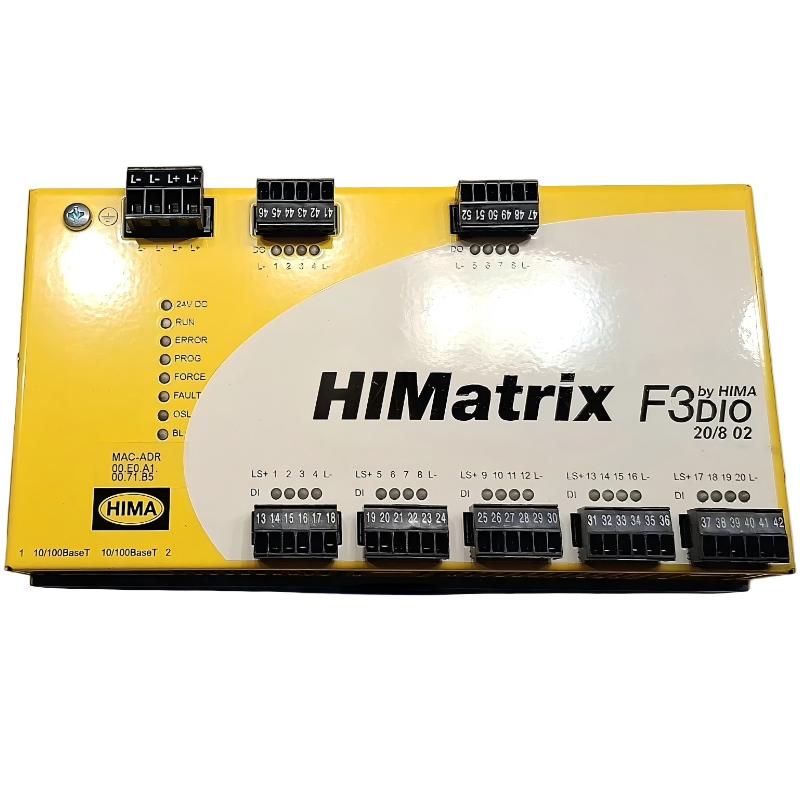
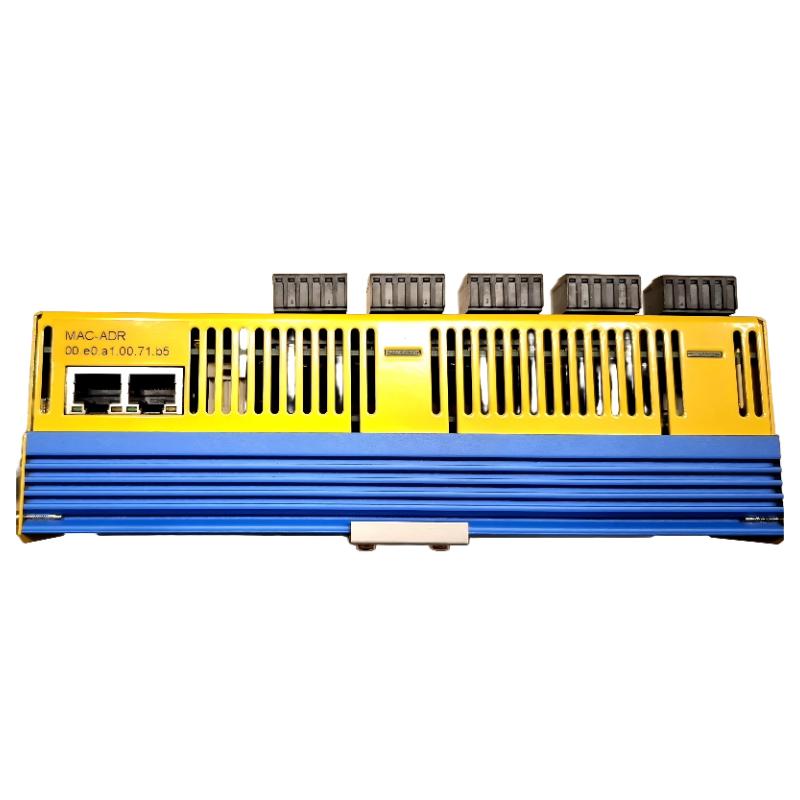
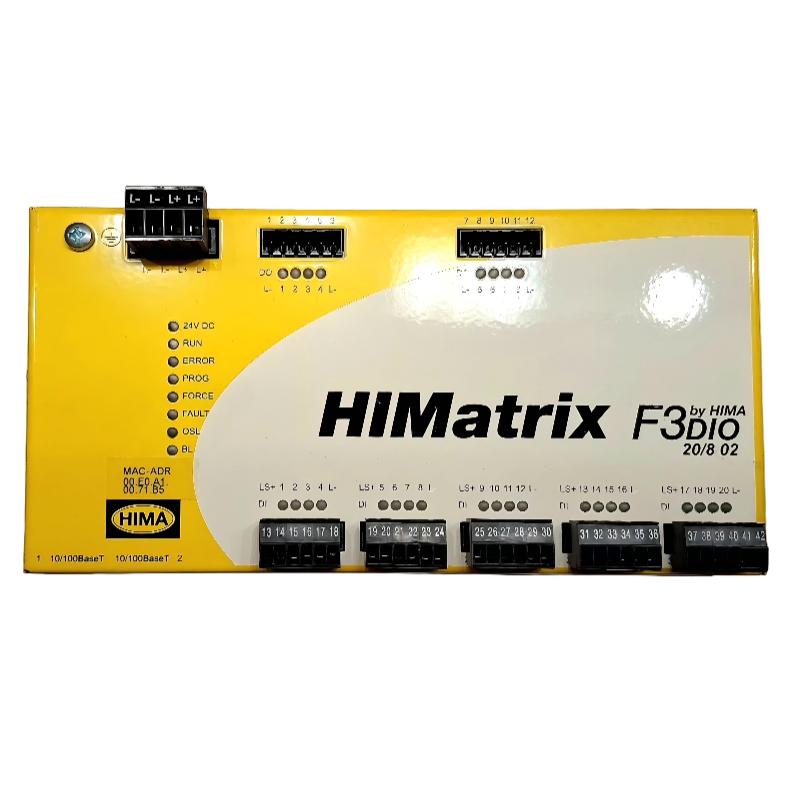
The HIMA F3 DIO 20/8 02 Remote I/O Module is a distributed automation interface designed to connect field devices with HIMA safety controllers. In large industrial plants, equipment and sensors are often spread across multiple locations. Remote I/O modules allow these devices to communicate with the central control system without requiring extensive wiring infrastructure.
The module supports both digital inputs and outputs, enabling it to monitor field device status and control equipment directly from the safety system. This combination improves efficiency while maintaining reliable signal exchange across the automation network.
Because of its ability to support distributed control architectures, the module is widely used in industrial environments where reliable remote signal management is necessary for safe and efficient plant operation.
Technical Specifications
| Parameter | Specification |
|---|
| Manufacturer | HIMA |
| Model | F3 DIO 20/8 02 |
| Module Type | Remote I/O Module |
| System Platform | HIMA Safety Automation Systems |
| Function | Distributed digital signal monitoring and control |
| Input Type | Digital inputs from field devices |
| Output Type | Digital outputs for equipment control |
| Application | Safety instrumented systems and distributed automation |
| Installation | Remote control panel / field enclosure |
| Operating Mode | Continuous industrial operation |
| Dimensions | 207 × 114 × 66 mm |
| Weight | 1 kg (2.20 lb) |
Distributed Signal Control in Industrial Safety Networks
The HIMA F3 DIO 20/8 02 Remote I/O Module is designed to provide distributed digital signal acquisition and control within HIMA safety automation systems. Remote I/O modules allow field devices located throughout an industrial facility to communicate with central safety controllers while minimizing complex wiring across long distances.
This module integrates both digital input and output capabilities, enabling it to monitor equipment status signals while also controlling actuators and alarm devices. By supporting remote installation closer to field equipment, the module improves system flexibility and simplifies industrial control architecture.
Typical industrial applications include:
-
Distributed safety instrumented systems in oil and gas facilities
-
Remote equipment monitoring in chemical processing plants
-
Industrial machinery control and status monitoring
-
Emergency shutdown signal distribution networks
-
Power generation automation systems
-
Large manufacturing plants requiring distributed I/O architectures
Through reliable remote signal handling, the module enables safety controllers to manage field devices efficiently across large industrial installations.
Operational Benefits
Integrated Digital Input and Output Channels
Allows simultaneous monitoring of field signals and control of external equipment.
Remote Installation Capability
Supports distributed automation architectures where field devices are located far from the central controller.
Designed for HIMA Safety Automation Platforms
Compatible with HIMA industrial safety control systems.
Improved System Wiring Efficiency
Reduces the need for long cable runs by enabling remote I/O connectivity.
Industrial Reliability
Built for continuous operation in demanding industrial environments.
Technical FAQs
1. What is the primary function of the F3 DIO 20/8 02 module?
It provides remote digital input monitoring and digital output control for safety automation systems.
2. What does “remote I/O” mean in industrial automation?
It refers to input and output modules installed near field equipment rather than inside the central control cabinet.
3. Which systems typically use this module?
HIMA safety automation systems supporting distributed control architectures.
4. What types of devices connect to the input channels?
Limit switches, safety contacts, push buttons, and equipment status sensors.
5. What equipment is typically controlled through the output channels?
Relays, alarms, solenoid valves, and safety shutdown devices.
6. How does remote I/O improve automation system design?
It reduces wiring complexity and allows more flexible equipment placement.
7. Where is the module usually installed?
In remote control panels or field-mounted automation enclosures.
8. Can the module operate continuously in industrial facilities?
Yes, it is designed for continuous operation in safety-critical environments.
9. What industries commonly use distributed I/O modules?
Oil and gas, petrochemical processing, power generation, and industrial manufacturing.
10. How does remote signal processing improve system performance?
It allows faster signal transmission and more efficient field device integration.
 A DCS Q Co., Ltd. - PLC and DCS Industrial Control Equipment Wholesale