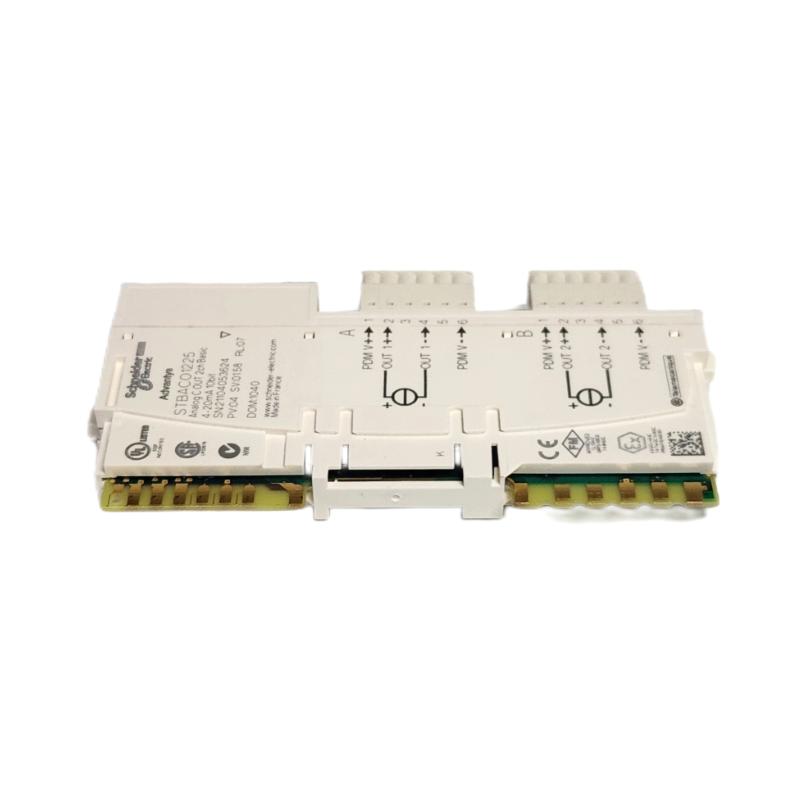
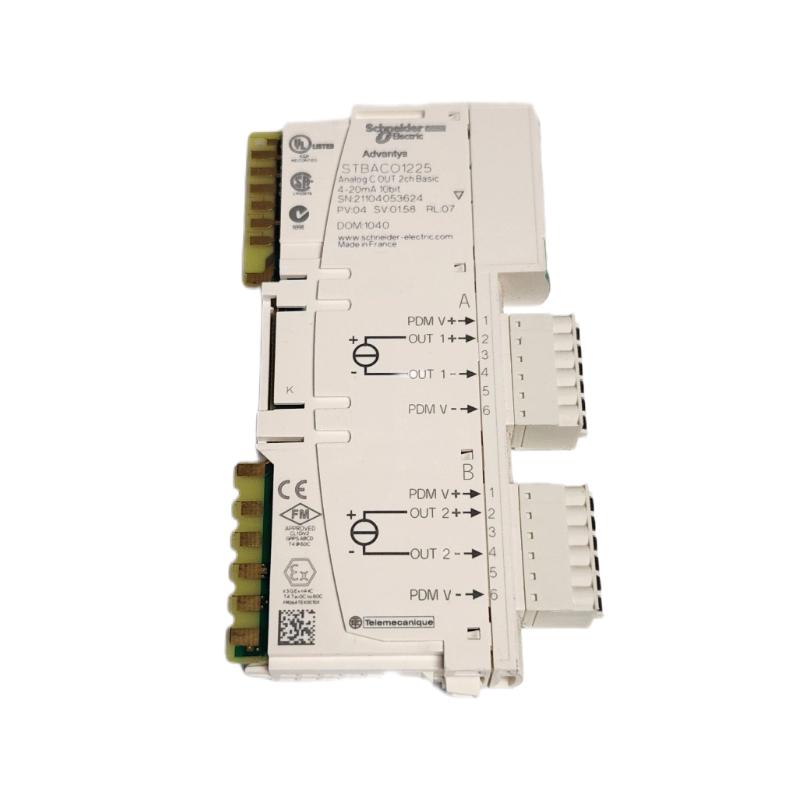
Product Introduction
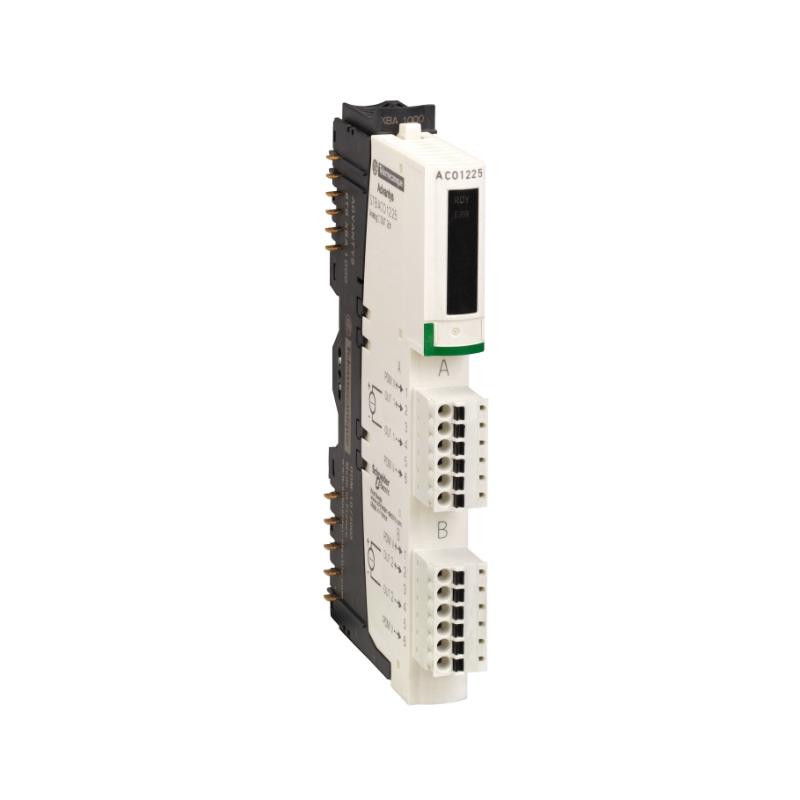
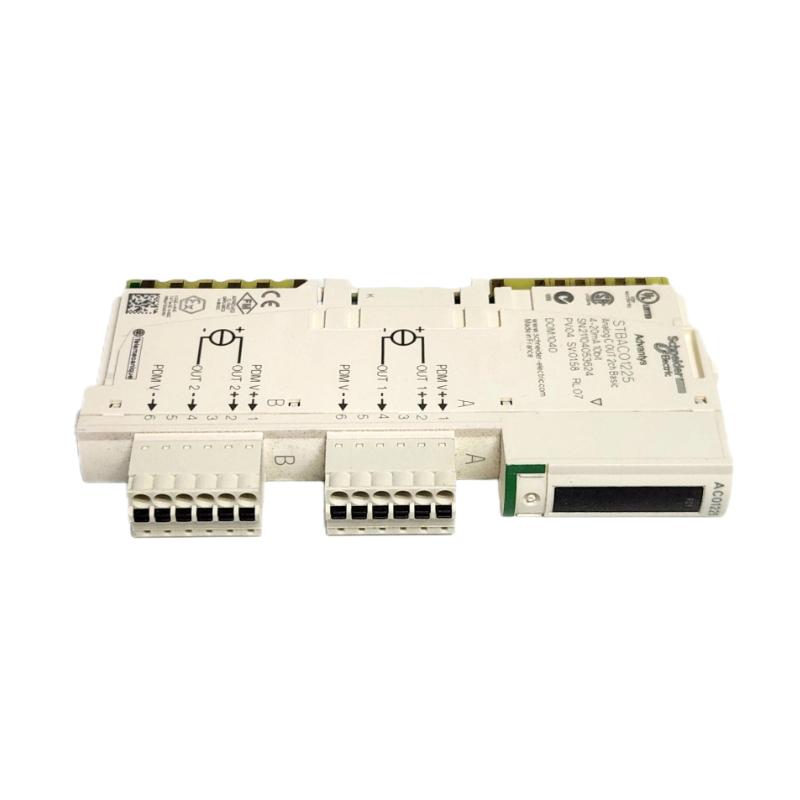
The Schneider Electric STBACO1225 Basic Analog Output Module is a reliable analog command output device designed to provide smooth and accurate control signals within distributed automation systems. As part of the Advantys STB modular I/O series, this module converts digital output values from controllers into proportional analog signals for field devices such as actuators, proportional valves, and speed controllers.
Engineered for straightforward integration and dependable operation, the STBACO1225 is ideal for systems requiring precise analog output without excessive complexity. Its compact DIN‑rail form factor, stable electrical performance, and multi‑signal support make it an excellent choice for machine automation, process control loops, and building management systems.
Technical Specifications
| Specification | Details |
|---|
| Manufacturer | Schneider Electric |
| Model Number | STBACO1225 |
| Module Type | Basic Analog Output Module |
| Product Series | Advantys STB |
| Analog Output Channels | 2 Analog Outputs |
| Output Signal Types | Voltage (0–10 V), Current (4–20 mA) |
| Resolution | 12‑bit |
| Typical Accuracy | ±1 % of Full Scale |
| Update Rate | Approx. 20–25 ms per Channel |
| Load Impedance | ≤500 Ω (Current), ≥10 kΩ (Voltage) |
| Supply Voltage | 24 V DC |
| Power Consumption | ≤3 W |
| Mounting Method | DIN‑Rail |
| Protection Rating | IP20 |
| Operating Temperature | 0 °C to 55 °C |
| Dimensions (H × W × D) | 90 × 90 × 70 mm |
| Weight | Approx. 0.24 kg |
Industrial Applications
Process Control Loops
In continuous process systems, this module provides analog signals to control variable valves, speed drives, and other actuation components for stable regulation.
Machine and Equipment Automation
Used in packaging, assembly lines, and robotics applications where proportionally scaled output commands improve precision and responsiveness.
HVAC & Building Automation
Supports environmental control loops by delivering analog outputs to dampers, fans, and variable control elements within building systems.
OEM Electronics & Control Panels
Compact design makes the module suitable for integration in OEM panels where basic analog output control is required without complex configurations.
Key Advantages
Dual Analog Output Channels
Two independent outputs support simultaneous control of separate field devices or loops, enhancing system flexibility.
Flexible Signal Compatibility
Supports both voltage and current output types, allowing seamless interface with a wide range of analog actuators and transducers.
Compact & Easy Installation
Standard DIN‑rail mounting and slim profile make panel installation quick and space‑efficient.
Basic, Cost‑Effective Design
Optimized for applications where essential analog output functions are required without advanced features, keeping overall system cost down.
Industrial‑Grade Reliability
IP20 rated and engineered for factory environments, providing stable performance across typical operating temperatures.
Technical FAQs
1. How many analog outputs does the STBACO1225 support?
It provides 2 analog outputs for proportional signal control.
2. What output signal types are supported?
Both voltage (0–10 V) and current (4–20 mA) outputs are supported.
3. What is the expected resolution?
The module offers a 12‑bit resolution for each analog output.
4. What level of accuracy can be expected?
Typical accuracy is around ±1 % of full scale.
5. What supply voltage does the module require?
It operates on a 24 V DC supply.
6. How are the outputs updated?
Each channel updates at roughly 20–25 ms, enabling responsive loop control.
7. Where is this module typically mounted?
Standard DIN‑rail mounting inside control cabinets or I/O racks is supported.
8. Is this module designed for outdoor use?
No, it is rated IP20 and intended for indoor industrial environments.
9. What types of systems use this module?
Process control, machine automation, HVAC, and OEM control panels commonly deploy this module.
10. Can this module interface with different bus systems?
Yes — compatibility depends on the bus coupler or network interface of the distributed architecture.
 A DCS Q Co., Ltd. - PLC and DCS Industrial Control Equipment Wholesale