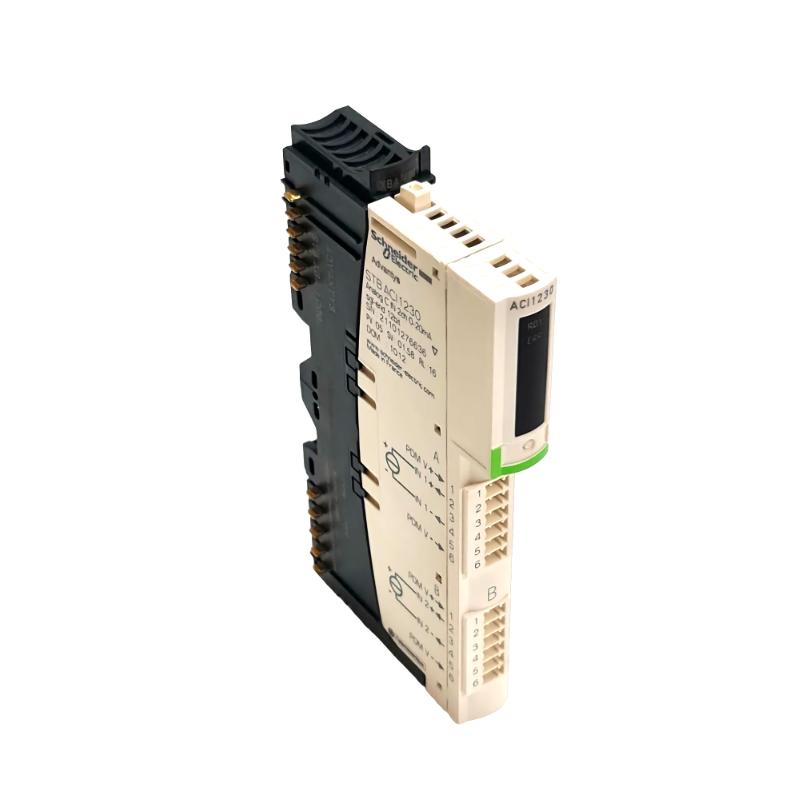
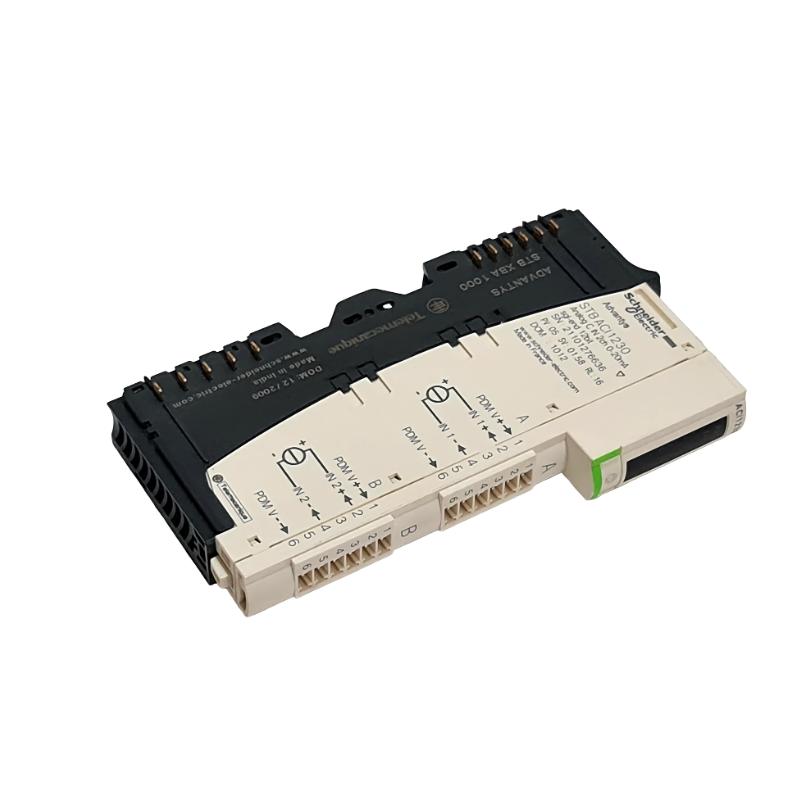
Product Introduction
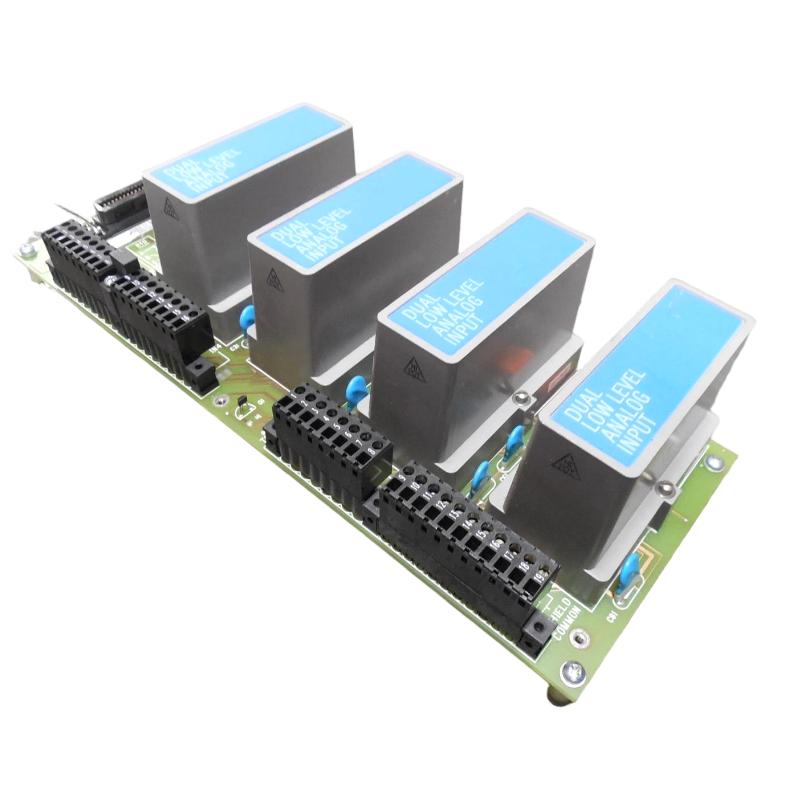
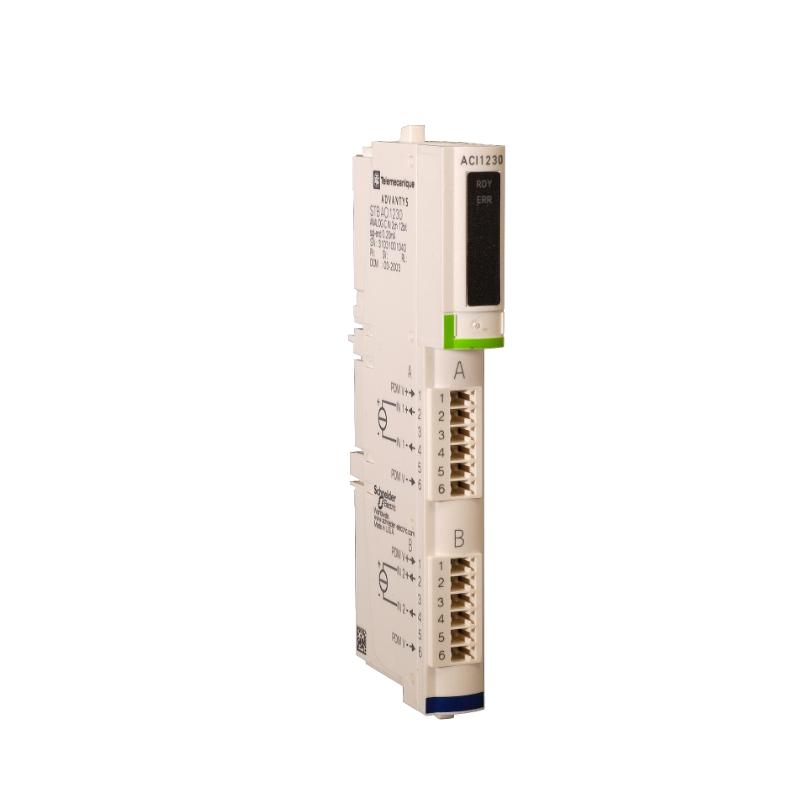
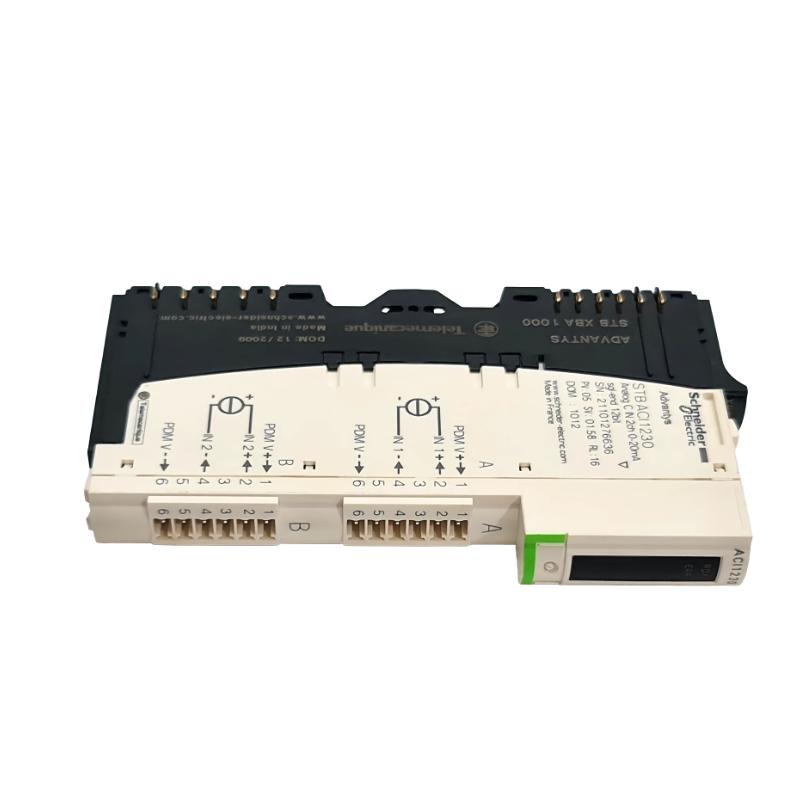
The Schneider Electric STBACI1230 Standard Analog Input Module is a precision analog acquisition component engineered for distributed I/O systems within industrial automation environments. As part of the Advantys STB series, this module offers reliable conversion of real‑world analog sensor signals into high‑integrity process data for PLCs, motion controllers, and supervisory systems.
Designed for performance and simplicity, the STBACI1230 supports multiple analog signal types, fast sampling rates, and stable measurement accuracy. Its compact DIN‑rail form factor and robust electrical design make it ideal for applications involving environmental sensing, machine control, process monitoring, and building automation. Whether deployed in centralized racks or remote I/O stations, this analog input module helps improve system responsiveness and data quality.
Technical Specifications
| Specification | Details |
|---|
| Manufacturer | Schneider Electric |
| Model Number | STBACI1230 |
| Module Type | Standard Analog Input Module |
| Product Series | Advantys STB |
| Analog Input Channels | 12 Inputs |
| Signal Types Supported | Voltage (0–10 V), Current (0–20 mA / 4–20 mA) |
| Resolution | 12‑bit |
| Sampling Time | 10 ms per Channel |
| Input Impedance | ≥100 kΩ (Voltage) |
| Accuracy | ±0.5 % FS typical |
| Response Time | ≤25 ms |
| Supply Voltage | 24 V DC |
| Power Consumption | ≤3.5 W |
| Fieldbus Interface | Determined by System Bus Coupler |
| Mounting | DIN‑Rail |
| Protection Rating | IP20 |
| Operating Temperature | 0 °C to 55 °C |
| Dimensions (H × W × D) | 90 × 120 × 70 mm |
| Weight | Approx. 0.32 kg |
Industrial Applications
Distributed Process Monitoring
In process industries such as chemical, food & beverage, and water treatment, this module captures multiple analog signals for real‑time monitoring and control.
Machine and Equipment Automation
Used where numerous analog measurements such as pressure, temperature, and speed feedback are required on complex machinery.
Building Management Systems
Integrates with building automation platforms to handle environmental sensor data for HVAC, lighting, and energy analytics.
OEM Control Panels
Original equipment manufacturers use the STBACI1230 in control panels where multiple analog data streams need centralized processing.
Key Advantages
Multi‑Channel Analog Acquisition
With twelve analog inputs, this module consolidates numerous field signals, reducing the need for multiple single‑channel modules.
Flexible Signal Compatibility
Supports both voltage and current input ranges, offering versatility in connecting pressure transmitters, thermocouples (via signal conditioners), flow meters, and other analog devices.
High‑Resolution Measurement
12‑bit conversion provides precise data essential for fine control and accurate process regulation.
Fast Data Sampling
Even with many channels, the module maintains responsive sampling performance for control systems requiring near real‑time data.
Industrial‑Grade Reliability
Robust construction and IP20 protection ensure dependable operation in factory and plant environments.
Technical FAQs
1. How many analog inputs does this module provide?
It offers 12 analog input channels for multiple field measurements.
2. What signal types are supported?
Voltage (0–10 V) and current (0–20 mA / 4–20 mA) signals are supported.
3. What is the analog resolution?
The module uses a 12‑bit ADC for accurate signal conversion.
4. What supply voltage is required?
It operates on 24 V DC.
5. Can this module be used outdoors?
No; it is designed for indoor industrial use with IP20 protection.
6. What mounting style does it use?
Standard DIN‑rail mounting within control cabinets or I/O racks.
7. What industries commonly use this module?
Process control, OEM machines, building automation, and distributed control networks.
8. Is the module compatible with different fieldbus networks?
Yes — compatibility depends on the system’s bus coupler or network interface.
9. What is the typical sampling rate?
Each channel is sampled in about 10 ms.
10. What accuracy can be expected?
Typical accuracy is ±0.5 % of full scale for most industrial signals.
 A DCS Q Co., Ltd. - PLC and DCS Industrial Control Equipment Wholesale