Product Introduction
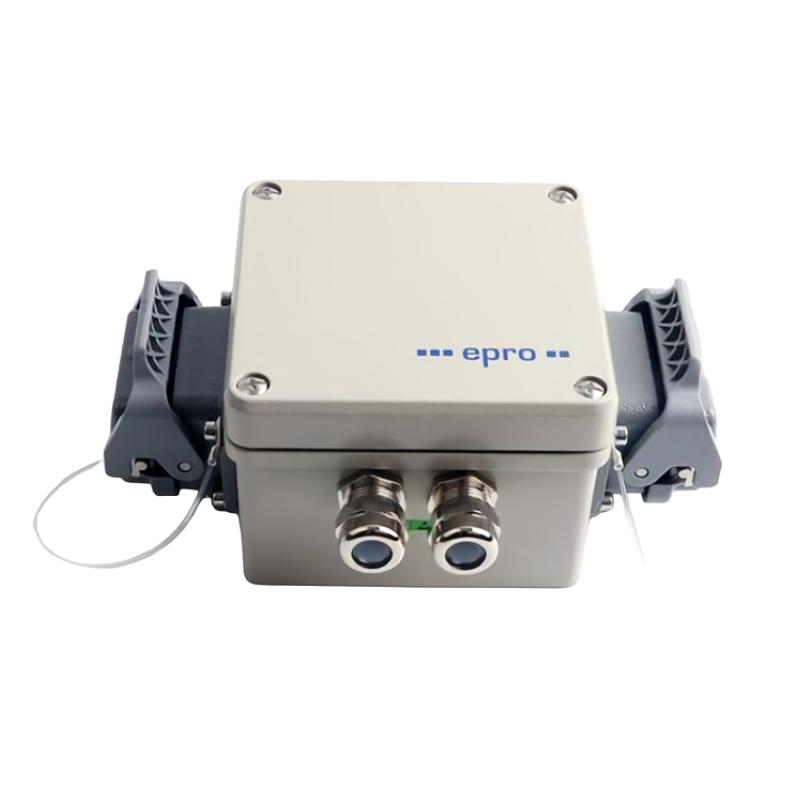
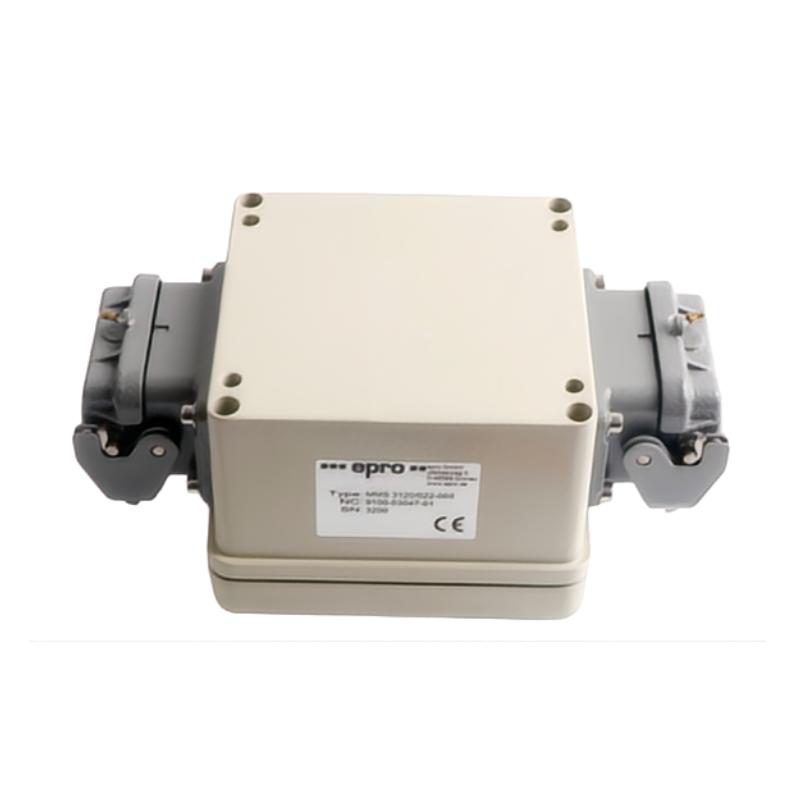
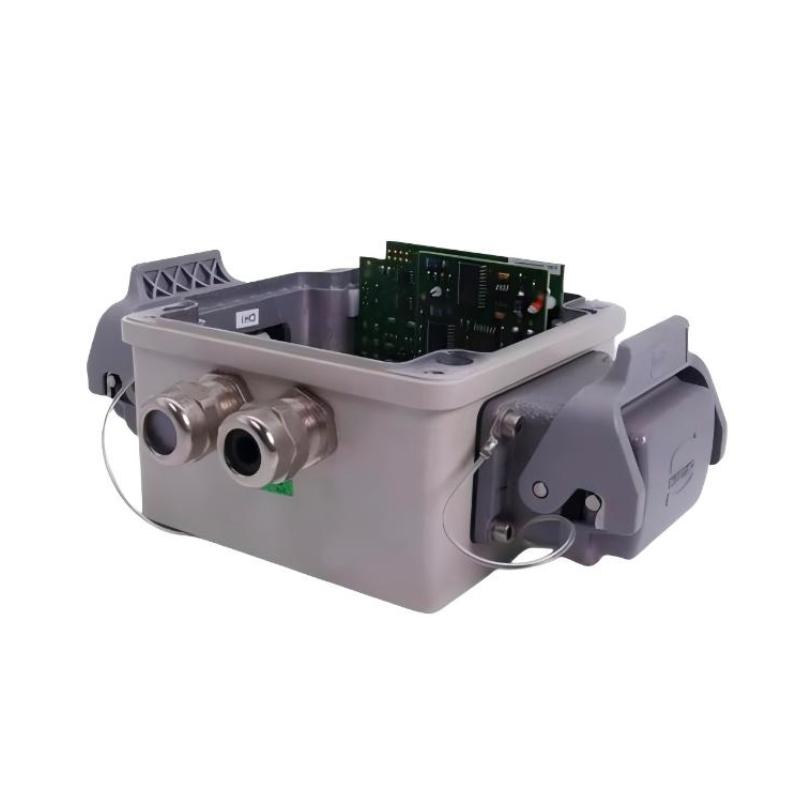
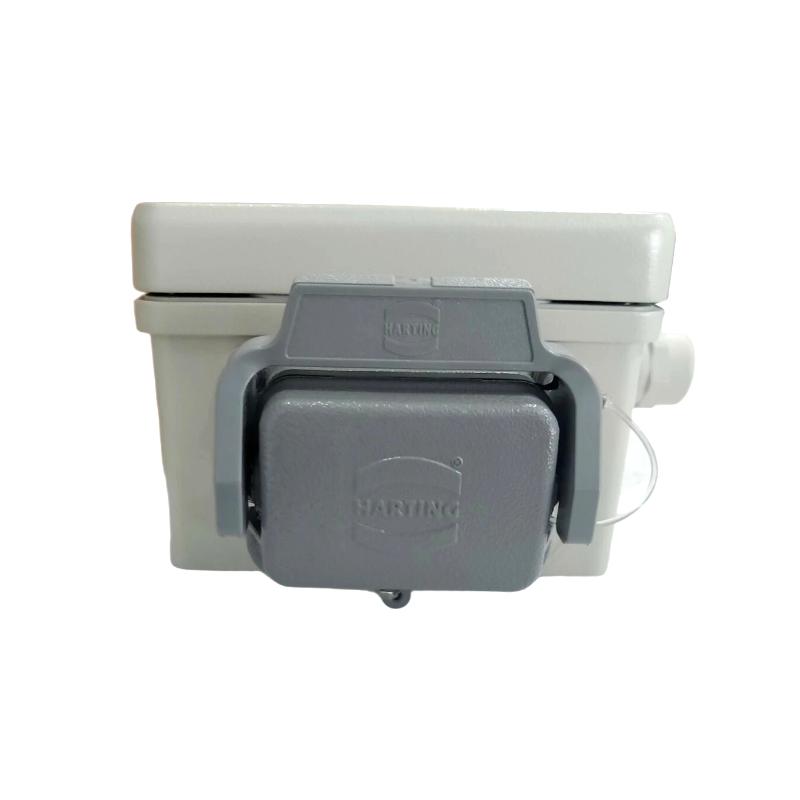
The Epro MMS3120 Dual-Channel Bearing Vibration Transmitter is a dedicated vibration monitoring device developed for machine protection and predictive maintenance systems. It processes vibration signals from electrodynamic sensors and converts them into standardized current outputs that can be transmitted to plant control systems.
The transmitter is part of the MMS 3000 machinery monitoring platform and is commonly used in turbine monitoring systems and other high-value rotating equipment. Its dual-channel architecture allows two measurement points to be monitored simultaneously, reducing installation complexity and improving monitoring efficiency.
By combining high-precision signal processing, diagnostic monitoring, and industrial communication capability, the MMS3120 provides reliable vibration data for early fault detection and long-term equipment health analysis.
Technical Specifications
| Parameter | Specification |
|---|
| Manufacturer | Epro |
| Model | MMS3120 |
| Module Type | Dual-Channel Bearing Vibration Transmitter |
| Monitoring Channels | 2 independent vibration channels |
| Measurement Type | Absolute bearing vibration |
| Sensor Compatibility | Electrodynamic vibration transducers (PR9268 series) |
| Measurement Accuracy | ±2% full scale |
| Frequency Range | 10 Hz – 10 kHz |
| Output Signals | Two isolated 0/4–20 mA outputs |
| Power Supply | 24 V DC |
| Power Inputs | Dual redundant inputs |
| Diagnostic Functions | Sensor and electronics self-monitoring |
| Operating Temperature | −20°C to +65°C |
| Installation | Direct machine mounting |
| Dimensions | 127.5 × 125.75 × 80 mm |
| Weight | 1.3 kg (2.87 lb) |
Industrial Deployment for Bearing Condition Monitoring
The Epro MMS3120 Dual-Channel Bearing Vibration Transmitter is engineered for continuous monitoring of bearing vibration in industrial rotating machinery. As a component of the MMS 3000 monitoring system, it processes signals from electrodynamic vibration transducers and converts them into standardized outputs for PLC, DCS, or SCADA integration.
This transmitter enables real-time detection of abnormal bearing vibration levels, allowing early identification of mechanical issues such as imbalance, misalignment, or bearing wear. Its compact machine-mountable design makes it suitable for decentralized monitoring architectures where measurement electronics are installed close to the equipment.
Typical industrial environments include:
-
Steam and gas turbine monitoring systems
-
Compressor and centrifugal pump condition monitoring
-
Gearbox vibration supervision in heavy industry
-
Industrial fan and blower vibration monitoring
-
Rotating equipment protection systems in power plants
-
Predictive maintenance systems in refineries and chemical faciliti
Engineering Advantages
Dual Independent Measurement Channels
The transmitter provides two vibration input channels, enabling simultaneous monitoring of two bearing locations within a single machine.
High-Precision Vibration Measurement
Measurement resolution can reach 0.01 µm, with high accuracy for detecting subtle mechanical changes in bearing performance.
Wide Frequency Detection Range
The system supports vibration frequencies from approximately 10 Hz to 10 kHz, covering both low-frequency mechanical faults and higher-frequency vibration events.
Flexible Industrial Output Signals
Two independent 0/4–20 mA analog outputs allow direct integration with control systems and monitoring platforms.
Integrated Diagnostics and Self-Test
Built-in self-monitoring continuously checks sensor connections and internal electronics, improving reliability in critical equipment monitoring systems.
Technical FAQs
1. What type of vibration does the MMS3120 measure?
It measures absolute bearing vibration using electrodynamic vibration sensors.
2. How many channels are available for monitoring?
The transmitter includes two independent measurement channels.
3. Which sensors are compatible with the transmitter?
It supports Epro electrodynamic vibration transducers, such as PR9268 series sensors.
4. What output signals does the device provide?
Each channel generates isolated 0/4–20 mA analog current outputs proportional to vibration amplitude.
5. What vibration frequency range can the transmitter process?
Typical frequency response ranges from 10 Hz to 10 kHz depending on configuration.
6. What type of power supply does the device require?
The transmitter operates with 24 V DC power supply inputs.
7. Does the device include redundant power capability?
Yes, it supports two redundant 24 V DC power inputs for improved operational reliability.
8. What monitoring standards does the transmitter comply with?
It is designed to comply with industrial vibration monitoring standards such as VDI 2056.
9. Where is the transmitter typically installed?
It is designed for direct installation on or near machinery, minimizing signal loss and wiring complexity.
10. What industrial machines commonly use this transmitter?
Applications include turbines, compressors, pumps, fans, and gearboxes used in heavy industrial processes.
 A DCS Q Co., Ltd. - PLC and DCS Industrial Control Equipment Wholesale