Product Overview
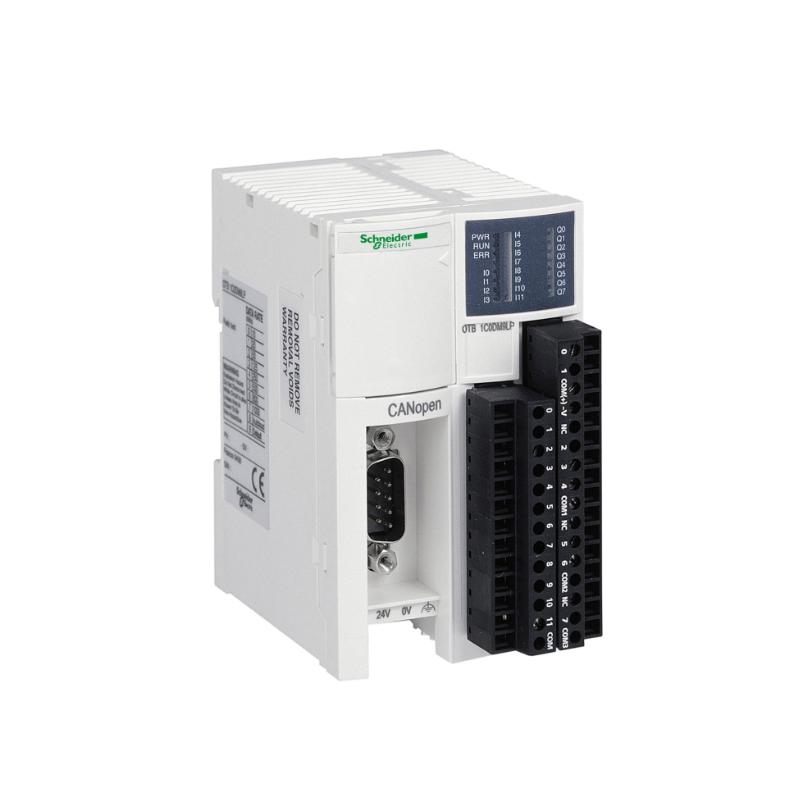
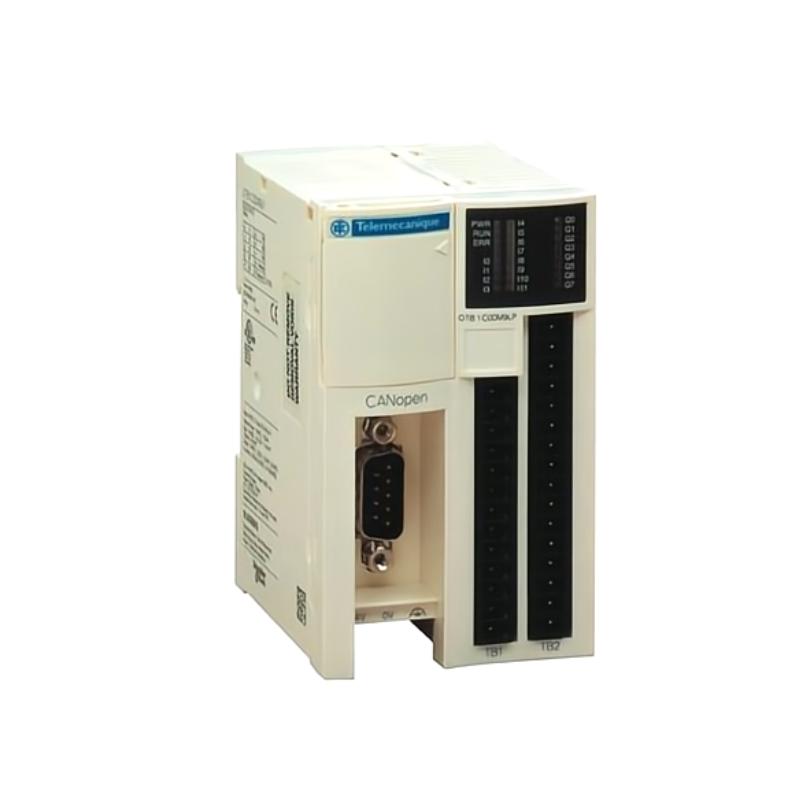
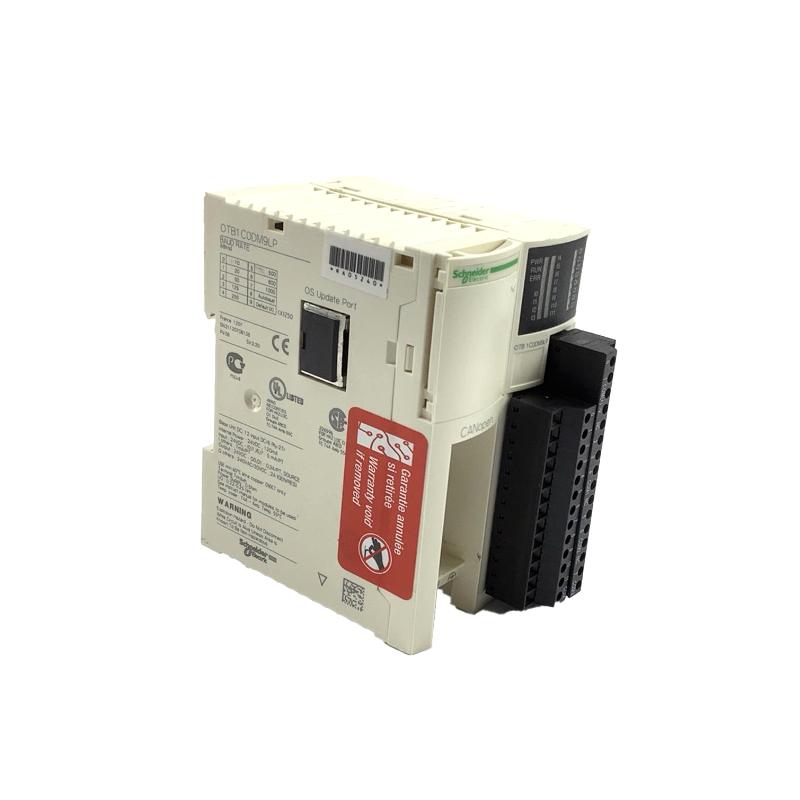
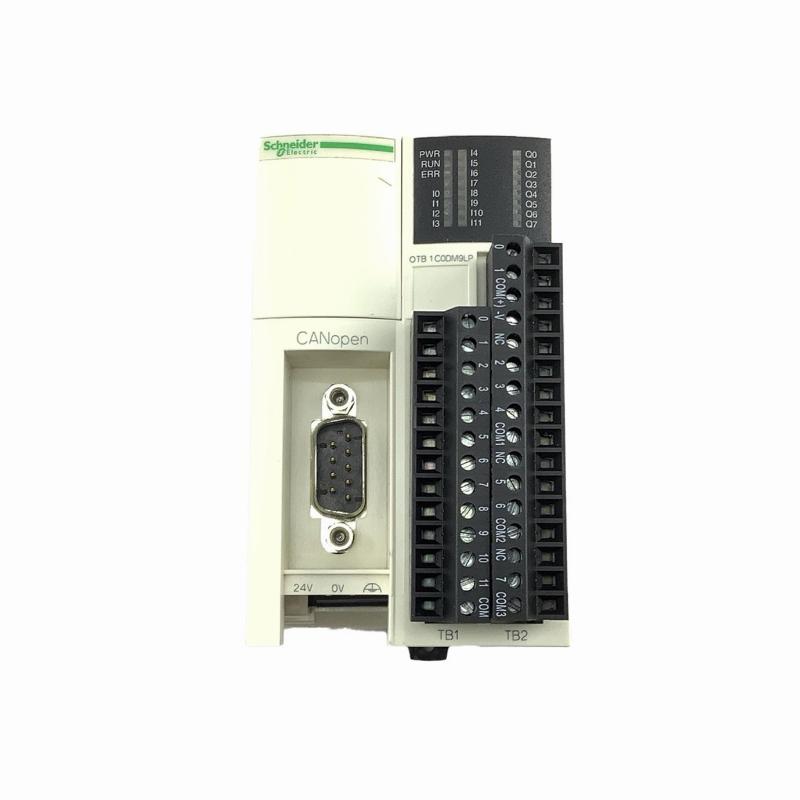
The Schneider Electric OTB1C0DM9LP I/O Distributed Module is part of the Modicon Advantys OTB distributed I/O family, designed to provide efficient remote input and output connectivity for industrial automation systems. This module integrates digital inputs and outputs with a network interface, allowing sensors, actuators, and field devices to communicate directly with PLC controllers through an industrial fieldbus.
Built for flexibility and simplified installation, the module combines I/O functionality and network communication within a single compact unit. Its design reduces wiring complexity and allows machine builders to place I/O modules closer to field devices, improving system efficiency and installation speed.
The OTB1C0DM9LP is particularly suitable for machine automation, packaging systems, and distributed control architectures where remote I/O solutions are essential for scalable and cost-effective automation.
Technical Specifications
| Parameter | Specification |
|---|
| Manufacturer | Schneider Electric |
| Model | OTB1C0DM9LP |
| Module Type | I/O Distributed Module |
| Product Series | Modicon Advantys OTB |
| Communication Protocol | CANopen Fieldbus |
| Transmission Speed | 10 kbit/s – 1 Mbit/s |
| Maximum Bus Length | Up to 1000 m |
| Discrete Inputs | 12 Digital Inputs (24 V DC) |
| Discrete Outputs | 8 Outputs (6 Relay + 2 PNP Solid-State) |
| Input Voltage | 24 V DC |
| Output Voltage | 24 V DC (Solid-State), up to 240 V AC / 30 V DC (Relay) |
| Power Supply | 24 V DC |
| Protection Rating | IP20 |
| Indicator LEDs | Channel Status, Power, Run, Error |
| Expansion Capability | Supports up to 7 TM2 I/O expansion modules |
| Mounting Method | DIN Rail |
| Operating Temperature | 0°C to 55°C |
Industrial Applications
Machine Automation
The OTB1C0DM9LP enables machine builders to connect sensors and actuators directly to distributed I/O modules located close to the equipment, reducing wiring complexity and improving system response time.
Packaging and Material Handling
Automated conveyors, packaging machines, and sorting systems benefit from distributed I/O architecture, enabling flexible placement of input/output points along the production line.
Manufacturing Lines
In assembly plants, the module allows centralized PLC controllers to communicate with remote devices through CANopen networks, ensuring reliable control and monitoring.
OEM Equipment Integration
Original equipment manufacturers use the module to build compact and modular control systems for specialized machines where space efficiency and easy installation are essential.
Key Advantages
Integrated I/O and Communication
Combines digital inputs, outputs, and network connectivity within one compact module, simplifying automation system architecture.
Reduced Wiring Requirements
Distributed I/O placement allows sensors and actuators to connect locally, minimizing long wiring runs and installation costs.
Flexible Expansion Capability
Supports additional TM2 expansion modules, enabling system growth without redesigning the control architecture.
Industrial Communication via CANopen
Provides stable and efficient communication with PLC controllers and distributed automation devices.
Compact DIN-Rail Installation
Designed for quick mounting in control cabinets, allowing easy maintenance and module replacement.
Technical FAQs
1. What is the main purpose of the OTB1C0DM9LP module?
It serves as a distributed I/O interface that connects field devices to PLC controllers through a CANopen network.
2. How many input and output channels are available?
The module includes 12 digital inputs and 8 outputs.
3. What types of outputs are supported?
It provides six relay outputs and two PNP solid-state outputs.
4. What communication protocol does the module use?
It communicates through the CANopen fieldbus network.
5. What voltage does the module operate on?
It requires a 24 V DC power supply.
6. Can the module be expanded with additional I/O modules?
Yes, up to seven TM2 expansion modules can be connected.
7. What is the maximum communication distance?
The CANopen network can reach distances up to approximately 1000 meters depending on transmission speed.
8. What installation method is supported?
The module is designed for standard DIN-rail mounting.
9. What diagnostic indicators are available?
LED indicators display channel status, power status, run status, and error conditions.
10. Is the module still used in modern systems?
While widely deployed in existing systems, it has been replaced in newer installations by updated distributed I/O platforms.
 A DCS Q Co., Ltd. - PLC and DCS Industrial Control Equipment Wholesale