Monitoring Module Overview
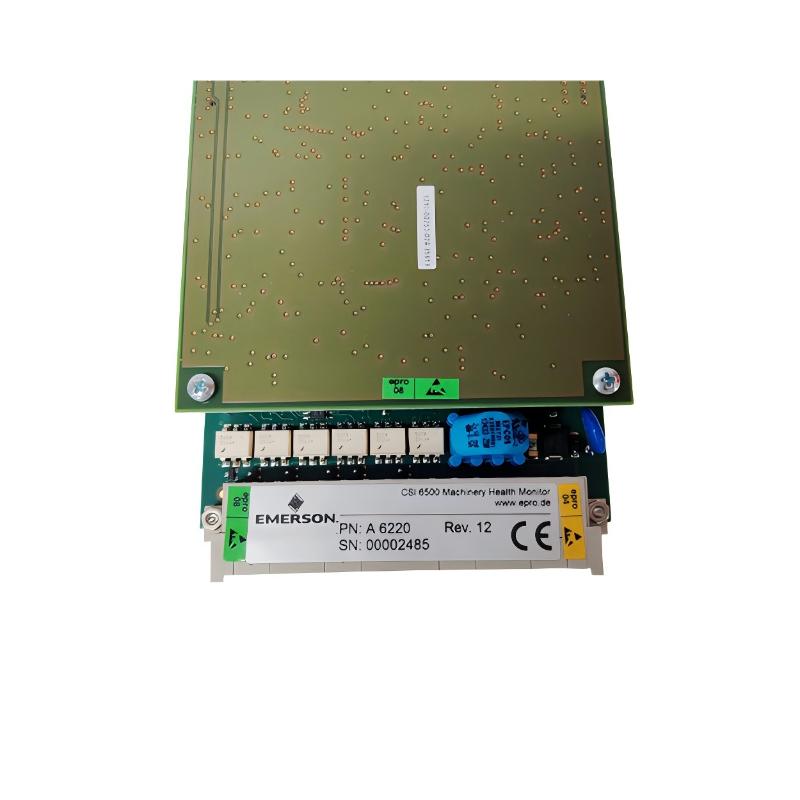
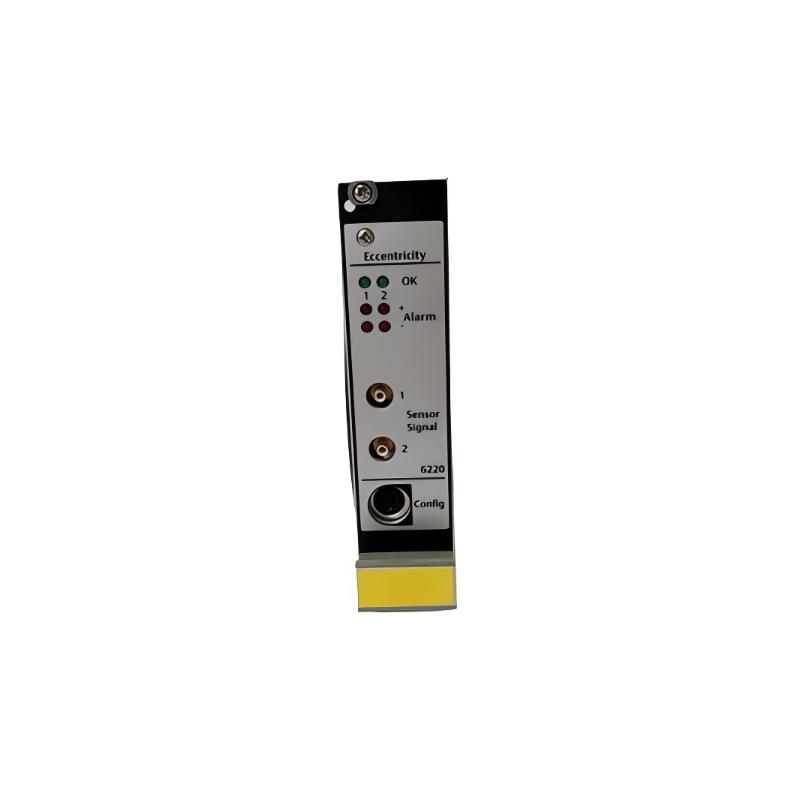
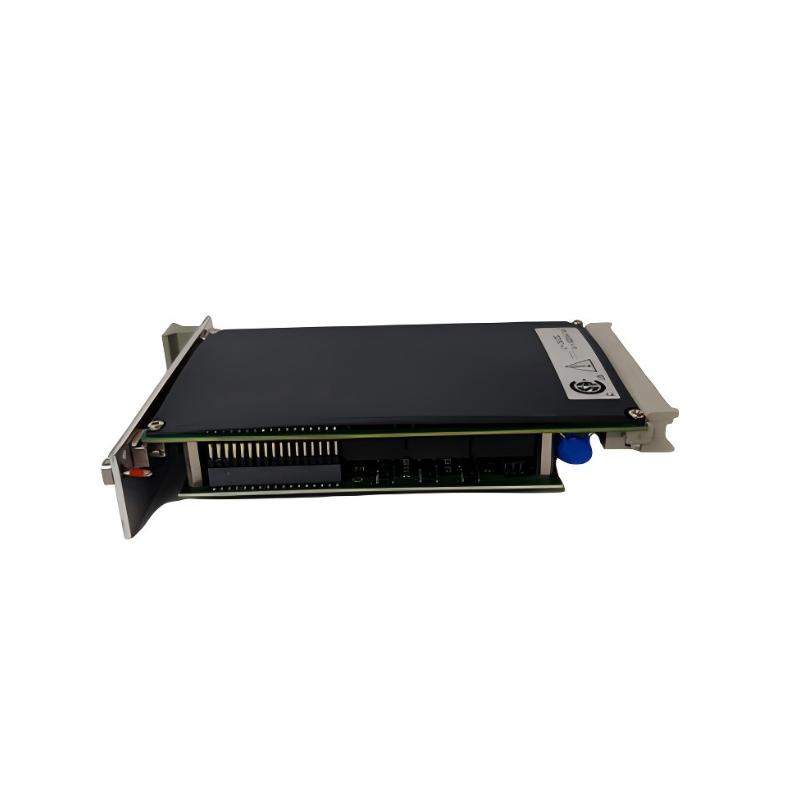
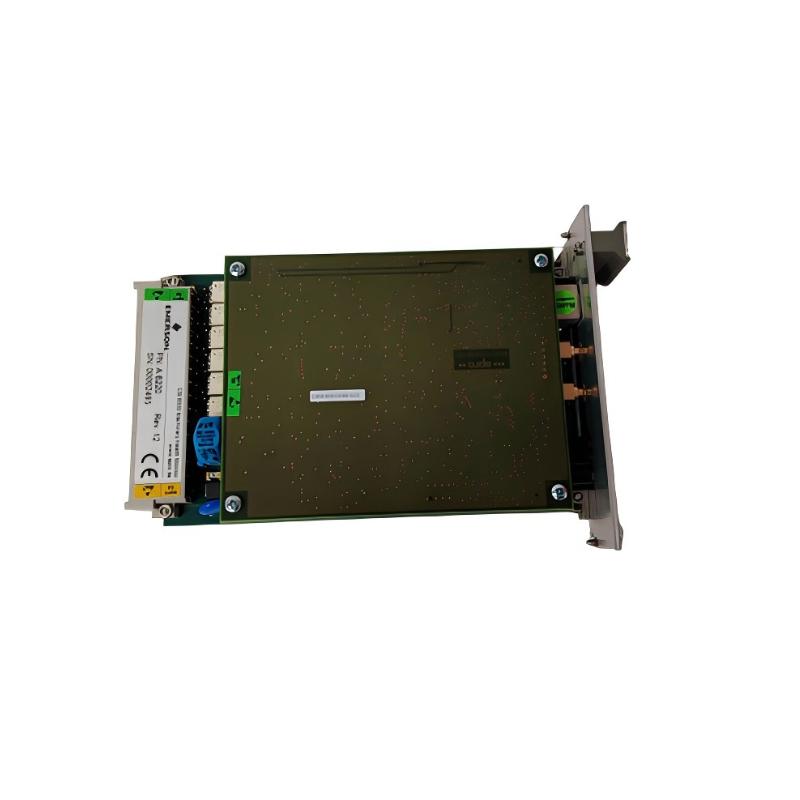
The Emerson A6220 Mechanical Health Monitor is part of an industrial machinery monitoring system designed to track the operating condition of critical equipment. In industrial facilities where machinery reliability directly impacts production and safety, continuous condition monitoring is an essential component of maintenance strategy.
The module receives signals from sensors installed on machinery and processes the data to evaluate equipment health. Operators can use this information to identify developing mechanical issues, monitor vibration trends, and implement corrective maintenance before failures occur.
By supporting real-time equipment diagnostics, the A6220 contributes to improved operational reliability and more effective predictive maintenance programs.
Technical Specifications
| Parameter | Specification |
|---|
| Product Type | Mechanical Health Monitor |
| Manufacturer | Emerson |
| Model Number | A6220 |
| Monitoring Function | Machinery Condition Monitoring |
| Typical Applications | Rotating Equipment Monitoring |
| Installation | Monitoring Rack or Control Cabinet |
| Operating Environment | Industrial Machinery Monitoring Systems |
| Dimensions | 160 mm × 128.4 mm × 30 mm |
| Weight | 0.32 kg (0.71 lb) |
Operational Context in Machinery Protection Systems
The Emerson A6220 Mechanical Health Monitor is designed to supervise the condition of industrial machinery by monitoring vibration and mechanical behavior. In facilities where rotating equipment operates continuously, monitoring systems provide early warnings of abnormal conditions that could lead to equipment failure.
This monitoring module is typically deployed in:
-
Turbine monitoring systems in power generation facilities
-
Compressor supervision in oil and gas processing plants
-
Industrial pump monitoring in water treatment infrastructure
-
Continuous manufacturing operations with rotating machinery
-
Process plants requiring predictive maintenance strategies
By analyzing mechanical signals from connected sensors, the module helps operators identify developing faults and maintain equipment reliability.
Operational Advantages for Equipment Monitoring
Continuous Machine Condition Tracking
The module provides ongoing monitoring of mechanical vibration and machine performance.
Early Detection of Mechanical Anomalies
Changes in vibration characteristics can reveal issues such as imbalance or misalignment.
Supports Predictive Maintenance Programs
Monitoring data helps maintenance teams schedule repairs based on actual equipment condition.
Integration with Industrial Monitoring Platforms
The module can connect with machinery protection systems and plant monitoring infrastructure.
Improved Equipment Reliability
Continuous monitoring helps reduce unexpected mechanical failures and operational downtime.
Technical FAQs
1. What is the main purpose of the A6220 mechanical health monitor?
It monitors machinery condition by analyzing vibration and mechanical signals from equipment.
2. What types of equipment are typically monitored with this module?
Rotating machinery such as turbines, compressors, pumps, and large industrial motors.
3. What type of sensors work with mechanical health monitors?
They commonly operate with vibration sensors, displacement probes, or accelerometers.
4. How does vibration monitoring indicate equipment problems?
Abnormal vibration patterns often signal mechanical faults like imbalance or bearing wear.
5. Why is continuous condition monitoring important in industrial plants?
It allows operators to detect problems early and prevent unplanned shutdowns.
6. Can this monitor integrate with plant automation systems?
Yes, monitoring outputs can be connected to DCS, PLC, or machinery protection systems.
7. What is the difference between condition monitoring and protection systems?
Condition monitoring provides diagnostic information, while protection systems initiate shutdowns when limits are exceeded.
8. Where is the monitor typically installed?
It is usually installed in control cabinets or dedicated machinery monitoring racks.
9. What industries rely heavily on mechanical health monitoring?
Energy production, oil and gas processing, chemical manufacturing, and heavy industrial operations.
10. What routine maintenance is recommended for monitoring modules?
Periodic sensor verification, inspection of wiring connections, and calibration checks.
 A DCS Q Co., Ltd. - PLC and DCS Industrial Control Equipment Wholesale