Product Introduction
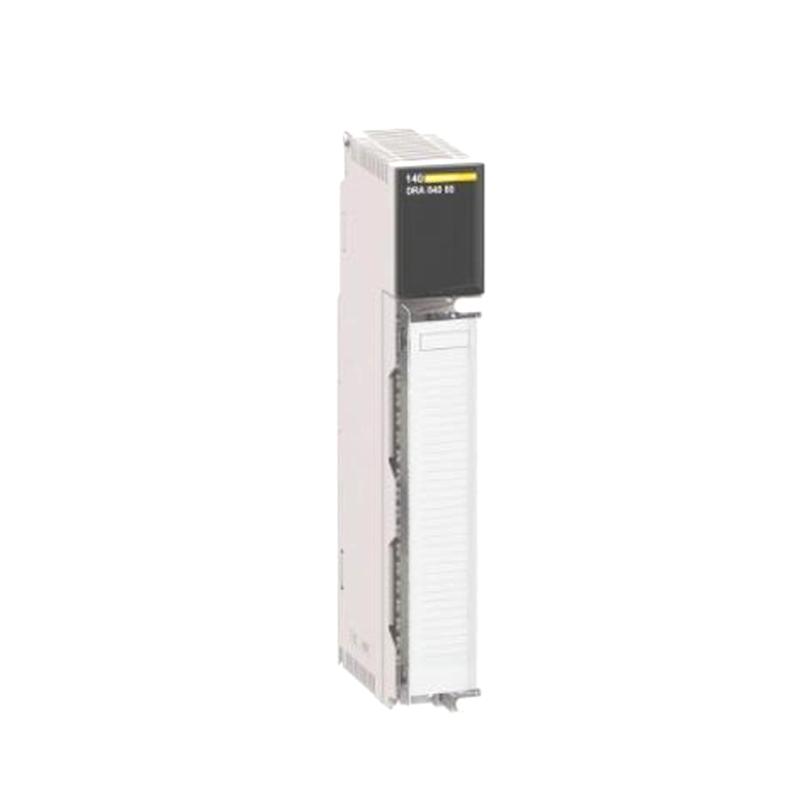
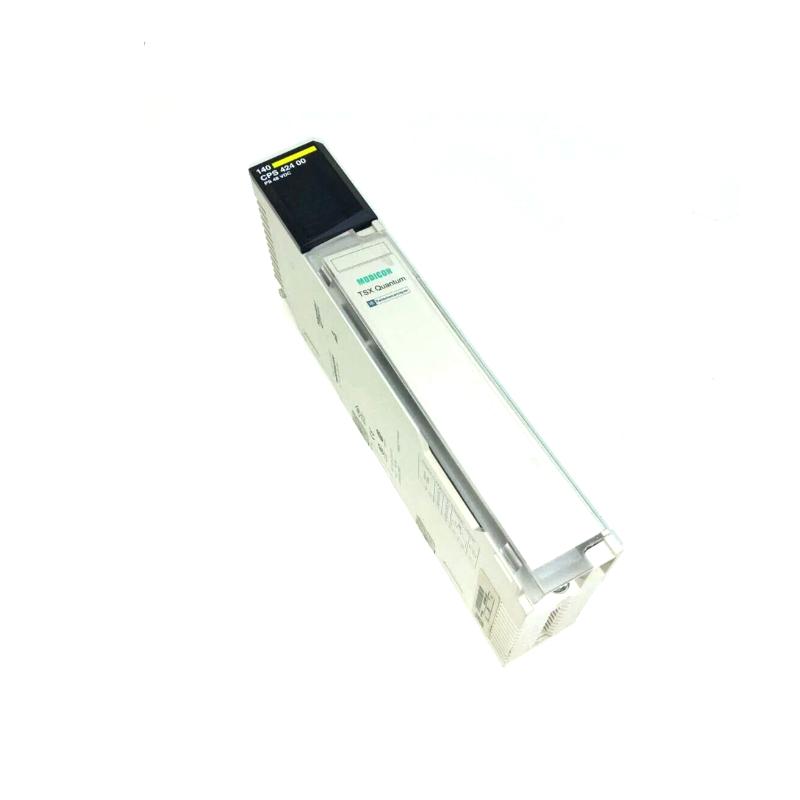
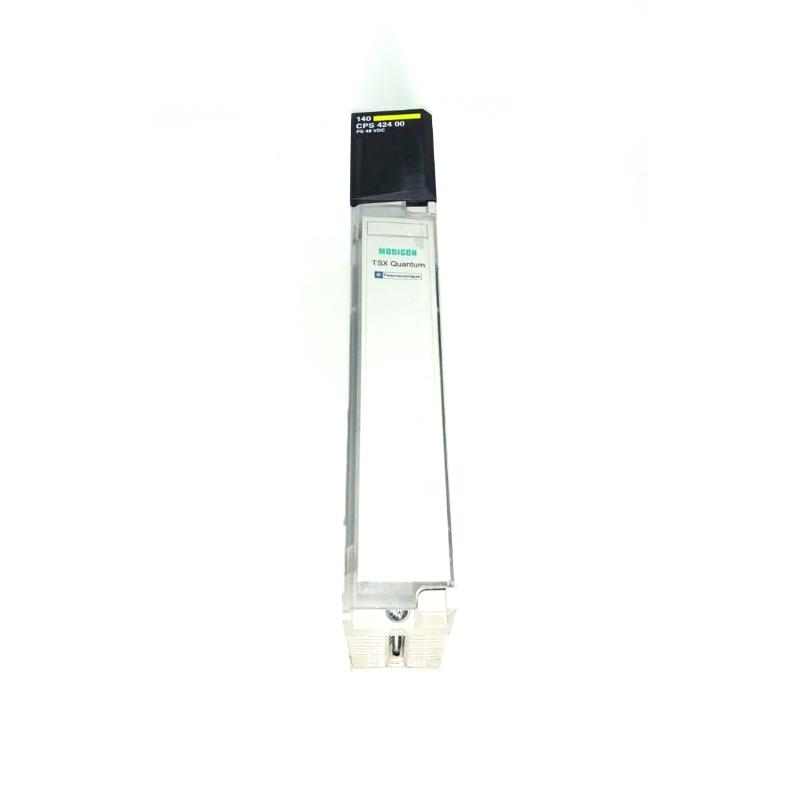
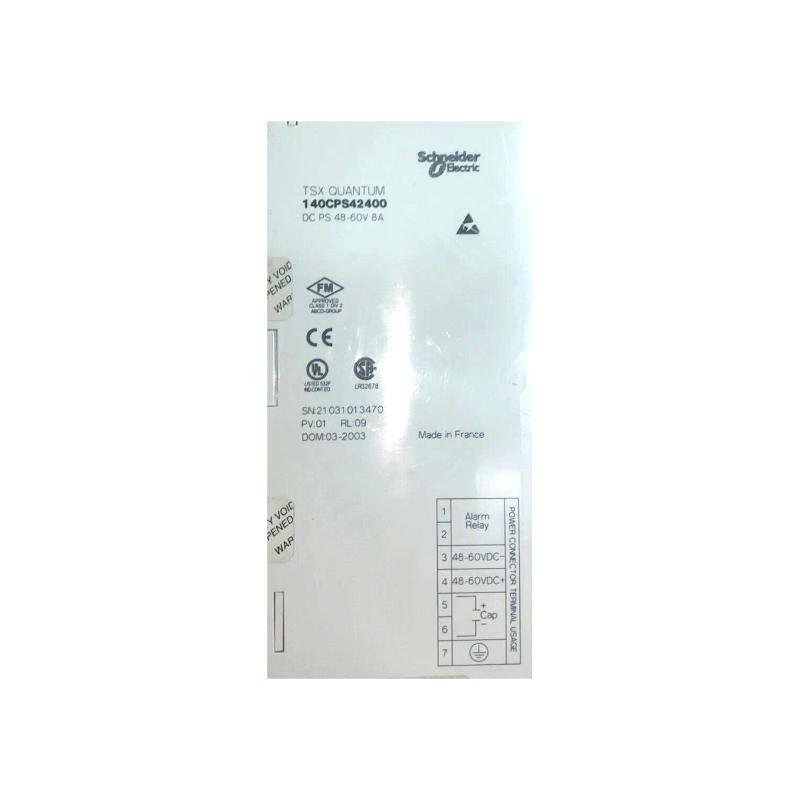
The Schneider 140CPS42400 Power Module is an essential component in modular PLC systems, responsible for supplying electrical power to controllers and I/O modules within the rack structure. In industrial automation systems, the stability of the power supply directly affects system reliability and operational continuity.
Installed within the PLC chassis, the module distributes power through the internal backplane to connected automation components. This design reduces external wiring and ensures that all modules receive consistent electrical input.
Because of its durable construction and dependable power delivery capability, the 140CPS42400 module is commonly used in industrial facilities where automation systems must maintain continuous and reliable performance.
Technical Specifications
| Parameter | Specification |
|---|
| Product Type | Power Module |
| Manufacturer | Schneider Electric |
| Model Number | 140CPS42400 |
| Function | Power Supply for PLC Rack Systems |
| Installation | PLC Rack / Control Cabinet |
| Typical Applications | Industrial Automation and Process Control |
| Operating Environment | Industrial Automation Infrastructure |
| Dimensions | 103.9 mm × 40.3 mm × 250 mm |
| Weight | 0.65 kg (1.43 lb) |
Industrial Deployment in PLC Automation Systems
The Schneider 140CPS42400 Power Module is designed to provide regulated electrical power to programmable logic controller (PLC) racks and their associated modules. In modular automation architectures, reliable power distribution is essential to ensure that controllers, communication modules, and I/O interfaces operate without interruption.
This power module is typically installed in:
-
PLC-based manufacturing automation systems
-
Process control infrastructures in chemical and petrochemical plants
-
Power generation control cabinets supervising turbine and auxiliary equipment
-
Oil and gas production facilities using modular automation platforms
-
Water treatment plants managing distributed control operations
By supplying stable power through the rack backplane, the module supports the reliable operation of the entire control system.
Key Advantages in Power Management
Consistent Power Regulation
The module delivers stable voltage to PLC processors and connected I/O modules, supporting uninterrupted control system operation.
Backplane Power Distribution
Electrical power is transmitted through the PLC rack backplane, simplifying wiring and reducing installation complexity.
Designed for Continuous Operation
The module is engineered for industrial environments where control systems run around the clock.
Efficient Rack Integration
Its form factor allows seamless installation into modular PLC chassis used in industrial automation platforms.
Improved System Reliability
Reliable power supply minimizes the risk of controller resets or system faults caused by unstable electrical input.
Technical FAQs
1. What is the primary role of the 140CPS42400 power module?
It provides regulated electrical power to PLC racks and the modules installed within them.
2. What components rely on this module for operation?
PLC CPUs, I/O modules, communication modules, and other rack-mounted devices.
3. How does the module distribute power within the system?
It supplies power through the PLC rack backplane to all installed modules.
4. Why is a dedicated PLC power module necessary?
Dedicated power modules ensure proper voltage regulation and protection for sensitive control electronics.
5. Where is the module installed in a PLC system?
It is mounted in a dedicated slot within the PLC rack or chassis.
6. Can the module operate in industrial environments with continuous workloads?
Yes, it is designed for 24/7 industrial automation operations.
7. Does the module help protect the system from electrical instability?
Stable power delivery helps prevent system errors caused by fluctuations in electrical supply.
8. Can multiple power modules be installed in large systems?
Some system configurations allow multiple modules for redundancy or increased power capacity.
9. What industries typically use this power module?
Manufacturing automation, energy production, process industries, and infrastructure control systems.
10. What routine checks are recommended for the module?
Inspection of electrical connections, ventilation, and system status indicators helps maintain reliable operation.
 A DCS Q Co., Ltd. - PLC and DCS Industrial Control Equipment Wholesale