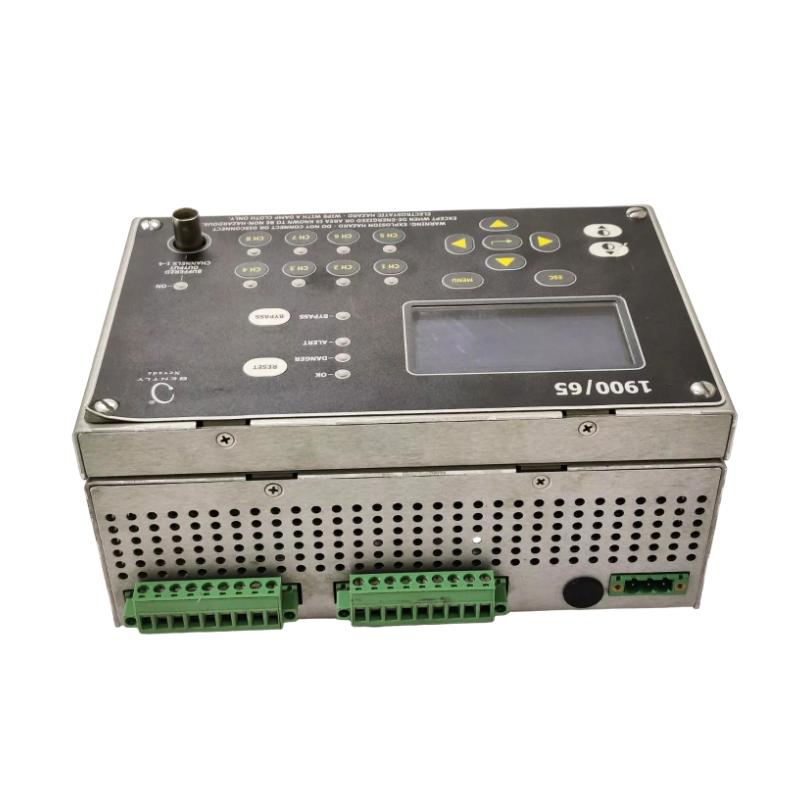
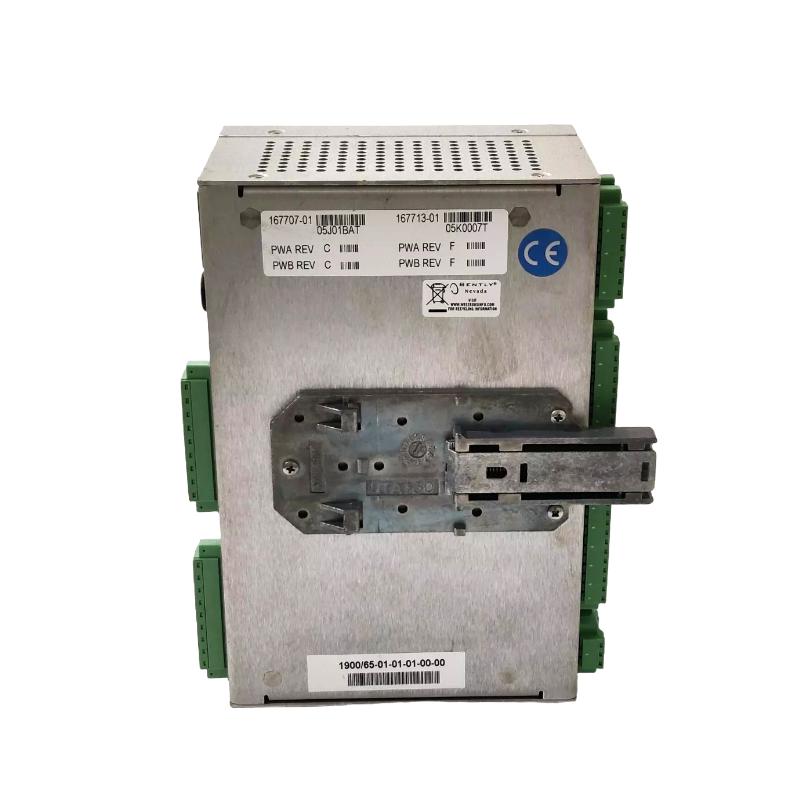
Product Introduction
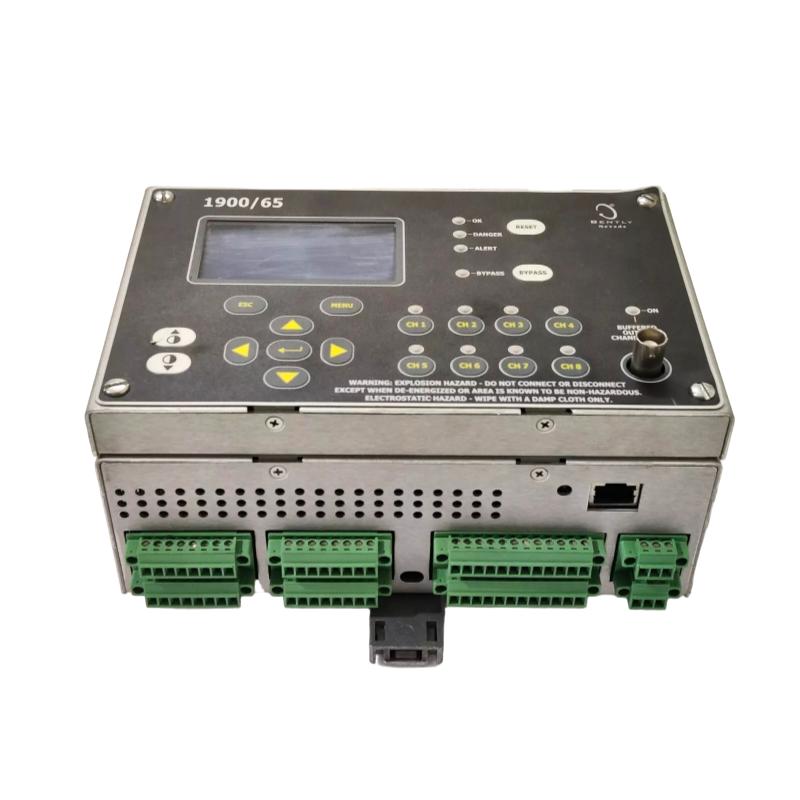
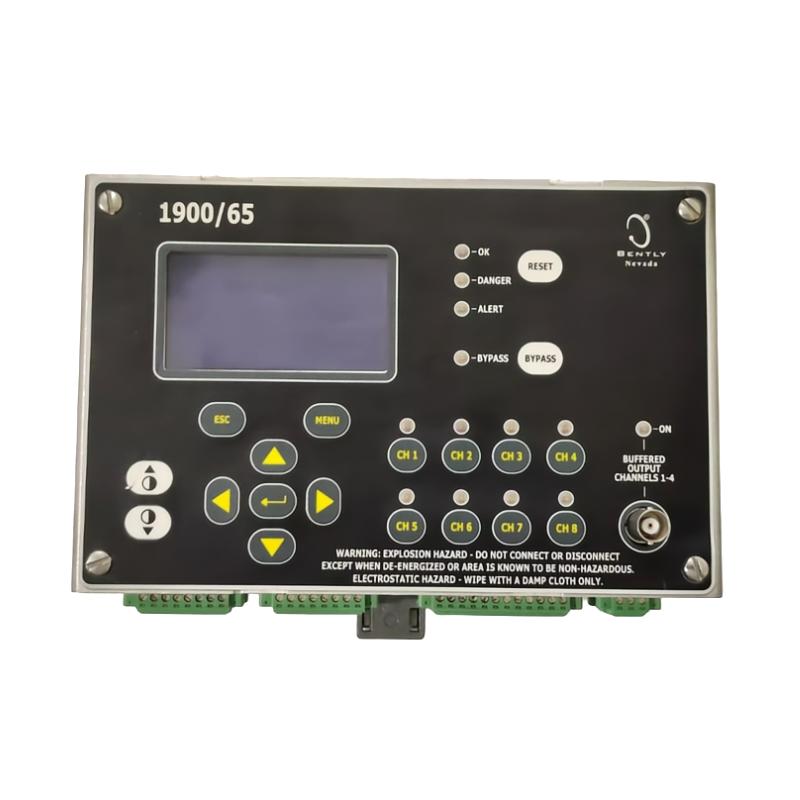
The Bently Nevada 1900/65-00-01-01-01-01 General Equipment Monitor is designed to provide reliable condition monitoring for a wide range of industrial machines. In modern industrial plants, machinery such as pumps, compressors, and motors must operate continuously under demanding conditions, making equipment health monitoring essential.
This monitoring device collects signals from condition sensors installed on machinery and processes them to provide real-time insight into equipment performance. When abnormal operating conditions are detected, alarms can alert operators so that corrective actions can be taken before damage occurs.
Because of its compact design and versatile monitoring capabilities, the unit is frequently deployed in facilities implementing predictive maintenance and equipment reliability programs.
Technical Specifications
| Parameter | Specification |
|---|
| Product Type | General Equipment Monitor |
| Manufacturer | Bently Nevada |
| Model Number | 1900/65-00-01-01-01-01 |
| Monitoring Function | Industrial Equipment Condition Monitoring |
| Compatible Sensors | Vibration, Temperature, and Other Machine Condition Sensors |
| Installation | Control Panel or Machinery Monitoring Cabinet |
| Typical Applications | Pumps, Motors, Compressors, and Industrial Equipment |
| Dimensions | 196.9 mm × 149.4 mm × 74.4 mm |
| Weight | 0.77 kg (1.70 lb) |
Operational Environments and Typical Use
The Bently Nevada 1900/65-00-01-01-01-01 General Equipment Monitor is a compact industrial monitoring device designed to supervise the condition of mechanical equipment across a wide variety of industrial sectors. In facilities where rotating machinery and process equipment operate continuously, equipment monitoring plays a key role in maintaining reliability and minimizing unexpected downtime.
Typical implementation environments include:
-
Monitoring pump stations in water and wastewater treatment plants
-
Supervising compressors and auxiliary equipment in oil and gas facilities
-
Industrial manufacturing lines with multiple motors and drive systems
-
Power generation plants monitoring support machinery
-
Process industries implementing condition-based maintenance programs
By collecting real-time operational data from connected sensors, the monitor helps operators detect developing mechanical issues before they evolve into major equipment failures.
Key Advantages for Industrial Equipment Monitoring
Versatile Monitoring Capability
The monitor can supervise a broad range of industrial machines, making it suitable for facilities with diverse equipment types.
Enhanced Predictive Maintenance
Continuous monitoring allows maintenance teams to identify abnormal trends early and plan service activities proactively.
Compact Panel-Mount Design
Its small footprint makes the device easy to integrate into control panels or machinery monitoring cabinets.
Reliable Continuous Operation
Designed for industrial environments, the monitor supports long-term operation where machinery runs continuously.
Compatibility with Monitoring Architectures
The unit can operate as part of a larger machinery protection or plant monitoring system.
Technical FAQs
1. What is the main function of the 1900/65-00-01-01-01-01 monitor?
It continuously monitors equipment condition to detect abnormal operating behavior and potential mechanical faults.
2. What types of equipment can this monitor supervise?
It is commonly used with pumps, motors, compressors, fans, and other rotating or mechanical equipment.
3. How does this monitor assist predictive maintenance programs?
By collecting operational data, it helps identify early indicators of mechanical deterioration.
4. What types of sensors can be connected to the monitor?
Sensors measuring vibration, temperature, or other machine condition parameters are typically used.
5. Can the device generate alarms for abnormal conditions?
Yes, configurable alarm thresholds allow operators to be notified when monitored values exceed safe limits.
6. Is the monitor designed for continuous industrial operation?
Yes, it is engineered to operate reliably in environments where equipment runs around the clock.
7. How is the monitor installed in industrial systems?
It is usually mounted in machinery monitoring cabinets or control panels within the facility.
8. Can this monitor integrate with plant-wide monitoring platforms?
Yes, it can be incorporated into broader equipment condition monitoring infrastructures.
9. What mechanical problems can this monitor help identify?
Common detectable issues include imbalance, overheating, vibration anomalies, and component wear.
10. What routine checks should be performed for reliable operation?
Periodic inspection of sensor wiring, alarm settings, and calibration verification helps maintain monitoring accuracy.
 A DCS Q Co., Ltd. - PLC and DCS Industrial Control Equipment Wholesale