Product Overview
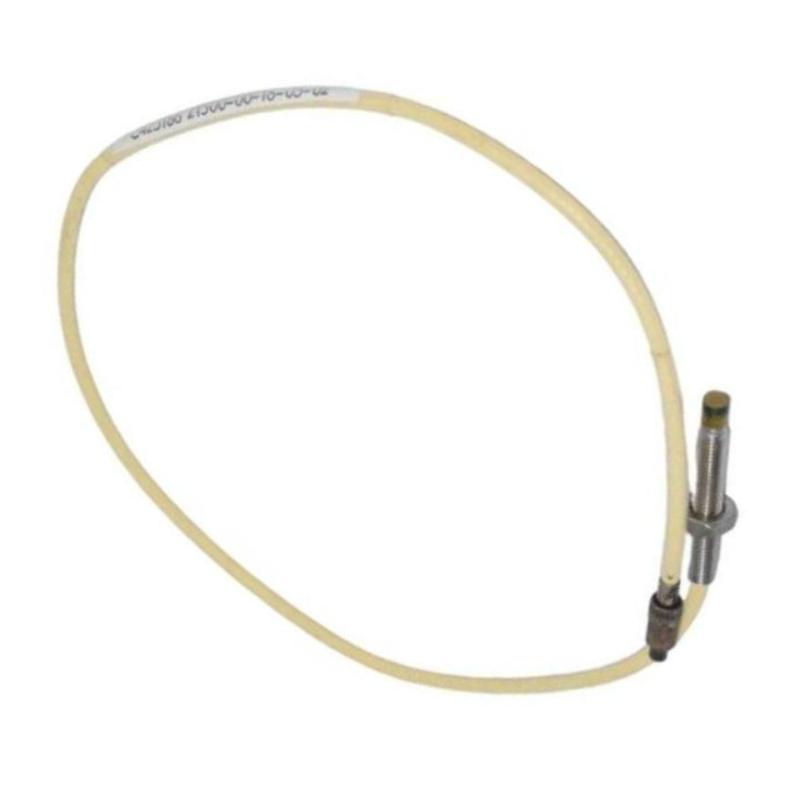
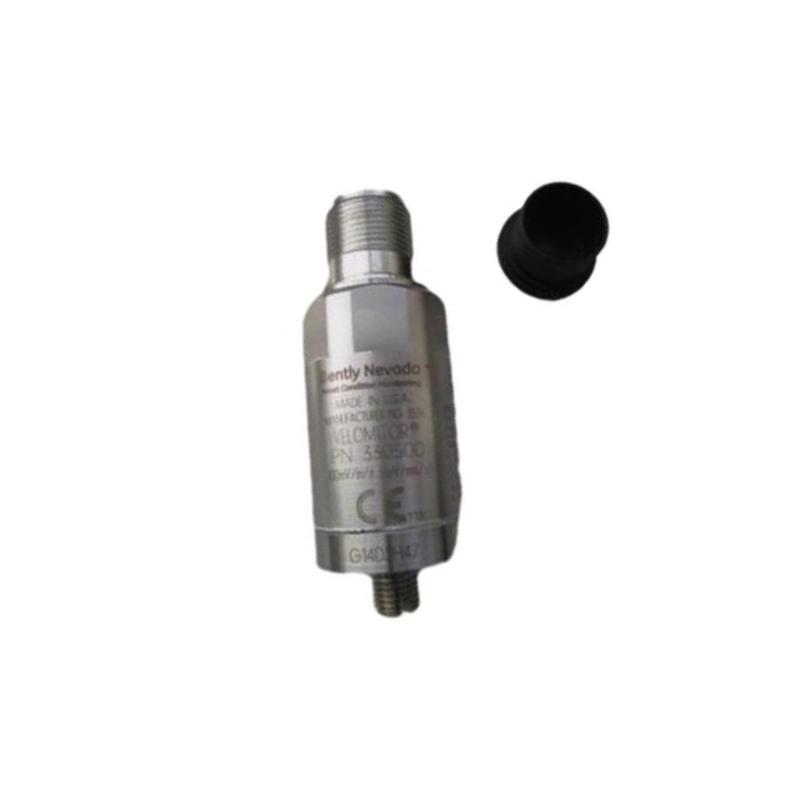
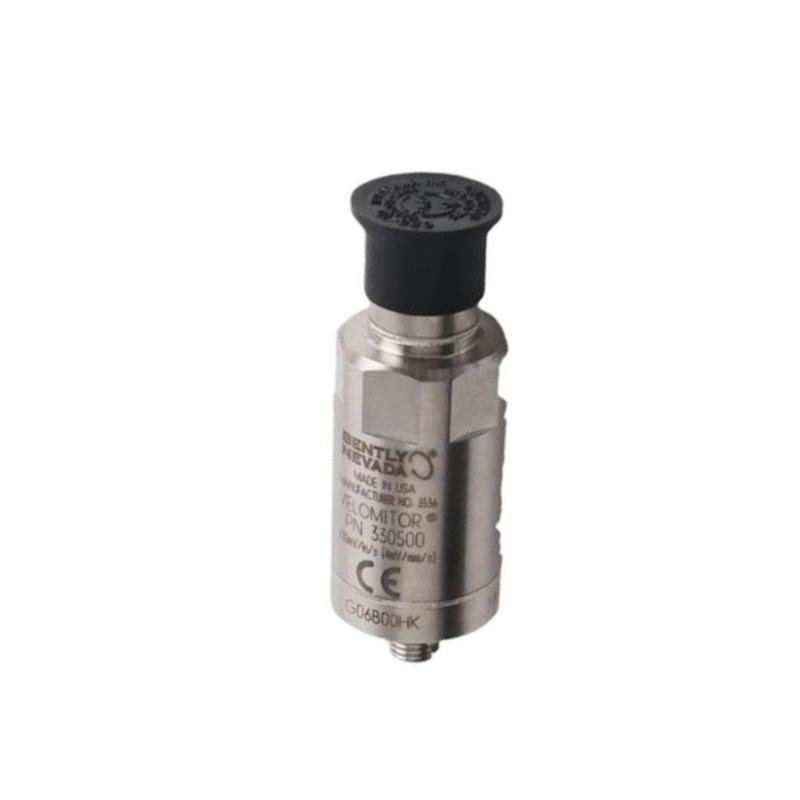
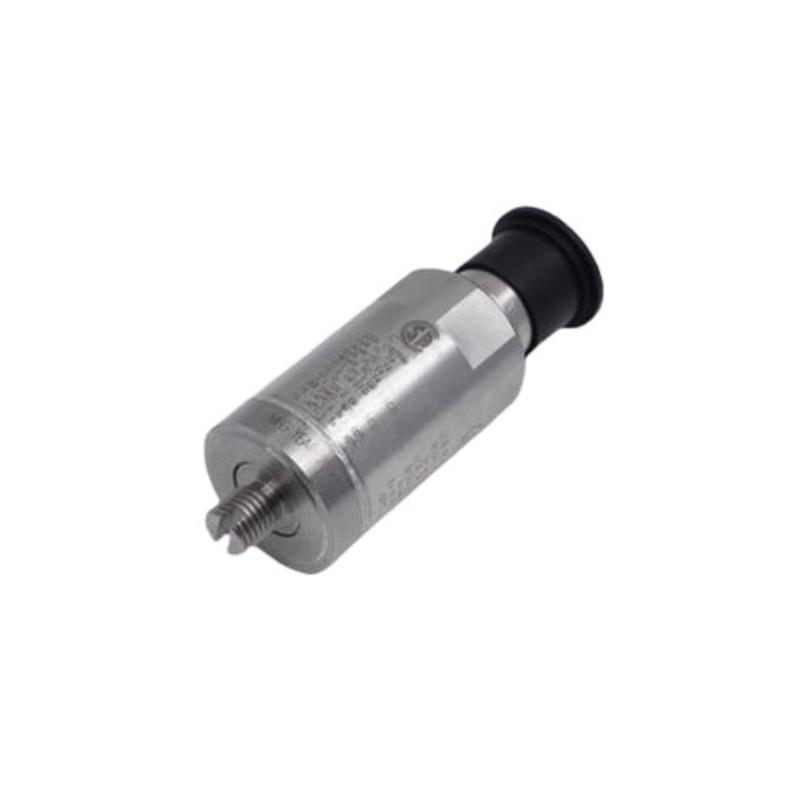
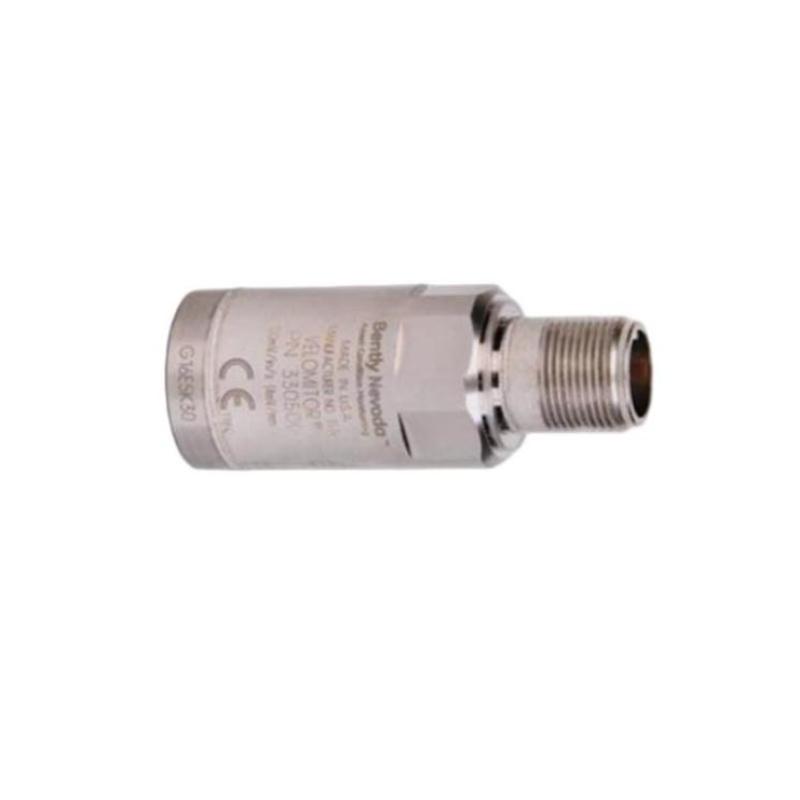
The Bently Nevada 330500‑00‑01 Velomitor Piezoelectric Velocity Sensor is a high‑quality industrial vibration sensor engineered for reliable velocity measurement in machinery condition monitoring and protection systems. Using proven piezoelectric sensing technology, this Velomitor sensor converts mechanical vibration into proportional electrical signals that provide insight into machine health and performance.
Designed for continuous operation in demanding industrial environments, the 330500‑00‑01 delivers stable velocity readings that help detect imbalance, misalignment, bearing defects, and other dynamic faults. Its robust construction and broad frequency response make it suitable for use on rotating equipment in power plants, petrochemical facilities, refineries, and heavy manufacturing operations.
Technical Specifications
| Specification | Details |
|---|
| Manufacturer | Bently Nevada |
| Model | 330500‑00‑01 |
| Product Type | Velomitor Piezoelectric Velocity Sensor |
| Sensing Technology | Piezoelectric velocity transduction |
| Output Type | AC voltage proportional to vibration velocity |
| Frequency Range | Typically 2 Hz to 1 kHz |
| Sensitivity | Standard velocity sensitivity (industry nominal) |
| Connector | Industrial coaxial or multi‑pin connector |
| Housing Material | Stainless steel or rugged industrial alloy |
| Mounting | Stud or surface mount (application dependent) |
| Operating Temperature | Industrial temperature range |
| Protection Class | Industrial rating |
Industrial Applications
The 330500‑00‑01 Velomitor sensor is widely used in vibration monitoring applications that require velocity measurement to assess machinery condition and stability.
Typical application areas include:
-
Steam and gas turbine vibration monitoring
-
Generator and alternator condition diagnostics
-
Pump and compressor vibration assessment
-
Balance and alignment evaluation
-
Predictive maintenance programs
-
Industrial process machinery monitoring
By providing reliable velocity data, this sensor plays a key role in protecting equipment and supporting proactive maintenance strategies.
Key Advantages
Piezoelectric Velocity Sensing
Piezoelectric elements generate an AC output signal proportional to the velocity of vibration, offering a direct measure of dynamic motion.
Rugged Industrial Design
Durable stainless steel housing and industrial‑rated internals ensure reliable performance in harsh plant environments with vibration, heat, and contaminants.
Wide Frequency Response
Designed to capture velocity information across typical machinery vibration ranges, supporting effective condition assessment.
Stable and Reliable Output
Consistent electrical output facilitates accurate input to vibration analyzers and condition monitoring modules.
Easy Mounting
Standard mounting configurations allow straightforward installation on machinery housings and bearing caps.
Technical FAQs
1. What does the 330500‑00‑01 sensor measure?
It measures vibration velocity, converting mechanical motion into an electrical signal.
2. What technology does this sensor use?
Piezoelectric elements provide proportional voltage output based on vibration velocity.
3. Where is this sensor typically installed?
Mounted directly on equipment housings, bearing caps, or machine frames near vibration sources.
4. What industries commonly use this sensor?
Power generation, petrochemical, oil & gas, manufacturing, and heavy industry.
5. Does this sensor require signal conditioning?
Yes, it typically interfaces with vibration monitors or signal conditioning modules.
6. What is the typical frequency range?
Approximately 2 Hz to 1 kHz, supporting machinery vibration analysis.
7. Is this sensor suitable for continuous operation?
Yes, it is engineered for 24/7 industrial vibration monitoring.
8. What type of output does it provide?
AC voltage output proportional to the measured vibration velocity.
9. Does the sensor require calibration?
Calibration may be performed during initial system commissioning.
10. What mounting options are available?
Standard stud or surface mount hardware is typically used for installation.
 A DCS Q Co., Ltd. - PLC and DCS Industrial Control Equipment Wholesale