Product Introduction
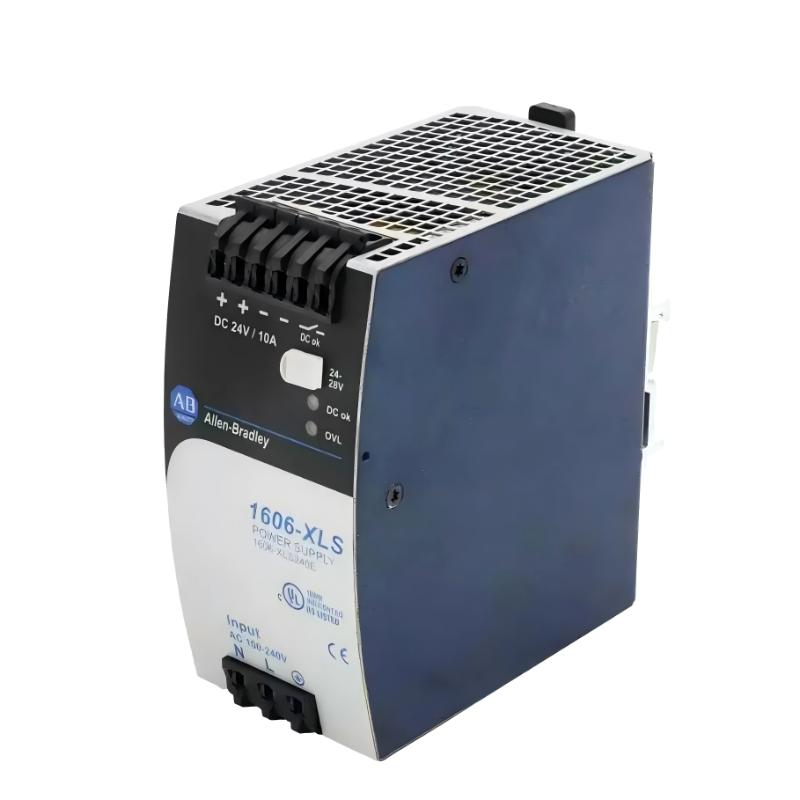
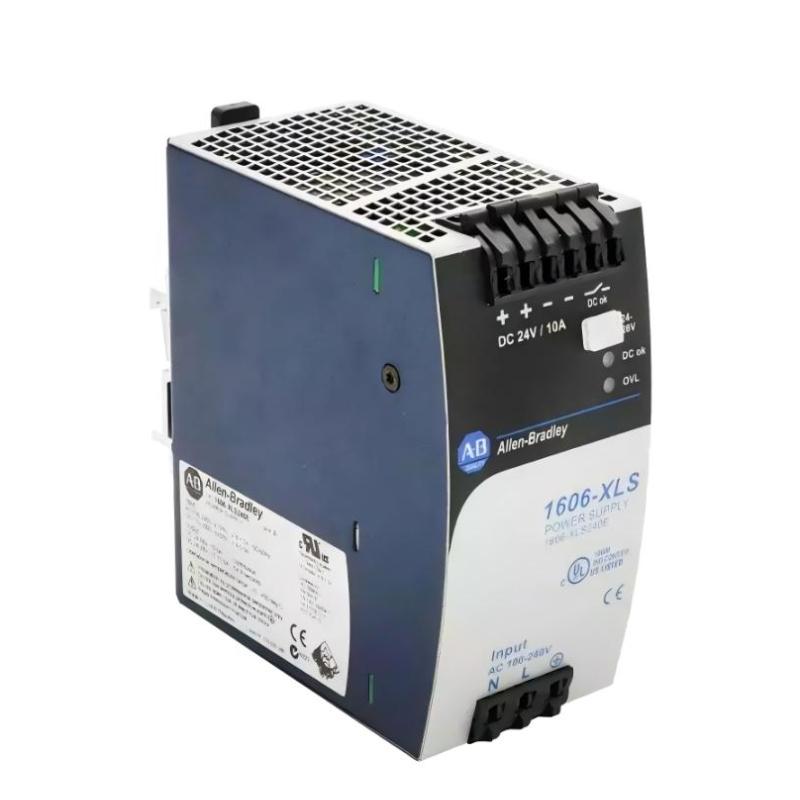
The Allen Bradley 1606-XLS240E Power Supply Module is part of the Bulletin 1606 series of industrial switched-mode power supplies designed for automation and control environments. In industrial facilities, automation systems rely on stable low-voltage DC power to maintain communication and control between controllers, sensors, and actuators.
This module performs the critical task of converting facility AC power into regulated DC voltage suitable for automation electronics. Its compact structure enables easy installation within control cabinets while maintaining efficient heat dissipation and reliable electrical performance.
Because of its dependable operation and compatibility with standard automation infrastructure, the 1606-XLS240E is widely used in manufacturing plants, industrial processing systems, and infrastructure control environments where continuous power reliability is essential.
Technical Specifications
| Parameter | Specification |
|---|
| Manufacturer | Allen Bradley |
| Model | 1606-XLS240E |
| Module Type | Power Supply Module |
| Application | Industrial automation and control systems |
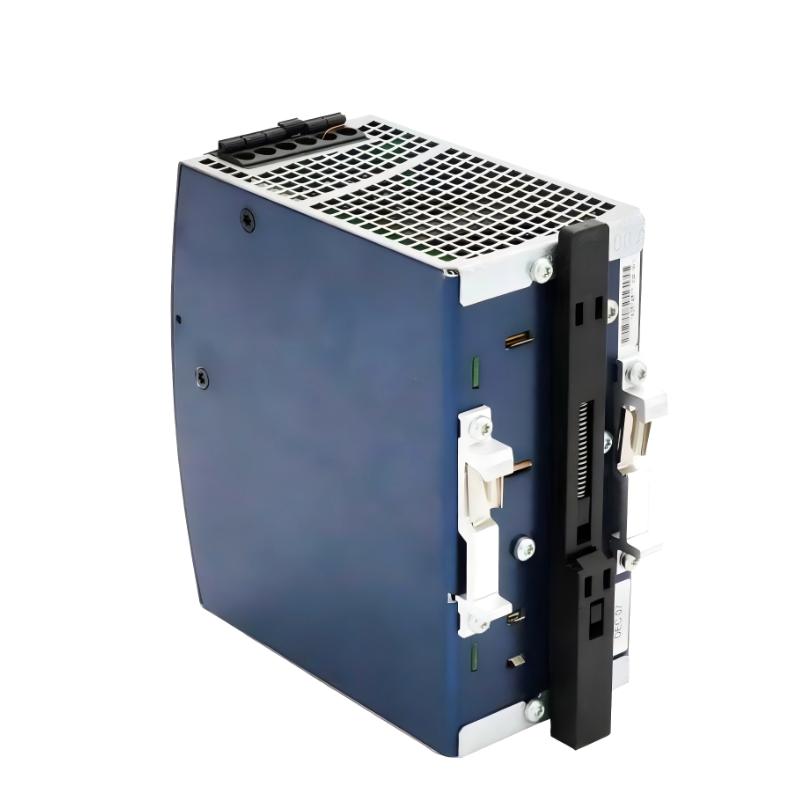
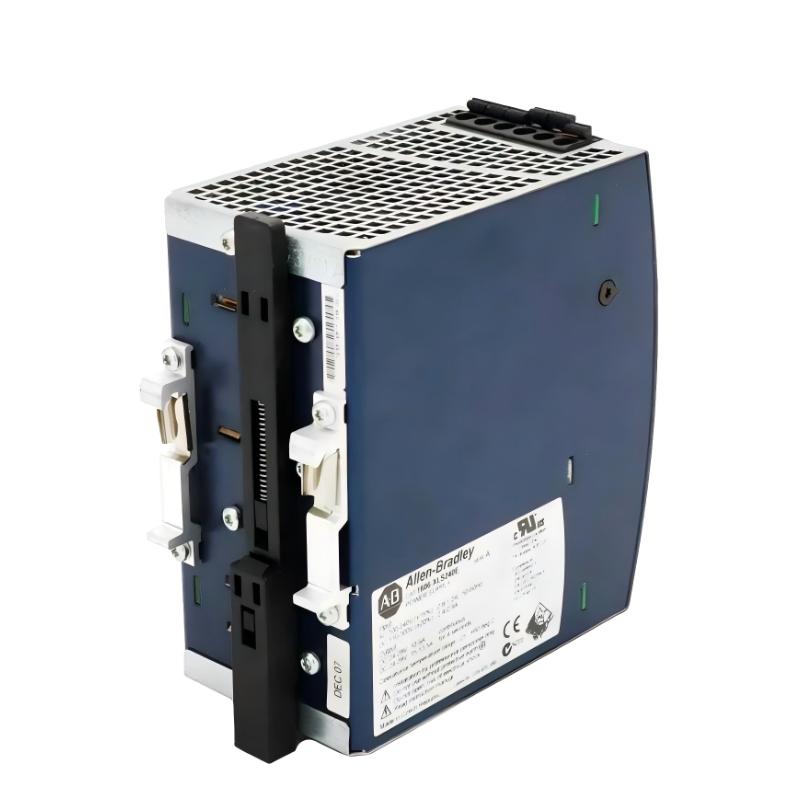
| Installation | DIN rail mounting in control cabinets |
| Input Power | AC power input |
| Output Type | Regulated DC output |
| Dimensions | 60 mm × 124 mm × 117 mm |
| Weight | 0.9 kg (1.98 lb) |
Automation System Power Applications
The Allen Bradley 1606-XLS240E Power Supply Module is designed to provide stable DC power for industrial control systems and automation equipment. As part of the Bulletin 1606 series of industrial power supplies, this module converts incoming AC voltage into regulated DC output required by PLC controllers, distributed I/O systems, industrial communication devices, and field instrumentation.
Reliable power delivery is a critical factor in industrial automation environments where continuous system availability is required. The 1606-XLS240E supports stable operation by providing consistent DC voltage for control system components installed within industrial cabinets and machine panels.
Typical industrial use cases include:
-
Factory automation lines, supplying power to PLC processors, sensors, and automation networks.
-
Packaging and processing systems, where control electronics require continuous and stable power.
-
Material handling installations, including conveyors and automated sorting systems.
-
Water and wastewater treatment facilities, powering monitoring and control devices in distributed systems.
-
OEM machine control panels, where compact power supplies are integrated into equipment designs.
By delivering regulated DC output, the module ensures reliable performance of automation infrastructure across a wide range of industrial applications.
Core Advantages
Stable Power Conversion
The module converts AC input power into regulated DC output suitable for sensitive automation electronics.
Compact Industrial Design
Its narrow housing allows installation in space-constrained control cabinets.
Efficient Energy Performance
The switched-mode design improves efficiency while reducing heat generation within automation panels.
Continuous Operational Reliability
Engineered for industrial environments, the module supports long-term, uninterrupted operation.
Flexible System Integration
Multiple power supply modules can be used within the same automation system to distribute electrical loads effectively.
Technical FAQs
1. What is the primary role of the 1606-XLS240E power supply?
It converts AC electrical input into regulated DC power for industrial automation equipment.
2. What devices are typically powered by this module?
PLCs, I/O modules, sensors, industrial communication interfaces, and human-machine interface panels.
3. How does the module support reliable automation system performance?
By maintaining stable DC voltage that prevents power fluctuations from affecting control electronics.
4. Can the module operate continuously in industrial environments?
Yes. It is designed for long-term use in automation control cabinets.
5. Is the module compatible with DIN rail installations?
Yes. It is designed for standard DIN rail mounting inside industrial control panels.
6. Can multiple power supply modules be installed in one cabinet?
Yes. Automation systems often deploy several units to distribute loads or support redundancy.
7. Does the module support automation networking equipment?
Yes. Industrial communication gateways and network switches can be powered by its DC output.
8. How does the module contribute to control system infrastructure?
It provides the electrical foundation required for PLC processors and associated automation hardware.
9. Is the module suitable for machine-level automation panels?
Yes. It is commonly integrated into OEM machinery control systems.
10. What is the typical function of such modules in distributed automation systems?
They provide centralized DC power distribution to multiple automation components within the system.
 A DCS Q Co., Ltd. - PLC and DCS Industrial Control Equipment Wholesale