Where This Monitor Is Typically Used
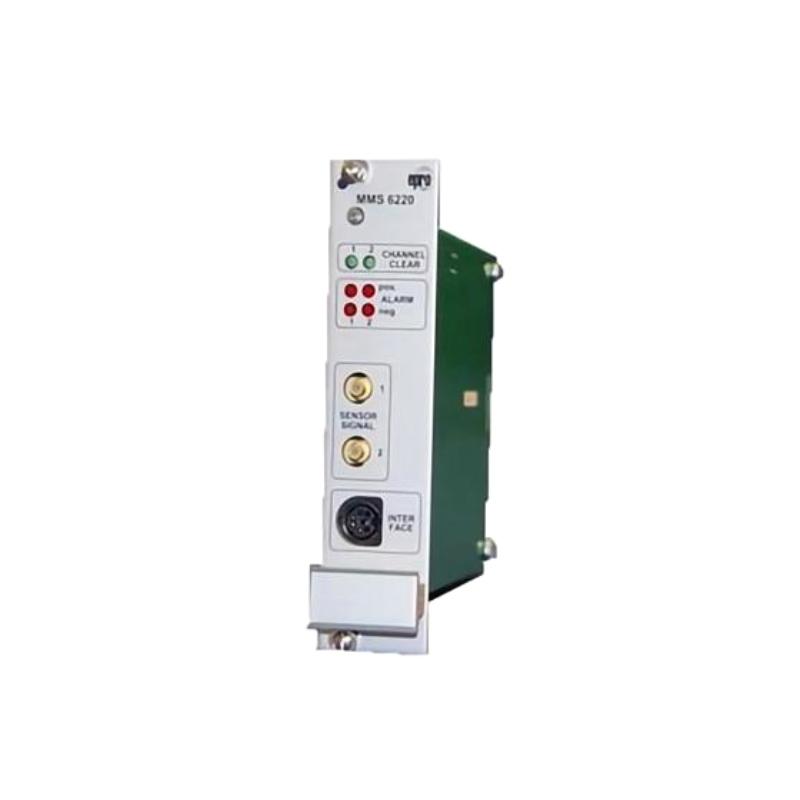
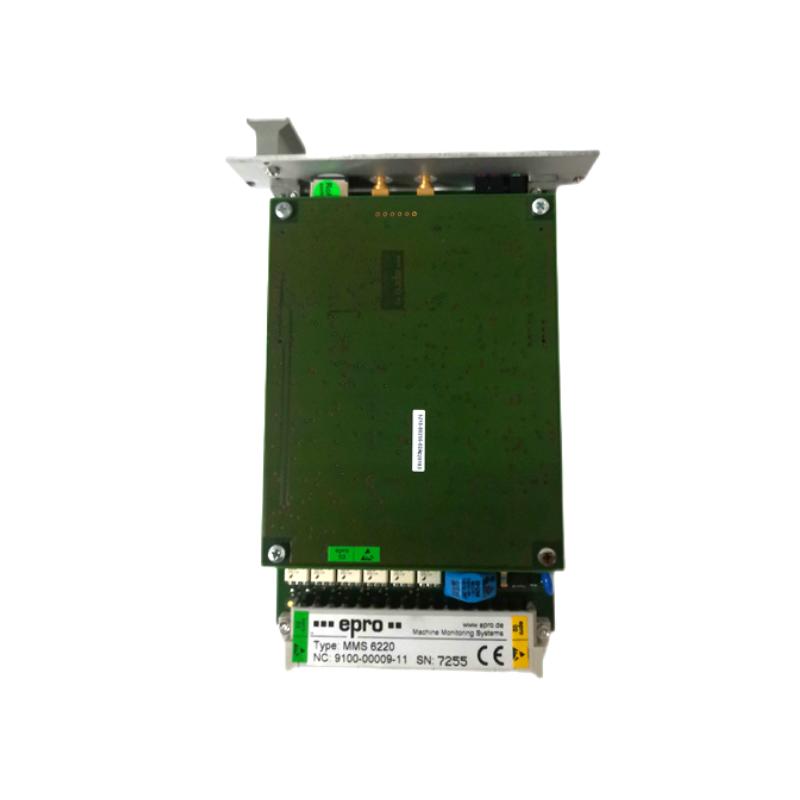
Monitoring shaft eccentricity is essential for detecting rotor deformation, mechanical imbalance, or shaft bending in high-speed rotating machinery. The Epro MMS6220 9100-00009N Dual-Channel Shaft Eccentricity Monitor is developed to continuously measure shaft eccentricity signals and deliver accurate diagnostic data to machinery protection systems.
This monitoring module is widely installed in environments where rotating equipment reliability is critical, including:
-
Steam turbine monitoring systems in power generation plants where rotor stability must be closely supervised.
-
Gas compressors and expanders used in petrochemical and refining operations.
-
Large industrial motors and generators operating under continuous load conditions.
-
Centrifugal pumps and high-capacity fans in process industries.
-
Heavy rotating machinery in steel mills and cement plants, where mechanical loads can cause rotor deformation.
The device supports two measurement channels, allowing engineers to monitor eccentricity at multiple locations or directions for improved diagnostic capability.
Key Operational Advantages
Dual Eccentricity Monitoring Channels
Two independent input channels enable simultaneous monitoring of shaft eccentricity signals from multiple sensors.
Accurate Rotor Condition Detection
The monitor processes displacement signals from proximity probes to detect abnormal shaft movement and rotor deformation.
Reliable Signal Processing
Integrated electronics provide stable signal conditioning, ensuring accurate monitoring results even in electrically noisy industrial environments.
Compact Rack-Compatible Design
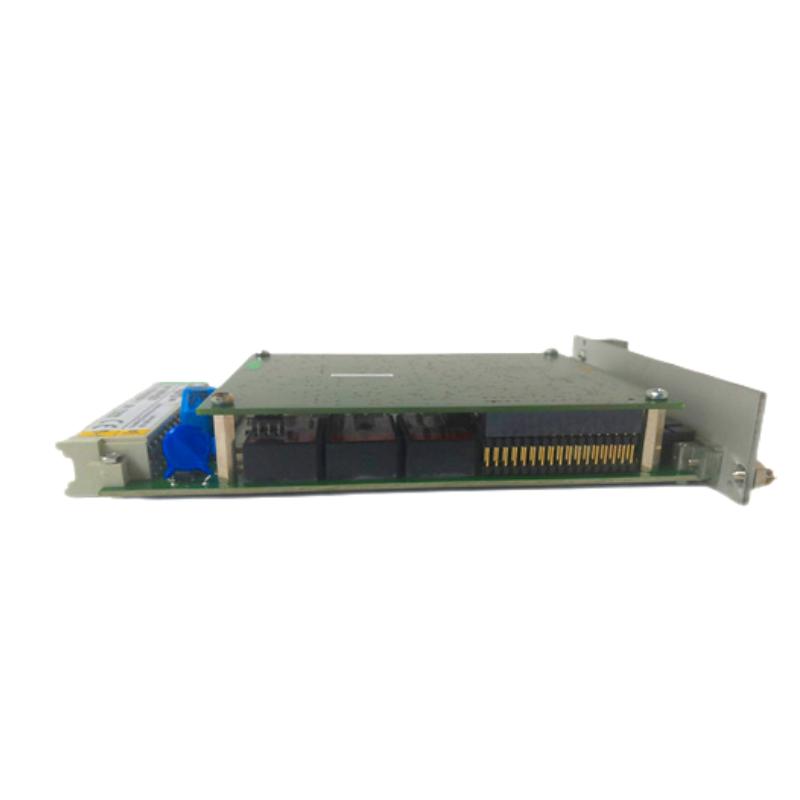
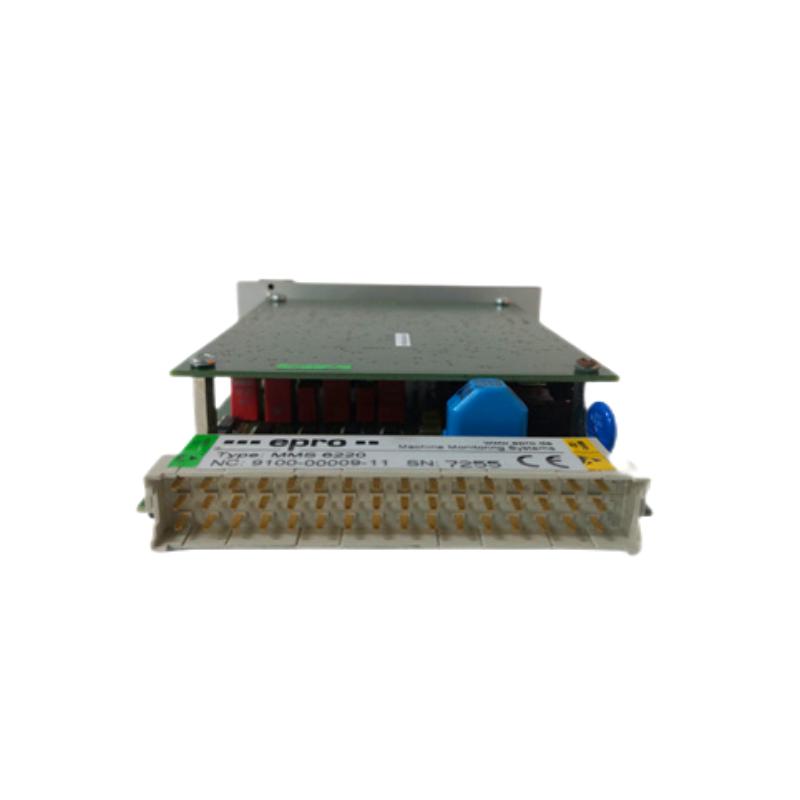
The slim form factor allows easy installation within machinery monitoring racks or industrial control cabinets.
Integration with Machine Protection Systems
The module can operate as part of a comprehensive monitoring system that includes vibration, axial position, and speed monitoring devices.
Technical FAQs
1. What parameter does the MMS6220 monitor?
It measures shaft eccentricity, which represents the deviation of the shaft centerline during rotation.
2. How many monitoring channels are available?
The device supports two independent eccentricity measurement channels.
3. What sensors are typically connected to the monitor?
Non-contact proximity probes used for shaft displacement measurement.
4. Why is shaft eccentricity monitoring important?
Excessive eccentricity may indicate rotor bow, thermal distortion, or mechanical imbalance.
5. Can the module integrate with PLC or DCS systems?
Yes. The monitor outputs signals that can be used by industrial control and monitoring platforms.
6. Is the device suitable for turbine monitoring systems?
Yes. It is commonly used in turbine protection systems to monitor rotor condition.
7. Does the monitor include signal conditioning?
Yes. Sensor signals are processed internally to ensure accurate and stable monitoring outputs.
8. Can alarm limits be configured for eccentricity levels?
Yes. External monitoring or protection systems can apply alarm thresholds based on the transmitted signals.
9. Is the monitor designed for continuous operation?
Yes. It is intended for permanent installation in industrial machinery monitoring systems.
10. How does dual-channel monitoring improve diagnostics?
It allows measurement of eccentricity in different directions or at different shaft positions for better fault analysis.
 A DCS Q Co., Ltd. - PLC and DCS Industrial Control Equipment Wholesale