Product Introduction
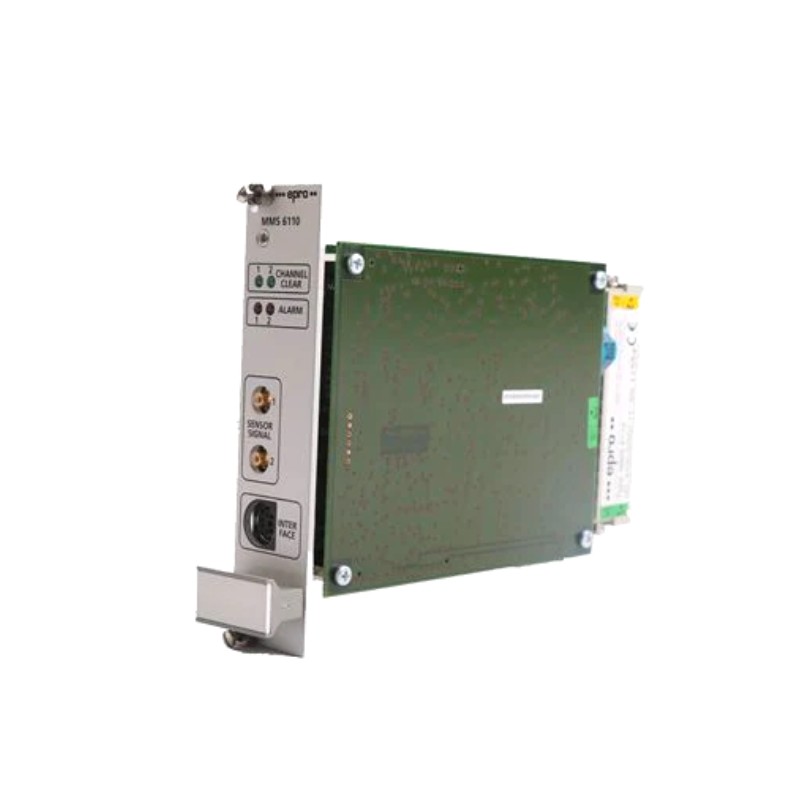
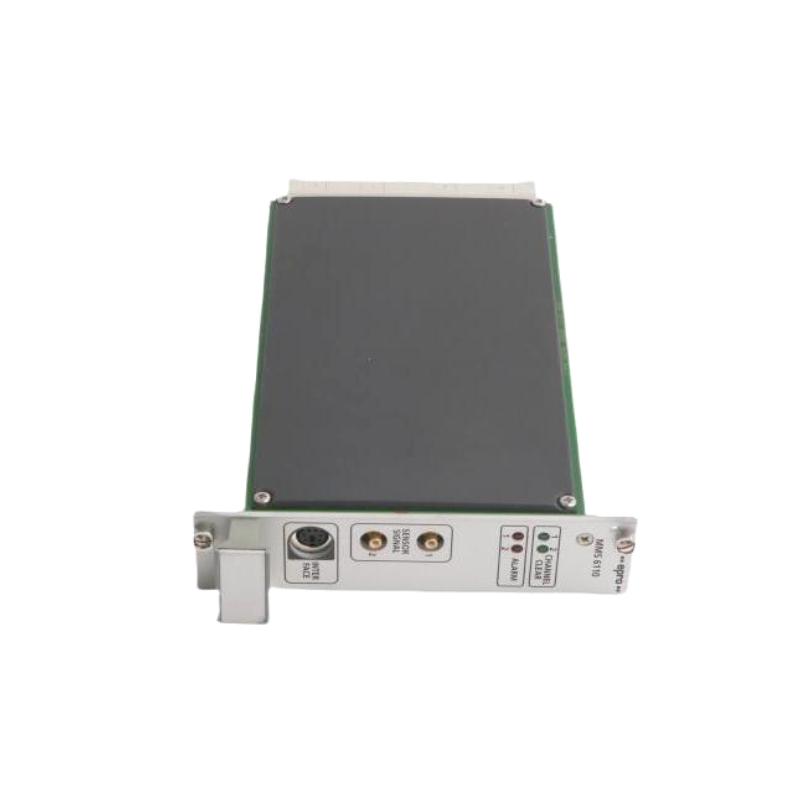
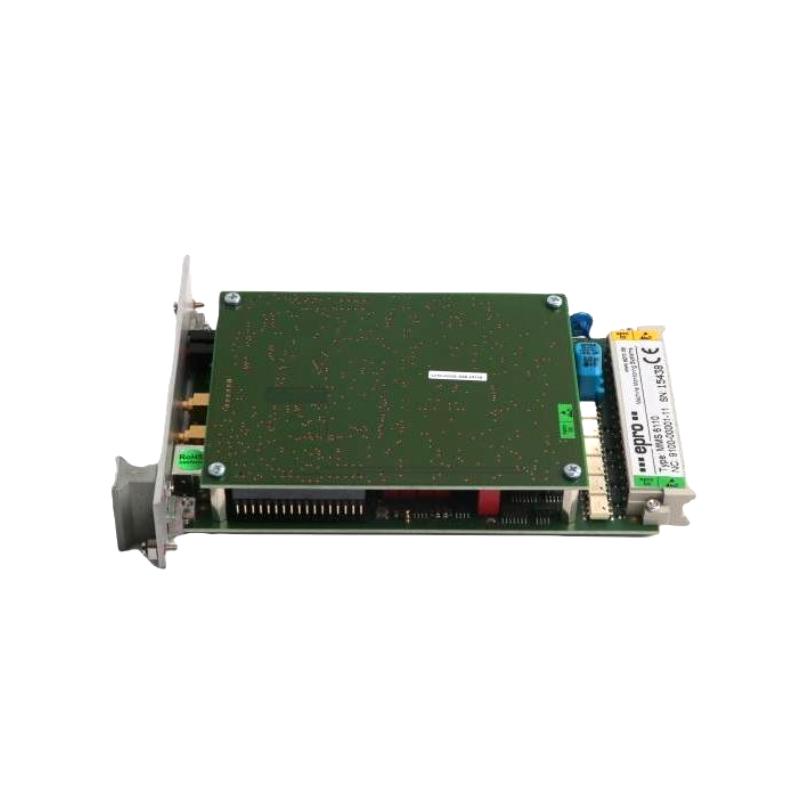
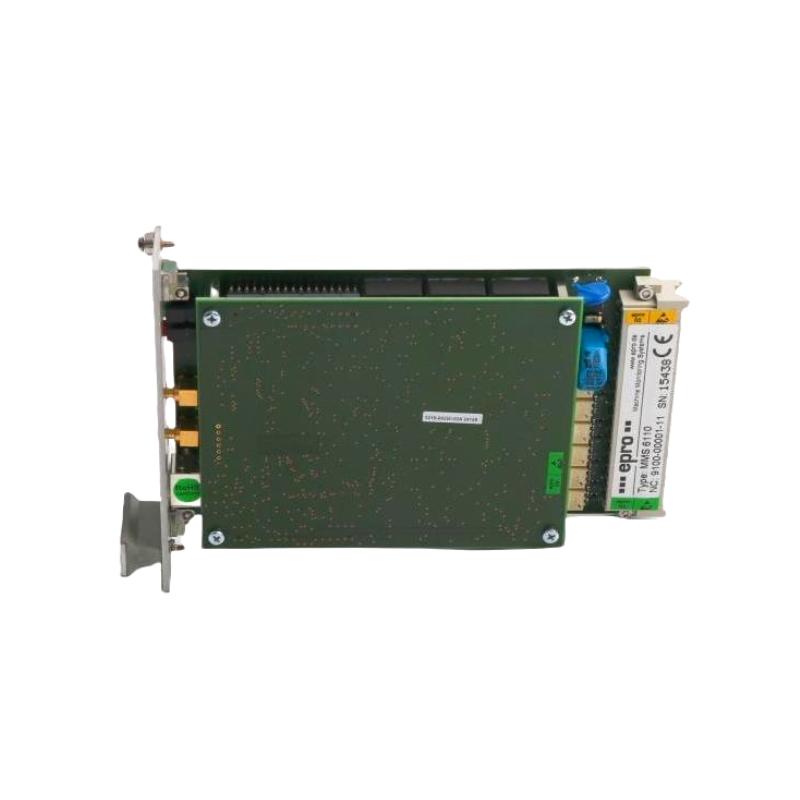
The Epro MMS6110 Dual-Channel Axial Transmitter is a specialized monitoring device developed for continuous measurement of axial shaft displacement in rotating machinery. In many industrial machines, axial position monitoring is essential to prevent damage to thrust bearings and internal mechanical components.
The transmitter receives signals from displacement probes mounted near the shaft and converts these signals into standardized outputs for industrial automation systems. By continuously transmitting axial displacement data, the device enables plant operators to detect abnormal movement early and take corrective action.
With two independent channels, the MMS6110 offers flexible monitoring configurations and improved system reliability. It is commonly integrated into comprehensive machine protection systems used in power plants, petrochemical facilities, and heavy industrial installations.
Technical Specifications
| Parameter | Specification |
|---|
| Manufacturer | Epro |
| Model | MMS6110 |
| Module Type | Dual-Channel Axial Transmitter |
| Monitoring Channels | 2 |
| Measurement Parameter | Axial shaft displacement |
| Sensor Compatibility | Axial displacement / proximity probes |
| Output Signal | Standard analog output for PLC/DCS systems |
| Mounting Method | Control cabinet installation |
| Application | Rotating machinery axial position monitoring |
| Dimensions | 127.5 mm × 125.75 mm × 80 mm |
| Weight | 1.3 kg (2.87 lb) |
Industrial Machinery Monitoring Applications
In high-performance rotating machinery, axial shaft displacement must be carefully monitored to protect thrust bearings and maintain rotor alignment. The Epro MMS6110 Dual-Channel Axial Transmitter is designed to measure axial movement and transmit accurate signals to industrial monitoring systems responsible for equipment protection and diagnostics.
The transmitter is widely used in industries where rotating equipment operates continuously under heavy mechanical loads, including:
-
Power generation facilities, particularly for monitoring steam turbines and generator shafts.
-
Oil and gas compressor stations, where axial shaft movement can indicate load imbalances or internal mechanical issues.
-
Large centrifugal pump systems in chemical plants and pipeline transport operations.
-
Industrial fans and blowers operating at high rotational speeds in manufacturing environments.
-
Marine propulsion systems and offshore equipment, where axial displacement monitoring is essential for long-term reliability.
With two independent monitoring channels, the transmitter can supervise multiple axial displacement sensors simultaneously, improving equipment protection and system redundancy.
Functional Benefits
Dual Measurement Capability
The transmitter supports two independent axial displacement inputs, allowing simultaneous monitoring of separate shafts or redundant measurements on a single shaft.
Reliable Signal Conversion
The device processes raw signals from displacement probes and converts them into standardized outputs that can be interpreted by PLCs, DCS platforms, or machine protection systems.
Continuous Equipment Protection
Real-time monitoring of axial movement enables early detection of abnormal shaft displacement, helping prevent thrust bearing damage and mechanical failures.
Compact Control Cabinet Integration
The transmitter’s compact enclosure allows convenient installation in machinery monitoring cabinets or equipment protection panels.
Compatibility with Condition Monitoring Systems
The unit integrates easily with broader machine health monitoring systems that track parameters such as vibration, speed, and displacement.
Technical FAQs
1. What parameter does the MMS6110 monitor?
It measures axial shaft displacement to detect movement along the shaft’s longitudinal axis.
2. How many channels are available for measurement?
The transmitter provides two independent axial measurement channels.
3. What type of sensors are typically connected to the transmitter?
Axial displacement probes or proximity sensors designed for shaft position measurement.
4. Can the transmitter integrate with industrial automation systems?
Yes. It outputs standardized signals suitable for PLC and DCS integration.
5. Why is axial displacement monitoring important?
Excessive axial movement can damage thrust bearings and cause rotor misalignment or internal mechanical contact.
6. Is the device intended for continuous operation?
Yes. It is designed for permanent installation and continuous monitoring of rotating equipment.
7. Does the transmitter include internal signal conditioning?
Yes. The module processes and stabilizes sensor signals before transmitting them to monitoring systems.
8. Can alarm thresholds be configured using the transmitter output?
Yes. Control systems receiving the signal can apply alarm limits for protective actions.
9. Is the device suitable for turbine monitoring systems?
Yes. It is commonly used for axial position monitoring in turbine and compressor protection systems.
10. What advantage does dual-channel monitoring provide?
It allows redundant measurements or simultaneous monitoring of multiple axial displacement points.
 A DCS Q Co., Ltd. - PLC and DCS Industrial Control Equipment Wholesale