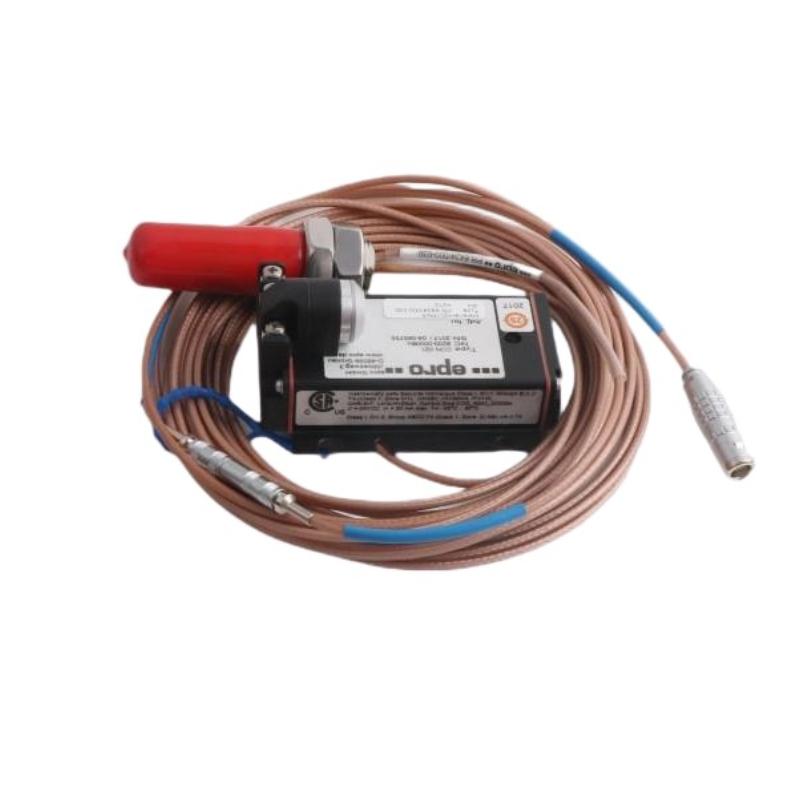
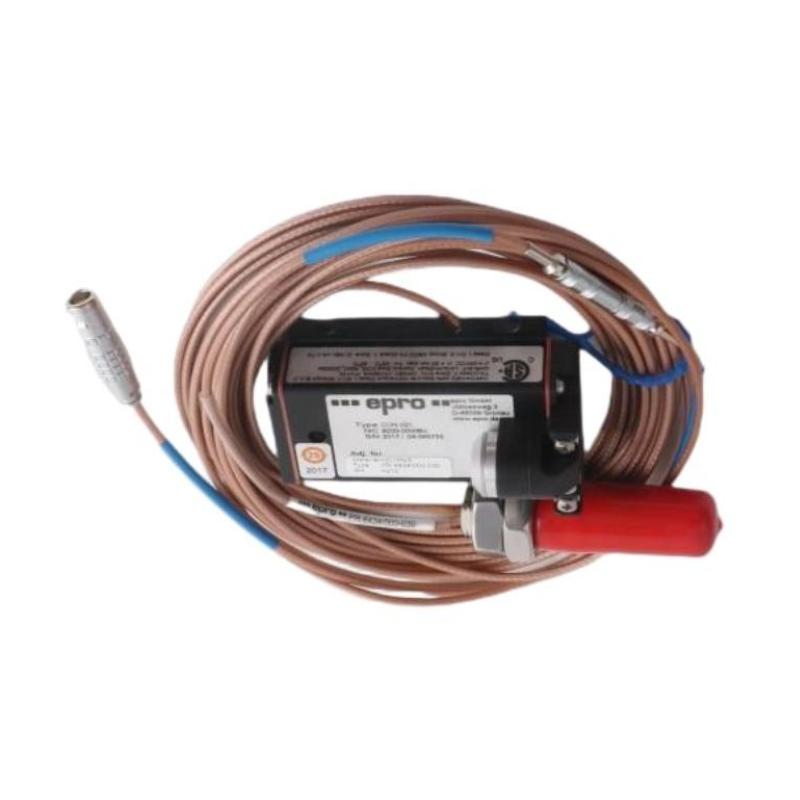
Product Overview
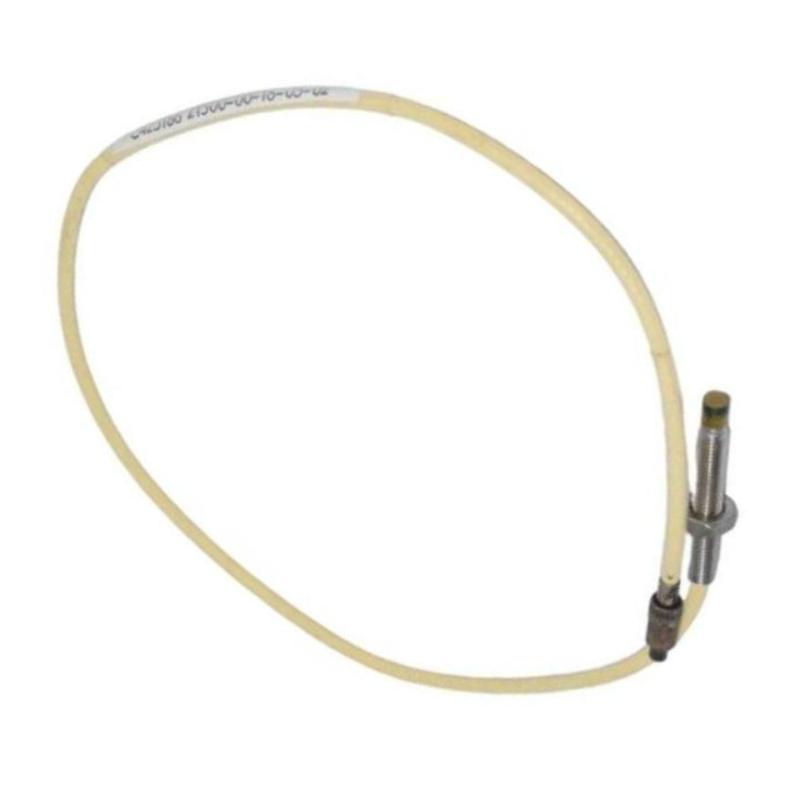
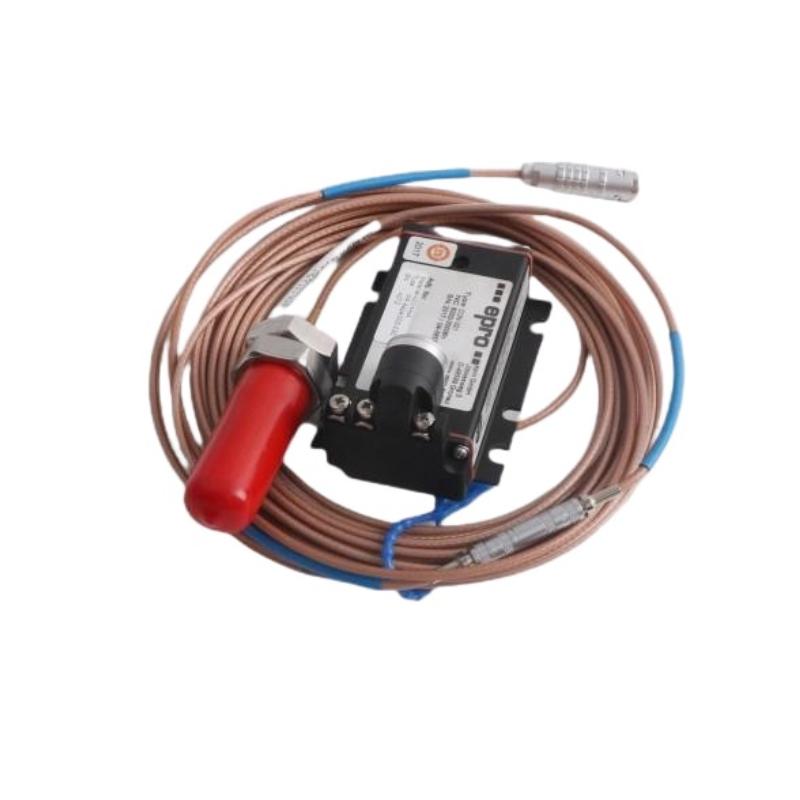
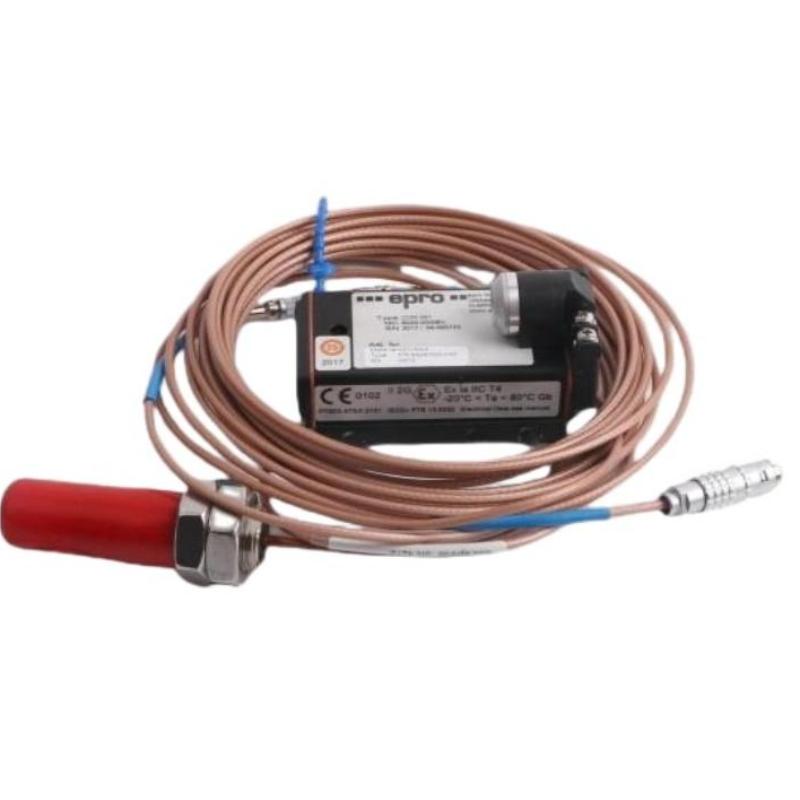
The Epro PR6424/002-100 16mm Eddy-Current Sensor is a precision non-contact measurement probe developed for continuous monitoring of rotating machinery. Designed for critical industrial environments, this sensor delivers highly accurate shaft displacement and vibration measurements, helping engineers maintain optimal equipment performance and prevent unexpected failures.
As part of the trusted PR6424 series, this 16 mm probe utilizes advanced eddy-current technology to detect shaft movement without mechanical contact. The sensor is commonly integrated into machinery protection and condition monitoring systems, providing stable signals for analysis and diagnostics. Its robust stainless-steel construction ensures reliability even in environments with high temperatures, vibrations, and demanding operational conditions.
In industries where equipment reliability directly impacts productivity—such as power generation, petrochemical processing, and heavy manufacturing—the PR6424/002-100 is valued for its accuracy, durability, and long-term operational stability.
Technical Specifications
| Parameter | Specification |
|---|
| Manufacturer | Epro (Emerson) |
| Model | PR6424/002-100 |
| Product Type | Eddy-Current Proximity Sensor |
| Probe Diameter | 16 mm |
| Thread Size | M18 × 1.5 |
| Measurement Principle | Non-contact eddy current |
| Sensitivity | 4 V/mm |
| Linearity Error | ≤ ±1.5% |
| Static Measurement Range | ±2.0 mm |
| Dynamic Range | Up to 1000 μm |
| Nominal Air Gap | Approx. 2.7 mm |
| Target Material | Ferromagnetic steel |
| Minimum Shaft Diameter | ≥ 80 mm |
| Maximum Surface Speed | Up to 2500 m/s |
| Operating Temperature | -35°C to 150°C |
| Storage Temperature | -40°C to 180°C |
| Pressure Resistance | Up to 10,000 hPa |
| Housing Material | Stainless Steel |
| Cable Type | PTFE insulated coaxial cable |
Typical Applications
Turbine Shaft Monitoring
The sensor is widely deployed in steam and gas turbines to monitor shaft vibration, eccentricity, and position, helping ensure safe and efficient turbine operation.
Compressor Condition Monitoring
In large industrial compressors, the probe provides accurate displacement data, enabling early detection of imbalance, misalignment, or mechanical wear.
Industrial Pump Systems
Critical pumping equipment benefits from real-time shaft monitoring to prevent damage caused by excessive vibration or abnormal shaft movement.
Machinery Protection Systems
The sensor integrates with machinery monitoring platforms to support predictive maintenance strategies and prevent costly downtime.
Key Advantages
High Measurement Accuracy
The eddy-current sensing technology provides precise displacement measurements with stable signal output, ensuring reliable machine diagnostics.
Non-Contact Operation
Because the sensor measures shaft movement without touching the surface, it eliminates mechanical wear and reduces maintenance requirements.
Robust Industrial Design
Constructed with stainless steel housing and durable cable insulation, the probe is designed for long-term use in harsh industrial environments.
Wide Temperature Capability
With an operating temperature range up to 150°C, the sensor is suitable for high-temperature machinery applications.
Reliable Performance in Critical Equipment
Its stable long-term drift characteristics make it ideal for continuous monitoring systems used in safety-critical rotating equipment.
Technical FAQs
1. What does the PR6424/002-100 sensor measure?
It measures shaft displacement, vibration, eccentricity, and position in rotating machinery.
2. What sensing technology does the probe use?
The probe uses eddy-current technology for non-contact displacement measurement.
3. What is the typical sensing gap?
The nominal center air gap is approximately 2.7 mm.
4. What materials can be detected by the sensor?
The probe is designed for ferromagnetic metal surfaces, particularly steel shafts.
5. What is the measurement range of the probe?
The sensor provides a static measurement range of ±2.0 mm.
6. Is the sensor suitable for high-speed rotating equipment?
Yes, it supports surface speeds up to approximately 2500 m/s.
7. Can the sensor operate in high temperatures?
Yes, it operates reliably in temperatures from –35°C to 150°C.
8. What systems typically use this probe?
It is commonly used in machinery protection and condition monitoring systems.
9. Does the sensor require a signal converter?
Yes, it is usually paired with a compatible signal converter module for processing and output.
10. How much does the sensor weigh?
The approximate weight of the probe is about 0.20 kg.
 A DCS Q Co., Ltd. - PLC and DCS Industrial Control Equipment Wholesale