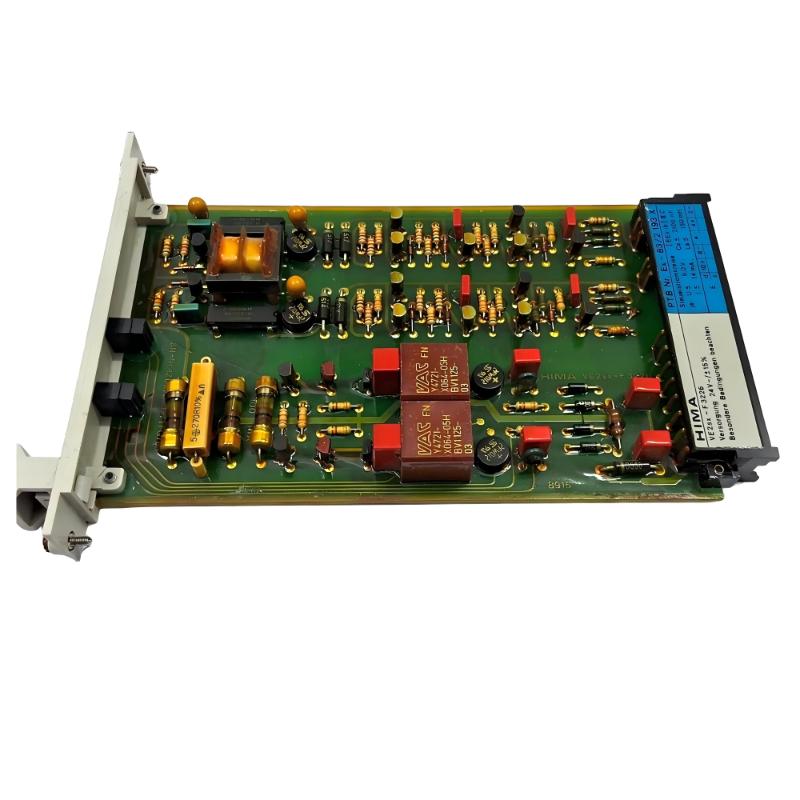
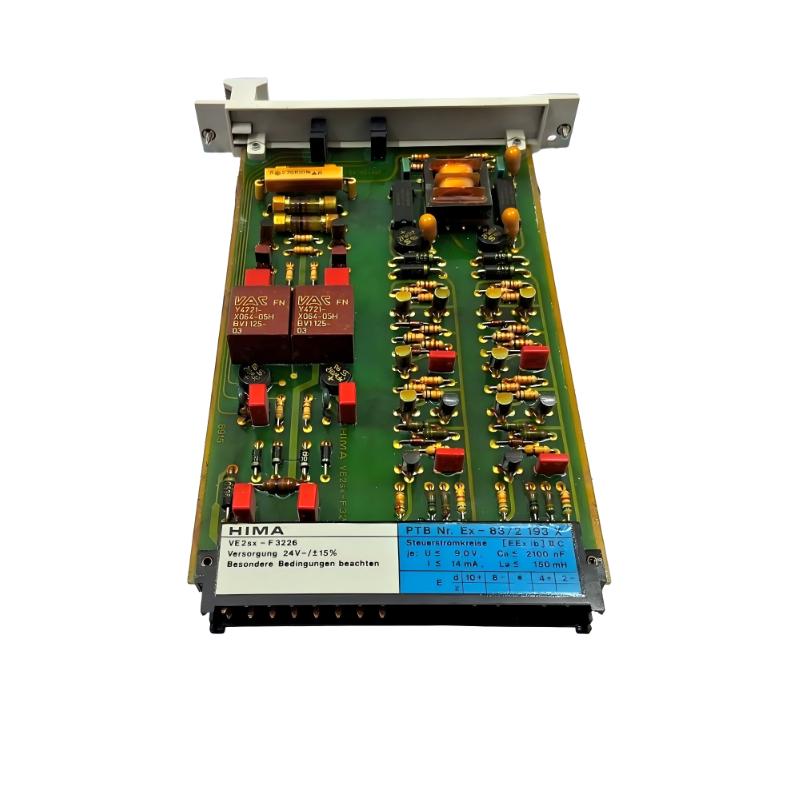
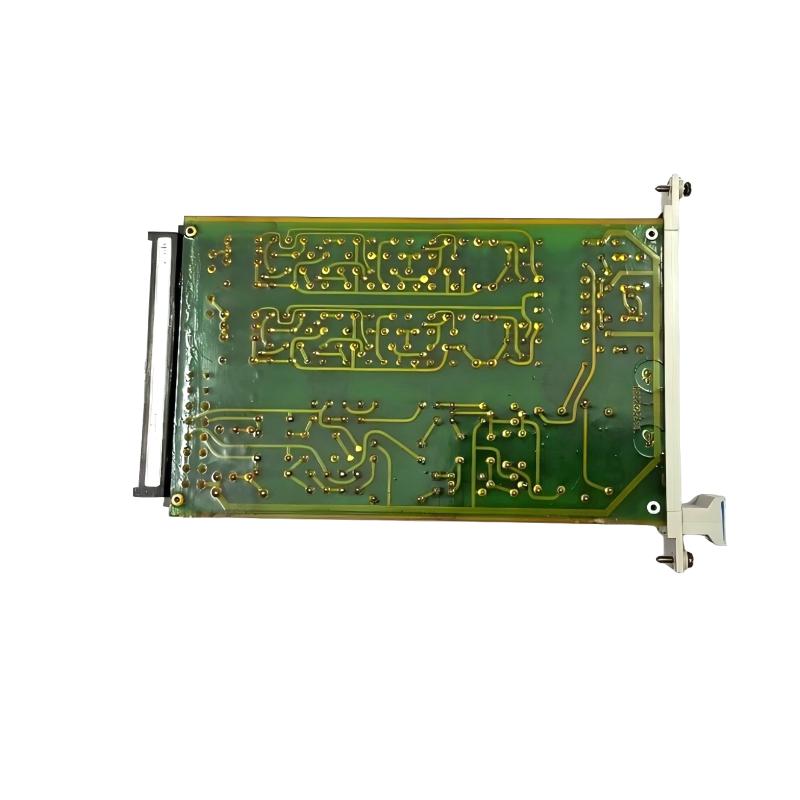
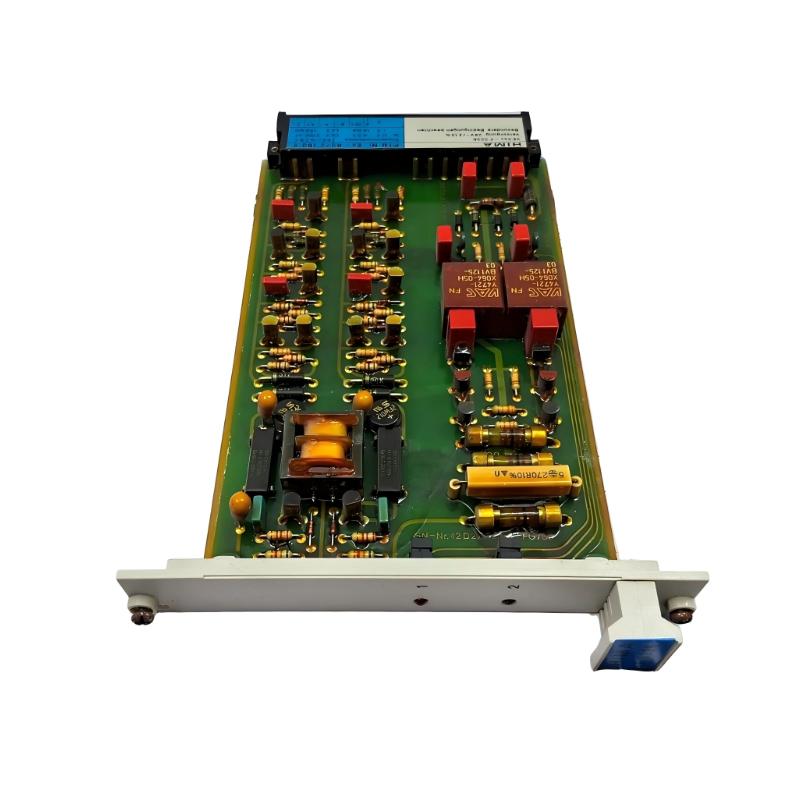
Module Introduction
The HIMA F3226 Switching Amplifier Module serves as a signal conditioning component within the Planar F safety automation platform. In industrial safety systems, switching amplifier modules are used to strengthen and control signals before they are processed by the safety controller.
This module provides two independent channels that allow multiple safety signals to be amplified and transmitted simultaneously. Such functionality is essential in complex safety architectures where multiple protective circuits must operate in parallel.
Industrial safety systems rely on accurate signal transfer between field devices and the central control logic. The F3226 module contributes to this reliability by ensuring stable amplification and switching of safety-related signals.
Its robust mechanical construction and standardized module format support efficient installation within control cabinets, helping engineers build scalable and maintainable safety automation infrastructures.
Technical Specifications
| Parameter | Specification |
|---|
| Manufacturer | HIMA |
| Model | F3226 |
| Module Type | 2-Channel Safety-Related Switching Amplifier Module |
| System Platform | Planar F System |
| Number of Channels | 2 |
| Function | Safety signal amplification and switching |
| Installation | Rack-mounted module |
| Application | Industrial safety and protection systems |
| Dimensions | 193 mm × 117 mm × 40 mm |
| Weight | 0.168 kg (0.37038 lb) |
Industrial Deployment Perspectives
The HIMA F3226 Switching Amplifier Module is developed for safety-oriented automation environments that require reliable signal amplification and switching for critical control circuits. As part of the Planar F system architecture, the module plays an important role in transmitting safety-related signals between field devices and the central safety controller.
In oil and gas facilities, the F3226 module is frequently used within emergency shutdown systems where switching amplifiers help ensure that protective commands reach final control elements such as shutdown valves and isolation mechanisms. Reliable switching behavior is essential to ensure that protective systems respond immediately to hazardous conditions.
Chemical production plants also incorporate switching amplifier modules in safety interlock systems that supervise reactor operations, pressure protection mechanisms, and containment systems. The module provides controlled signal amplification that ensures accurate communication between sensors and safety control logic.
Power generation facilities rely on modules like the F3226 for turbine protection circuits and auxiliary safety monitoring. By supporting dependable signal amplification and switching, the module contributes to maintaining operational safety across critical equipment.
Functional Advantages
Dual-Channel Switching Capability
The module provides two independent safety-related switching amplifier channels, enabling parallel signal control within safety architectures.
Integration with Planar F Systems
Designed specifically for the Planar F safety platform, the module integrates smoothly within HIMA safety automation infrastructures.
Reliable Signal Amplification
The module ensures that safety-related control signals maintain sufficient strength and integrity during transmission.
Compact Panel Integration
Its structured module design allows efficient installation in safety control cabinets where multiple modules are arranged together.
Industrial Operational Stability
The module is engineered for long-term operation in demanding industrial automation environments.
Technical FAQs
1. What is the primary function of the F3226 module?
It amplifies and switches safety-related signals between field devices and the safety controller.
2. How many channels does the module provide?
The module contains two independent switching amplifier channels.
3. Which system platform is compatible with this module?
It is designed for integration within the HIMA Planar F system architecture.
4. What types of devices typically connect to this module?
Field sensors, safety switches, and interface circuits commonly connect through the module.
5. Can the module be used in safety instrumented systems?
Yes, it is intended for use in safety-critical industrial control systems.
6. How does the module improve signal reliability?
By amplifying safety signals and ensuring stable switching behavior before signals reach the controller.
7. Is the module suitable for continuous industrial operation?
Yes, it is designed for long-term installation within industrial control cabinets.
8. Can the module support redundant safety architectures?
Depending on system configuration, it can be integrated into redundant safety designs.
9. What type of signals are typically processed by the module?
Safety-related control signals generated by sensors or switching devices.
10. How is the module installed within the automation system?
It is mounted within compatible racks or carriers used in Planar F safety systems.
 A DCS Q Co., Ltd. - PLC and DCS Industrial Control Equipment Wholesale