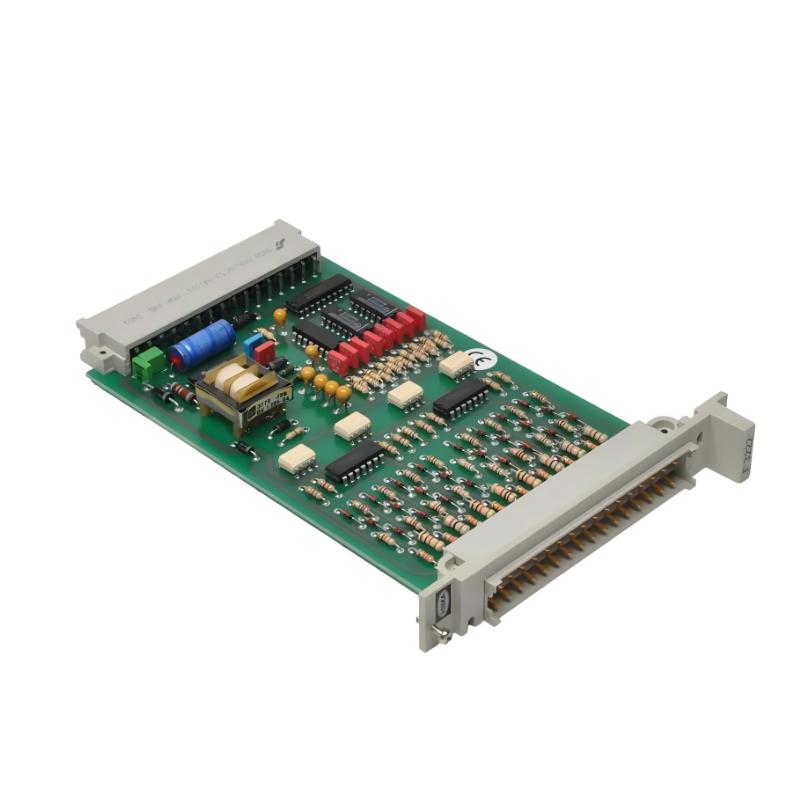
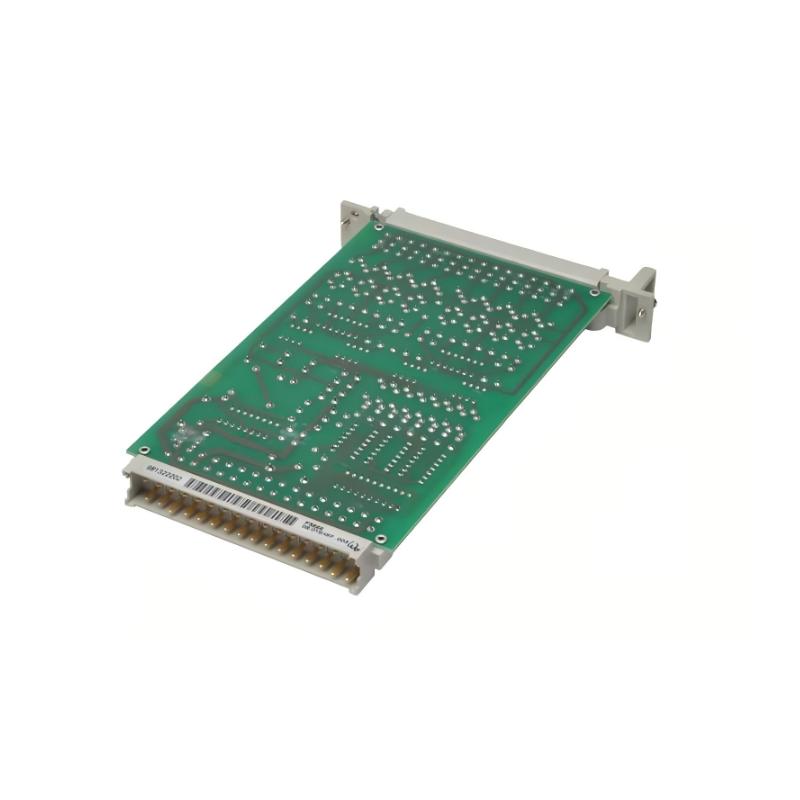
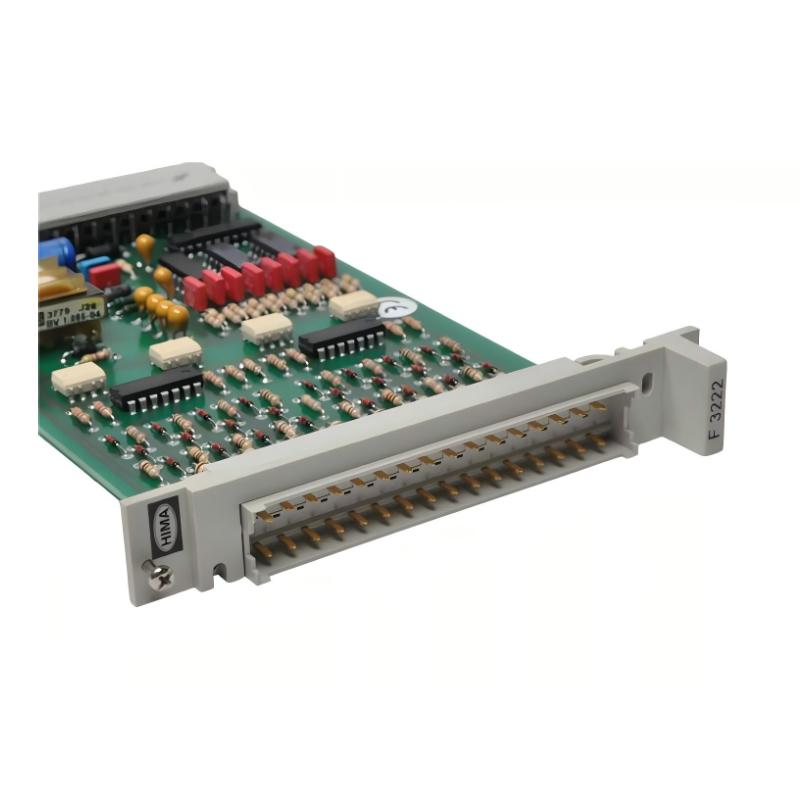
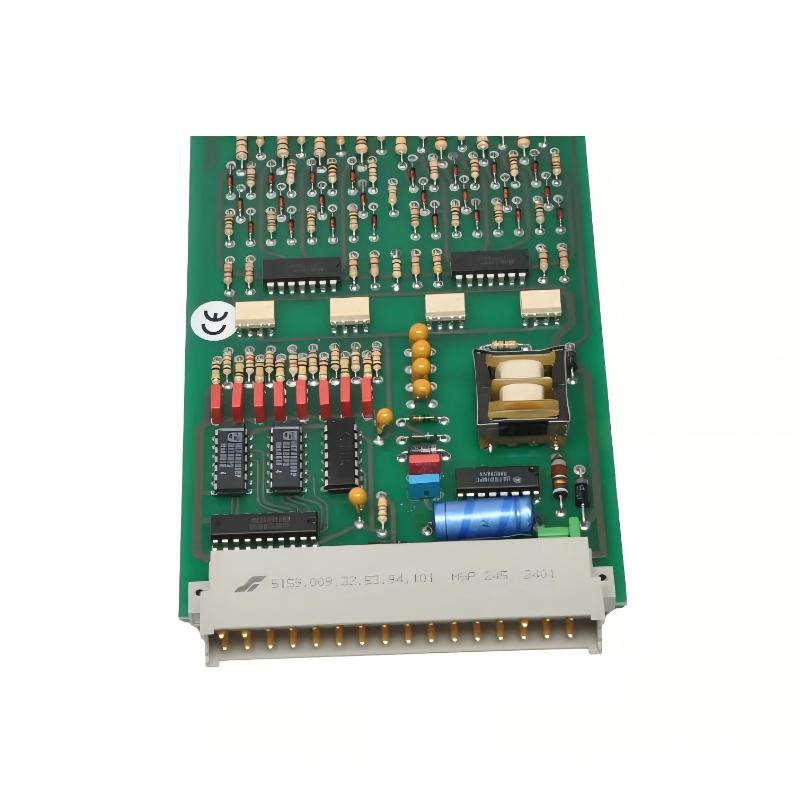
Module Overview
The HIMA F3222 Proximity Switch Input Module acts as a signal acquisition interface between proximity sensors and industrial control or safety systems. In modern automation infrastructure, accurate detection of mechanical states and equipment positions is essential for maintaining operational reliability and process safety.
By supporting eight proximity switch inputs, the module enables monitoring of multiple devices simultaneously. This capability is valuable in facilities where numerous sensors must be integrated into centralized monitoring frameworks.
Proximity switches are widely used in industrial environments because they offer reliable non-contact detection. The F3222 module ensures that these sensor signals are received accurately and transmitted to the control system without degradation.
Its compact mechanical design allows flexible installation in automation cabinets, making it well suited for systems that require high-density module configurations while maintaining reliable signal monitoring.
Technical Specifications
| Parameter | Specification |
|---|
| Manufacturer | HIMA |
| Model | F3222 |
| Module Type | 8-Channel Proximity Switch Input Module |
| Number of Channels | 8 |
| Signal Type | Proximity switch input signals |
| System Compatibility | HIMA Safety and Control Systems |
| Installation | Rack-mounted module |
| Application | Industrial sensor signal monitoring |
| Dimensions | 130 mm × 30 mm × 100 mm |
| Weight | 0.25 kg (0.55116 lb) |
Industrial Implementation Scenarios
The HIMA F3222 Proximity Switch Input Module is designed for industrial automation and safety monitoring systems that require dependable detection of proximity switch signals. It functions as an interface between field-mounted proximity sensors and the central control or safety system, ensuring that equipment status and positional feedback are accurately captured.
In oil and gas processing plants, proximity sensors connected through the F3222 module are often used to monitor valve positions, mechanical interlocks, and rotating equipment status. The module ensures that these signals are reliably transmitted to the safety controller, allowing the system to detect abnormal conditions and respond accordingly.
Manufacturing environments also benefit from the module when monitoring machine positioning, conveyor operations, and automated handling equipment. Proximity sensors provide non-contact detection, which is particularly valuable in environments where mechanical wear must be minimized.
In power generation facilities, the module may be used to supervise auxiliary equipment positions or safety-related mechanical states. By collecting accurate input signals from proximity switches, the module contributes to improved operational awareness and equipment protection.
Key Functional Benefits
Multi-Channel Sensor Monitoring
The module supports eight independent input channels, enabling simultaneous connection of multiple proximity sensors.
Reliable Non-Contact Signal Detection
It ensures accurate transmission of signals generated by inductive or mechanical proximity switches.
Industrial System Compatibility
The module integrates within HIMA safety and automation systems used in critical industrial environments.
Efficient Cabinet Integration
The compact design allows installation within densely populated control cabinets where multiple modules are deployed.
Stable Operation in Industrial Conditions
Engineered for continuous industrial use, the module maintains reliable signal detection under demanding conditions.
Technical FAQs
1. What type of sensors are supported by the F3222 module?
The module is designed to receive signals from proximity switches, including inductive and mechanical proximity sensors.
2. How many input channels does the module provide?
It supports eight independent proximity switch input channels.
3. What is the primary function of the module in an automation system?
Its role is to collect proximity switch signals and transmit them to the controller for monitoring and control decisions.
4. Can the module be used in safety monitoring applications?
Yes, it can be integrated into safety monitoring architectures depending on system configuration.
5. Are the input channels isolated from each other?
The module design ensures stable signal processing across all channels to prevent interference.
6. What industrial processes typically use proximity switch inputs?
Applications include machine position detection, valve position feedback, and equipment status monitoring.
7. Can the module operate continuously in industrial control cabinets?
Yes, it is designed for long-term operation in industrial automation environments.
8. How does the module communicate with the main controller?
Input signals are transmitted through the system backplane or internal communication architecture to the central controller.
9. What advantages do proximity sensors provide in automation systems?
They allow non-contact detection of objects or positions, reducing mechanical wear and improving reliability.
10. Is the module suitable for large-scale automation systems?
Yes, it can be deployed as part of modular control systems where multiple input modules operate together.
 A DCS Q Co., Ltd. - PLC and DCS Industrial Control Equipment Wholesale