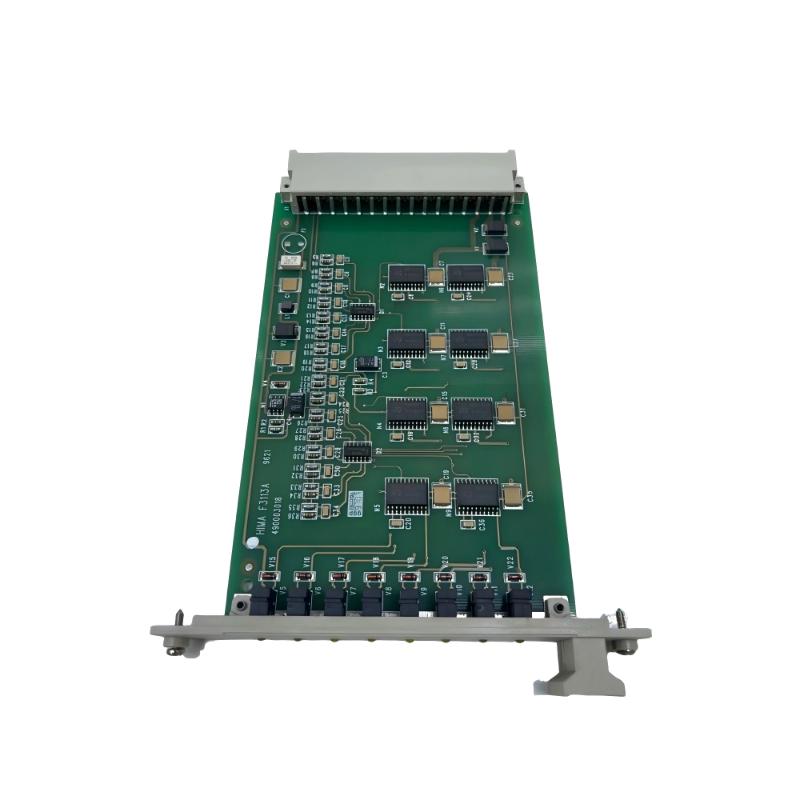
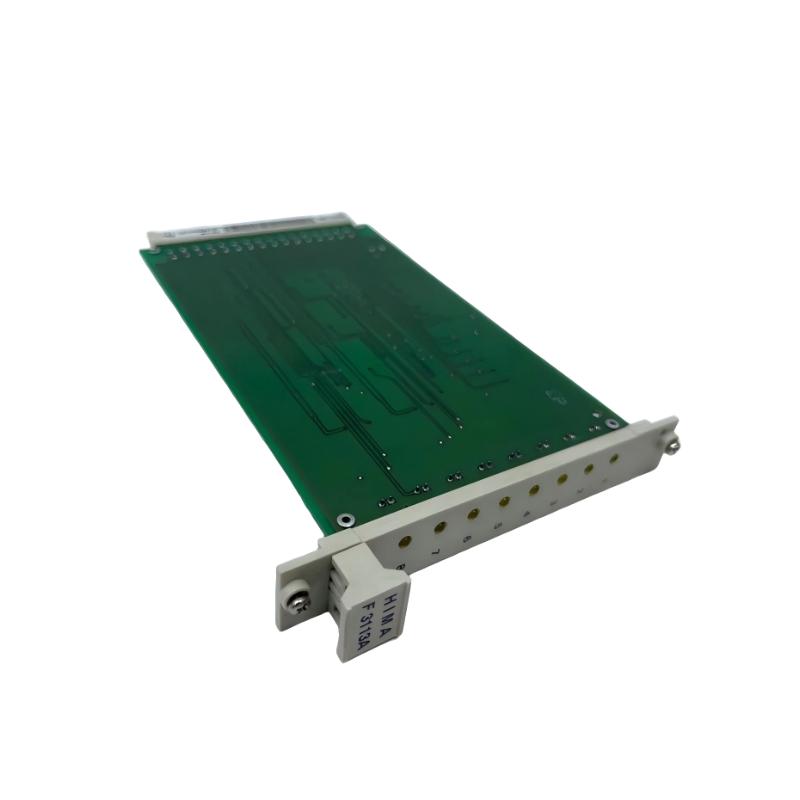
Module Introduction
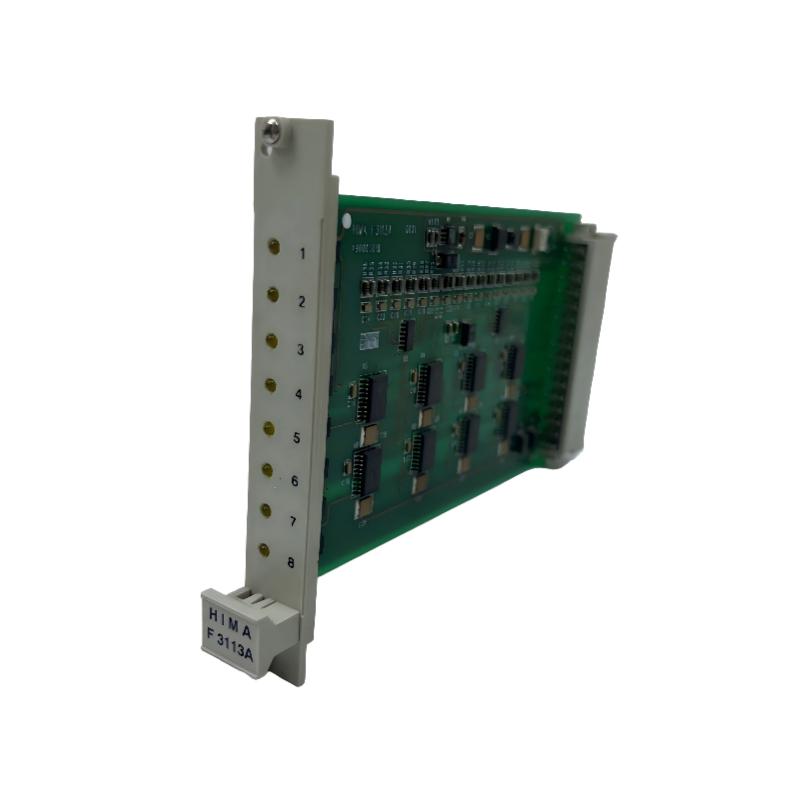
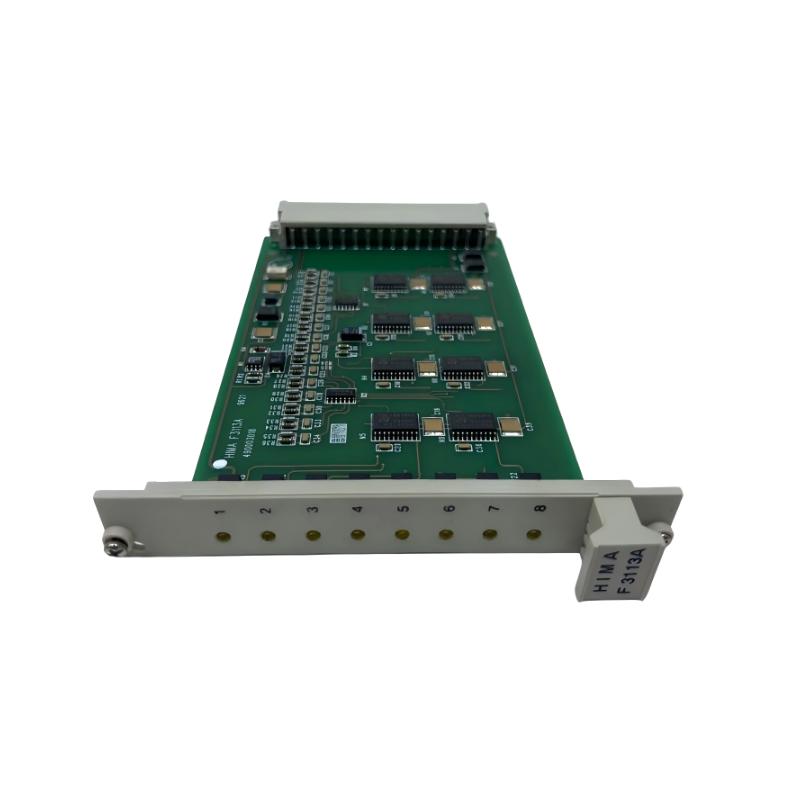
The HIMA F3113A Output Amplifier Module functions as a critical signal conditioning component within industrial safety automation systems. Its primary responsibility is to amplify output signals generated by safety controllers before they are transmitted to field-level devices.
In complex safety architectures, controller signals often require electrical conditioning to ensure that actuators, relays, and interface equipment receive reliable activation commands. The F3113A module performs this function by providing stable amplification across eight channels, allowing multiple control paths to operate simultaneously.
Engineers designing safety instrumented systems frequently incorporate output amplifier modules to maintain signal clarity and operational reliability. The F3113A supports this requirement by providing consistent electrical performance in environments where operational accuracy is essential.
Its compact dimensions and structured modular design allow efficient integration within control racks, helping engineers build scalable and maintainable safety control systems.
Technical Specifications
| Parameter | Specification |
|---|
| Manufacturer | HIMA |
| Model | F3113A |
| Module Type | 8-Channel Output Amplifier Module |
| Number of Channels | 8 |
| Function | Output signal amplification |
| System Compatibility | HIMA Safety Control Systems |
| Installation | Rack-mounted module |
| Operating Environment | Industrial control systems |
| Dimensions | 130 mm × 25 mm × 120 mm |
| Weight | 0.325 kg (0.71650 lb) |
Field Implementation Overview
The HIMA F3113A Output Amplifier Module is widely used in safety-oriented industrial automation systems where accurate signal amplification is necessary to drive external actuators and interface equipment. Within safety instrumented systems (SIS), the module serves as a bridge between controller outputs and field-level devices that require stable electrical signals for activation.
In oil and gas processing plants, the module is frequently installed in emergency shutdown systems that control isolation valves and protective mechanisms. The module ensures that control signals generated by safety controllers are properly amplified before reaching critical field devices.
Power generation facilities also rely on modules like the F3113A within turbine safety protection systems, where dependable signal transmission is essential for maintaining operational safety. In chemical production plants, the module supports interlock systems that prevent unsafe process conditions by transmitting amplified shutdown commands to actuators.
Due to its compact mechanical profile, the module fits easily into high-density control cabinets used in large safety control architectures.
Engineering Strengths
Reliable Multi-Channel Output Control
The module provides eight output channels, enabling simultaneous signal amplification for multiple field devices without signal interference.
Stable Signal Transmission
Designed to ensure consistent electrical output levels, the module helps maintain dependable communication between safety controllers and actuating components.
Industrial Safety Integration
The module is built for integration within HIMA safety platforms, supporting structured safety architectures commonly used in high-risk industries.
Efficient Cabinet Utilization
A slim form factor allows engineers to install multiple modules within limited cabinet space, optimizing panel layout.
Long-Term Operational Stability
Industrial-grade design supports continuous operation in demanding control environments where reliability is essential.
Technical FAQs
1. What role does the F3113A module play in a safety control system?
It amplifies controller output signals so they can reliably operate external actuators or interface circuits.
2. How many output channels are available on the module?
The module provides eight independent output channels.
3. Can the module operate within redundant safety architectures?
Yes, it can be integrated into redundant HIMA safety systems to support high availability configurations.
4. Is the module designed for safety-critical applications?
Yes, it is intended for use within safety instrumented systems where dependable signal transmission is required.
5. What types of devices typically receive signals from this module?
Common devices include relays, valve actuators, shutdown devices, and interface modules.
6. Does the module support continuous industrial operation?
Yes, it is designed for long-term operation in industrial automation environments.
7. How are the channels managed within the system?
Each channel operates independently, allowing multiple control signals to be handled simultaneously.
8. Can the module be installed in standard industrial control cabinets?
Yes, it is designed for rack installation within industrial automation cabinets.
9. Is signal integrity maintained across all channels?
The module design ensures stable amplification while minimizing interference between channels.
10. What type of maintenance is typically required?
Routine system diagnostics and periodic inspection within the safety system are generally sufficient.
 A DCS Q Co., Ltd. - PLC and DCS Industrial Control Equipment Wholesale