System Overview
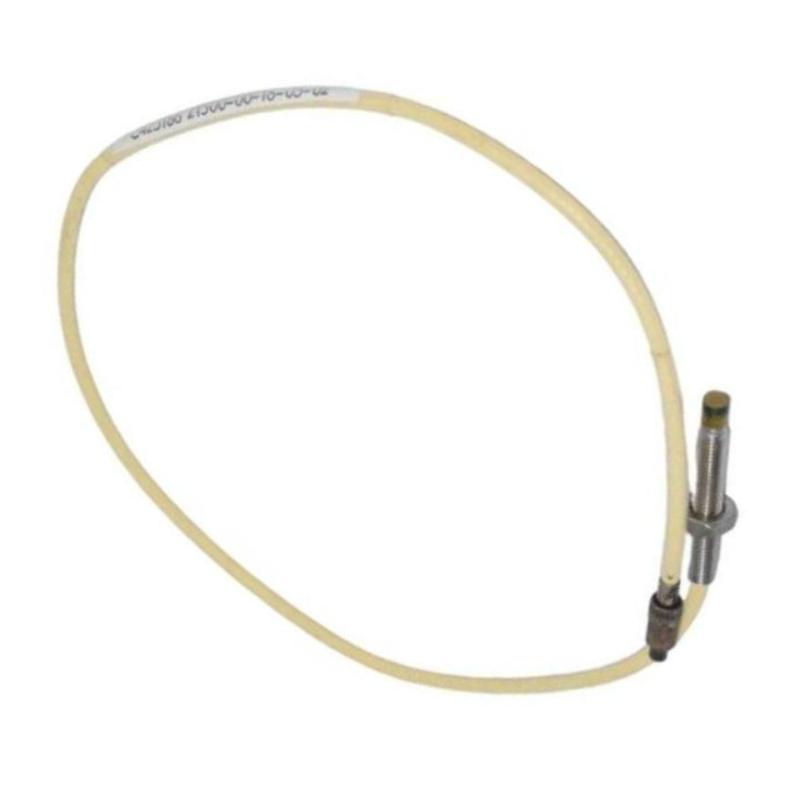
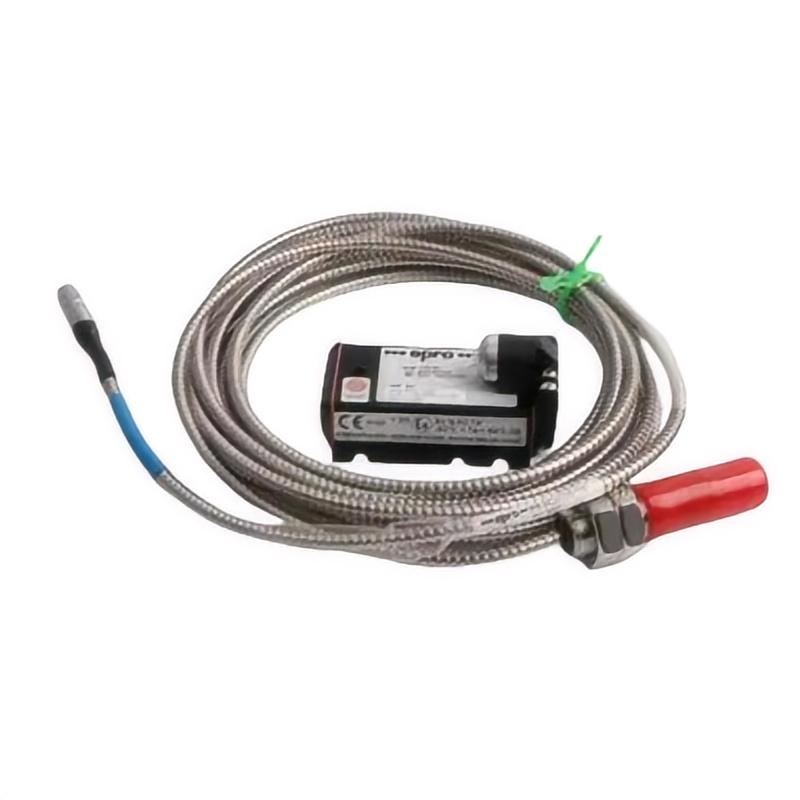
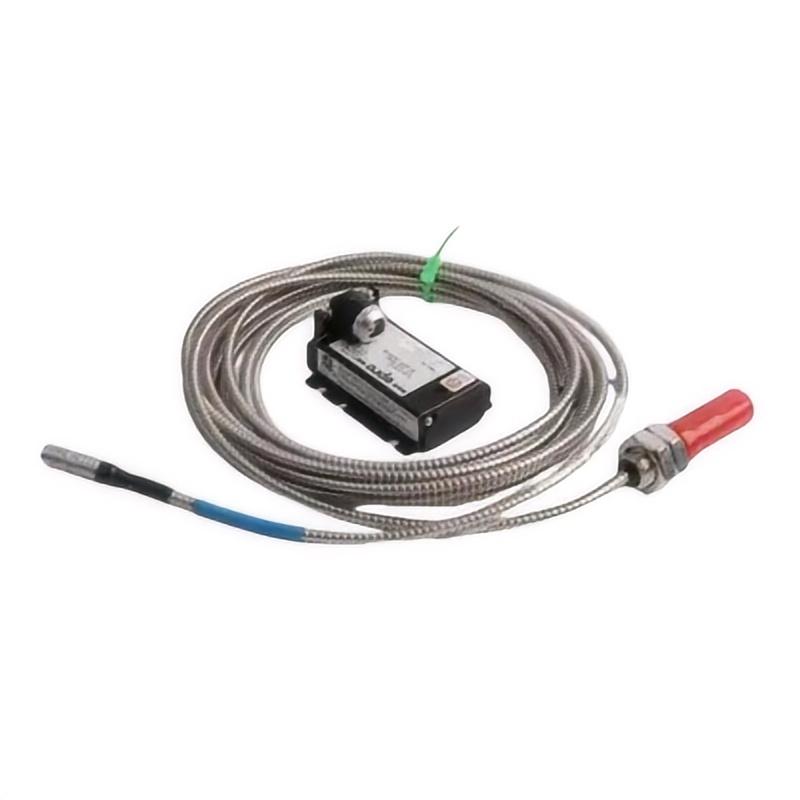
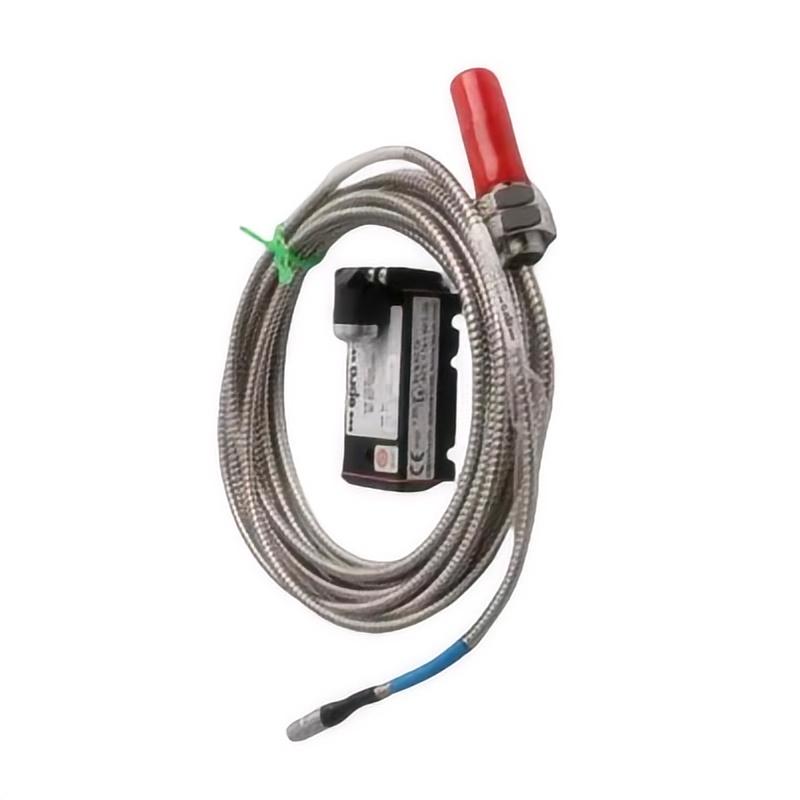
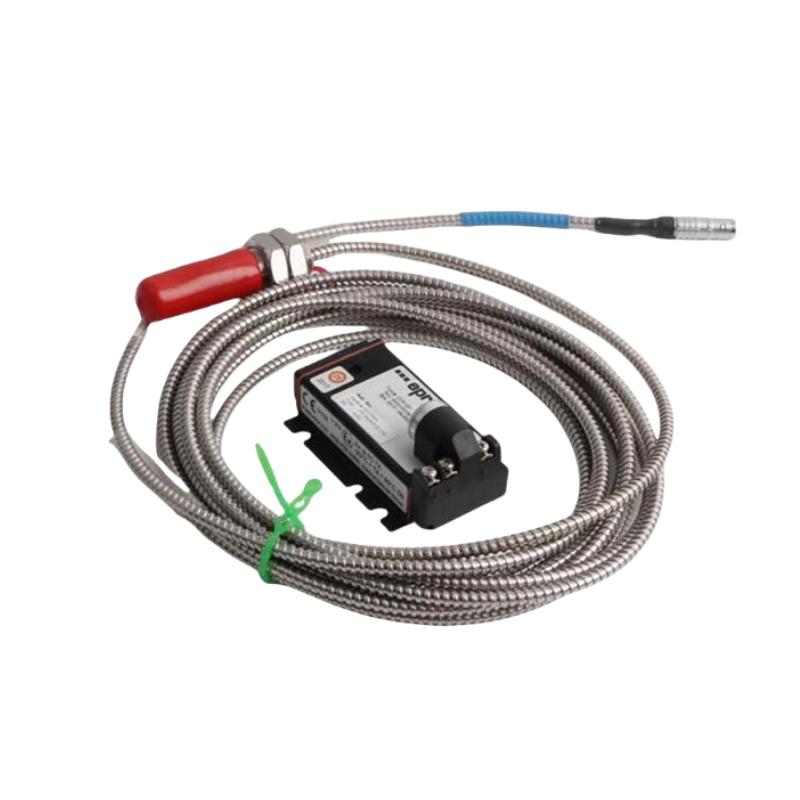
The CON021 + PR6424/002-031 system functions as a complete eddy current measurement chain consisting of a probe and signal converter. The probe generates an electromagnetic field; variations in this field caused by shaft movement are converted into proportional electrical signals by the CON021 unit.
In turbomachinery applications, this sensor system is essential for detecting excessive vibration, shaft misalignment, or axial displacement before mechanical failure occurs. Its robust construction and stable signal output support continuous online condition monitoring in mission-critical installations.
Technical Specifications
| Parameter | Specification |
|---|
| Manufacturer | Epro |
| Model | CON021 + PR6424/002-031 |
| Sensor Type | Eddy Current Displacement Sensor |
| Probe Diameter | 16 mm |
| Measurement Principle | Non-contact inductive (eddy current) |
| Target Material | Conductive metallic surfaces |
| Typical Application | Shaft vibration & displacement monitoring |
| Signal Output | Analog (via CON021 converter) |
| Operating Temperature | Industrial-rated (application dependent) |
| Mounting | Threaded probe installation |
| Sensor Head Diameter | 16 mm |
| Weight | 0.32 kg (≈ 0.71 lb) |
Industrial Monitoring Applications
The Epro CON021 signal converter paired with the PR6424/002-031 16 mm eddy current sensor is designed for high-precision non-contact displacement and vibration measurement in critical rotating machinery. This sensor system is widely deployed in turbomachinery protection and condition monitoring environments where micron-level accuracy is required.
Typical applications include:
-
Steam and gas turbines
-
Centrifugal compressors
-
Large industrial pumps
-
Generators and alternators
-
Gearboxes in heavy process industries
-
Shaft vibration and axial displacement monitoring systems
Its non-contact eddy current measurement principle makes it ideal for continuous operation in high-speed rotating equipment where mechanical wear must be minimized.
Engineering Advantages and Measurement Performance
High-Precision Non-Contact Measurement
Provides accurate shaft displacement and vibration monitoring without physical contact, eliminating mechanical wear.
Stable Performance in Harsh Conditions
Designed to operate reliably in environments with high temperature variation and mechanical vibration.
Wide Frequency Response
Suitable for dynamic shaft vibration analysis in turbomachinery applications.
Integrated Signal Conditioning
The CON021 converter ensures stable signal output compatible with monitoring and protection systems.
Industrial Reliability
Engineered for continuous operation in power generation and oil & gas facilities where downtime is costly.
Technical FAQs
1. What measurement principle does the PR6424 sensor use?
It operates using the eddy current (inductive) non-contact displacement measurement principle.
2. What is the typical application of a 16 mm probe?
It is commonly used for shaft vibration and radial displacement monitoring in large rotating machinery.
3. What type of output does the CON021 converter provide?
It provides a conditioned analog signal suitable for vibration monitoring systems and protection relays.
4. Can the sensor operate in high-temperature environments?
Yes, it is designed for industrial environments with elevated ambient temperatures, depending on cable and installation specifications.
5. Is the system suitable for API 670 compliance applications?
Yes, it is typically used in machinery protection systems aligned with API 670 standards.
6. What materials can be measured?
The sensor measures conductive metallic targets such as steel shafts.
7. How is calibration performed?
Calibration is conducted according to factory specifications using compatible signal converters and target materials.
8. Does the probe require physical contact with the shaft?
No, measurement is fully non-contact.
9. What determines measurement range?
Measurement range depends on probe size, target material, and system configuration.
10. Can it be integrated with turbine monitoring systems?
Yes, it integrates with machinery health monitoring and protection systems in turbine installations.
 A DCS Q Co., Ltd. - PLC and DCS Industrial Control Equipment Wholesale