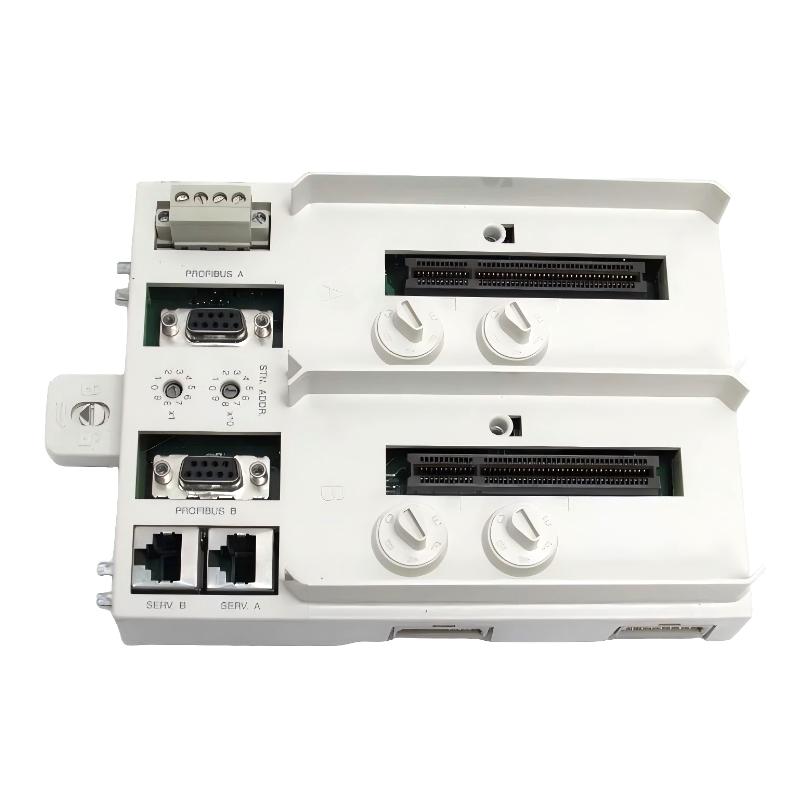
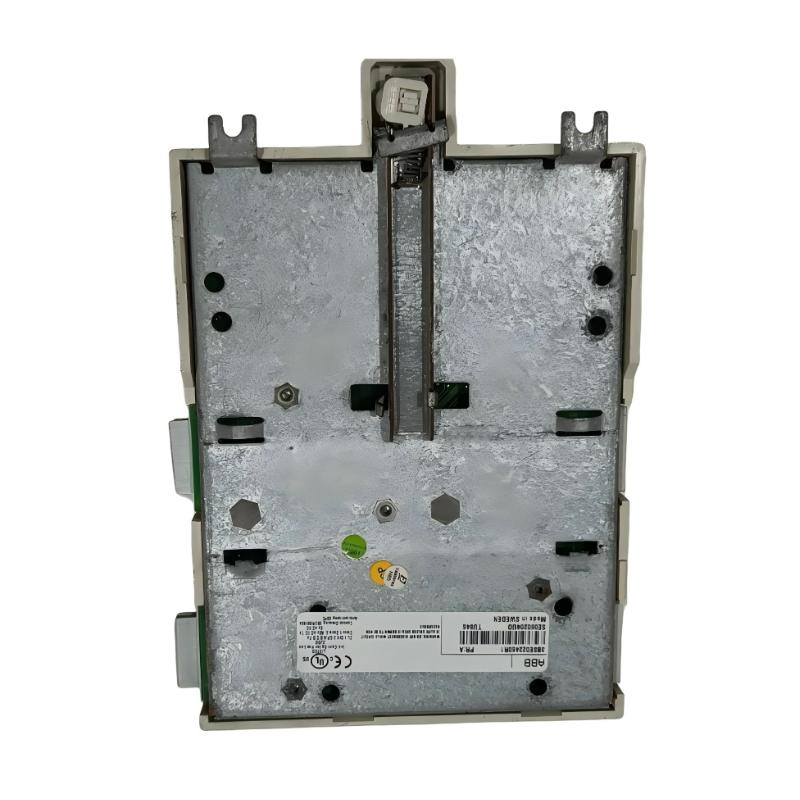
Product Overview
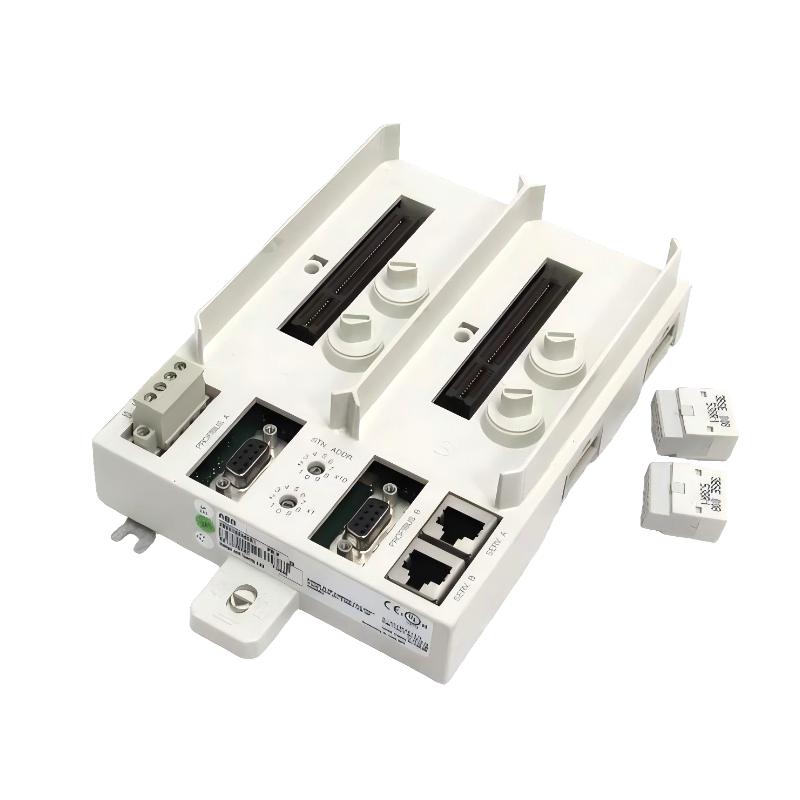
The ABB TU846 3BSE022460R1 Module Termination Unit serves as a structured wiring interface within distributed control and automation systems. While often overlooked compared to active control modules, termination units are fundamental to ensuring signal stability, maintainability, and long-term system reliability.
Its compact footprint and organized terminal layout support efficient panel design. In complex automation architectures, a properly engineered termination strategy significantly reduces wiring errors, commissioning time, and lifecycle service costs.
The TU846 reflects a design philosophy centered on operational clarity, mechanical robustness, and system compatibility.
Technical Specifications
| Parameter | Specification |
|---|
| Product Type | Module Termination Unit |
| Model Number | TU846 |
| Order Code | 3BSE022460R1 |
| Function | Field signal termination interface |
| Mounting Type | Panel / Cabinet mounting |
| Terminal Type | Industrial screw/clamp terminals |
| Application Environment | Indoor control cabinet installation |
| Construction | Industrial-grade housing |
| Dimensions (H × W × D) | 124 × 186 × 47 mm |
| Weight | 0.5 kg |
Typical Field Applications
The TU846 3BSE022460R1 Module Termination Unit is designed to provide structured and secure signal termination within ABB distributed control systems. It is primarily used in environments where reliable field wiring organization and maintainability are essential.
Common application areas include:
-
Process automation systems in oil & gas facilities
-
Power generation plants and substations
-
Chemical processing units
-
Water and wastewater treatment installations
-
Industrial manufacturing lines requiring structured I/O marshalling
Its design supports systematic cable management and efficient signal distribution between field devices and control modules, reducing commissioning time and long-term maintenance complexity.
Operational Benefits and Engineering Value
The TU846 is engineered with a focus on electrical integrity, structured termination, and service accessibility. From a system integration perspective, it plays a critical role in ensuring stable signal transmission and simplified diagnostics.
Structured Signal Termination
Clearly arranged terminal blocks allow for precise and organized wiring, minimizing human error during installation.
Improved Maintenance Workflow
Technicians can isolate and service individual channels without disturbing adjacent connections.
Robust Mechanical Design
The compact yet durable housing ensures reliable installation inside control cabinets operating in demanding industrial environments.
System Compatibility
Designed for seamless integration with ABB I/O modules, ensuring signal consistency and mechanical alignment within the automation platform.
Reduced Downtime Risk
Clear labeling and logical terminal grouping support faster troubleshooting and lower mean time to repair (MTTR).
Technical FAQs
-
What is the primary function of the TU846?
It provides structured termination points for field wiring, acting as an interface between field devices and control I/O modules.
-
Is the unit passive or active?
The TU846 functions as a passive termination unit without signal processing.
-
How are signals routed internally?
Signals are directly routed from field terminals to corresponding module connectors with defined channel mapping.
-
Does it provide signal isolation?
Electrical isolation depends on the connected I/O module; the TU846 itself does not introduce active isolation.
-
Can it support redundant configurations?
It can be used within redundant system architectures when paired with compatible redundant I/O modules.
-
What type of wiring termination is supported?
It supports screw or clamp-based terminal connections depending on configuration.
-
Is it suitable for high-density I/O systems?
Yes, it is optimized for structured high-channel-count installations.
-
How does it assist in fault diagnostics?
Clearly organized terminals allow faster identification of wiring-related issues.
-
What environmental considerations apply?
It is designed for installation within protected control cabinets under standard industrial environmental conditions.
-
Can it be replaced without full system shutdown?
Replacement procedures depend on system design, but structured termination allows controlled maintenance interventions.
 A DCS Q Co., Ltd. - PLC and DCS Industrial Control Equipment Wholesale