Applications
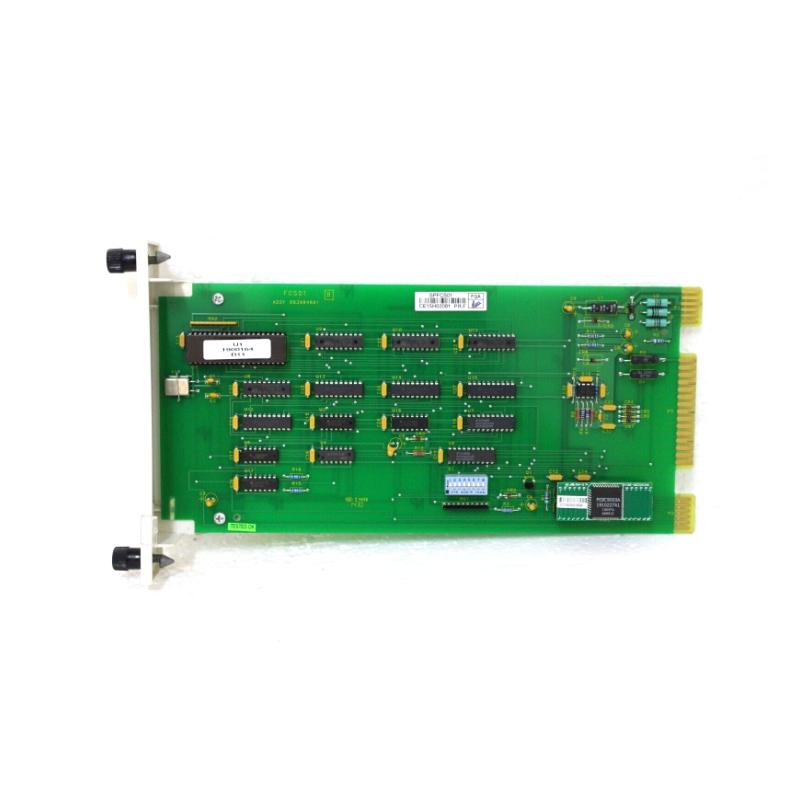
The SPFCS01 module is ideal for industrial measurement and control scenarios where precise frequency data is vital:
-
Dual‑channel turbine speed monitoring in power generation systems
-
Frequency measurement for motor control and speed feedback loops
-
Process control loops requiring real‑time frequency input
-
Distributed system signal acquisition in petrochemical and refining industries
-
High‑integrity monitoring for vibration, flow, or rotational systems
By delivering accurate and reliable frequency counts, the SPFCS01 supports optimized control decisions and enhanced process coordination.
Advantages
The ABB Bailey SPFCS01 stands out with features that directly enhance system clarity and operational robustness:
-
Dual Channel Measurement: Enables simultaneous acquisition of two separate frequency sources for versatile monitoring.
-
Reliable Frequency Range: Designed to handle typical industrial frequency ranges with consistent accuracy.
-
Industrial Compatibility: Integrates seamlessly into ABB distributed control environments for unified signal acquisition.
-
Durable Construction: Built to sustain industrial environmental conditions, supporting long‑term operational stability.
-
Space‑Efficient Form Factor: Compact dimensions simplify integration in dense control cabinet layouts.
These advantages make the SPFCS01 a trusted option for systems demanding dependable frequency measurement and monitoring.
Technical FAQs
-
What does the SPFCS01 measure?
It measures signal frequency, typically from turbine pickups or pulse sources, across two channels.
-
What frequency range can it handle?
The module reliably measures frequencies from approximately 3 kHz to 12.5 kHz.
-
How many channels does it support?
Two independent measurement channels are provided for dual monitoring needs.
-
Where is this module typically used?
Primarily in industrial automation systems for speed monitoring, process control, and diagnostic frequency acquisition.
-
Is the SPFCS01 still current?
It has been superseded by newer designs in some product lines but remains compatible with existing installations.
-
Can this module handle asymmetric signals?
It conditions and processes typical industrial frequency pulse inputs as part of control logic workflows.
-
Is remote calibration required?
Calibration typically occurs within system commissioning parameters using control configuration tools.
-
Does it support redundant system setups?
Redundancy depends on host system design; the module can be part of a redundant architecture where supported.
-
What environmental conditions can it tolerate?
It is engineered for industrial environments, supporting typical plant‑floor operational temperatures and conditions.
-
Can the module be retrofitted?
Yes, in many legacy ABB systems where compatible rack space and configuration support exist.
 A DCS Q Co., Ltd. - PLC and DCS Industrial Control Equipment Wholesale