Introduction
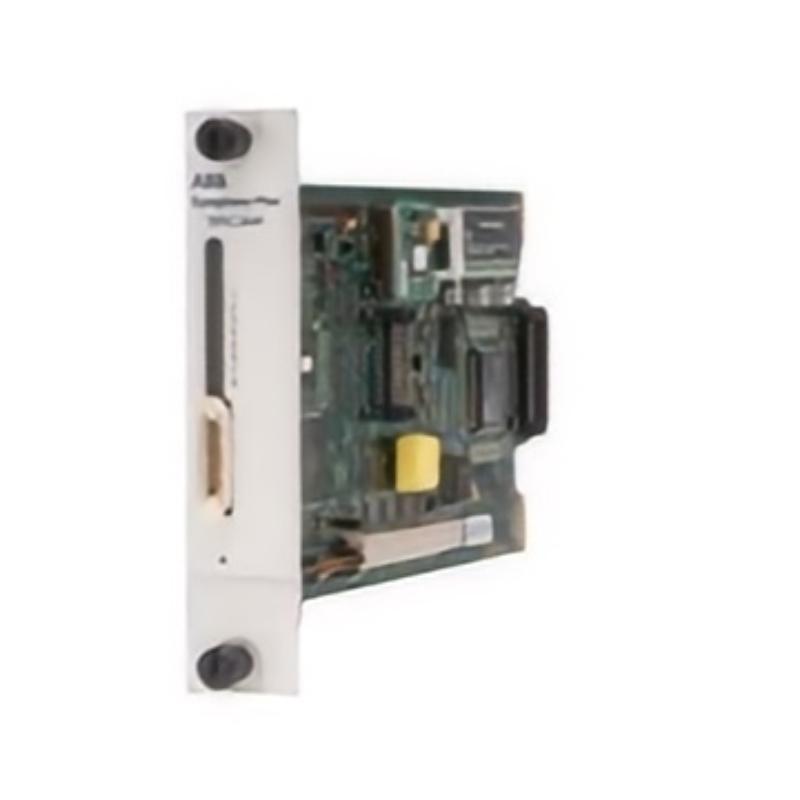
The ABB Bailey SPBRC300 Bridge Controller is a compact yet powerful communications and control unit used in industrial automation systems. Serving as a central bridge between different controller domains, it enables seamless data exchange, real‑time coordination, and reliable control across distributed system networks. Widely integrated into ABB Bailey INFI‑90 and Symphony Plus architectures, the SPBRC300 enhances system performance by managing I/O interactions and bridging legacy and modern network segments in demanding industrial environments.
Technical Specifications
| Feature | Specification |
|---|
| Model | SPBRC300 |
| Type | Bridge Controller |
| Compatibility | ABB Bailey INFI‑90, Net 90, and Symphony Plus systems |
| Function | Data bridging, controller communication management |
| Communication Interfaces | System network bus and memory backplane (protocol specific) |
| Environmental Rating | Industrial control environment |
| Typical Use | Distributed control system network coordination |
Applications
The SPBRC300 Bridge Controller is widely used as a core communication and control component in complex industrial automation architectures:
-
Bridging legacy INFI‑90 control systems with modern networks
-
Synchronizing distributed controllers and I/O modules
-
Network communication coordination in petrochemical and refining plants
-
Process automation in power generation facilities
-
Distributed control loops in manufacturing systems
By serving as a communication bridge, the SPBRC300 helps systems operate cohesively, maintaining reliable data flow across diverse control components.
Advantages
The ABB Bailey SPBRC300 offers several compelling benefits for industrial control deployments:
-
Seamless System Integration: Acts as an effective link between controller domains within a distributed control system.
-
Compact and Rugged: Industrial‑grade design supports long‑term operation under typical plant conditions.
-
Proven Compatibility: Fully compatible with INFI‑90 and Symphony Plus architectures, supporting system evolution.
-
Efficient Network Coordination: Helps distribute real‑time data for process control and monitoring.
-
Space‑Saving Profile: Small form factor simplifies installation in dense control racks.
These strengths make the SPBRC300 a reliable choice for automation professionals who demand stable interfacing and dependable control system performance.
Technical FAQs
-
What is the main role of the SPBRC300?
It serves as a bridge controller that facilitates communication and data exchange between control network segments.
-
Which systems is this controller compatible with?
Fully compatible with ABB Bailey INFI‑90, Net 90, and Symphony Plus environments.
-
Is this unit suitable for harsh industrial environments?
Yes, it is designed for rugged industrial automation conditions.
-
What kind of communication does it handle?
It manages system bus and network communication specific to ABB DCS architecture.
-
How does it impact control system performance?
By improving real‑time coordination and data flow across distributed control components.
-
Does it support redundant system configurations?
Redundancy handling depends on overall system design and implementation.
-
Can the SPBRC300 interface with legacy controllers?
Yes, it is optimized to bridge legacy INFI‑90 controllers with newer architectures.
-
How easy is it to integrate?
The compact profile and industry standard connectivity make integration straightforward.
-
Does it require special software?
Configuration typically uses system setup tools appropriate to the host control architecture.
-
Can it handle digital I/O logic?
It coordinates networked control data, but specific I/O handling is tied to connected modules.
 A DCS Q Co., Ltd. - PLC and DCS Industrial Control Equipment Wholesale