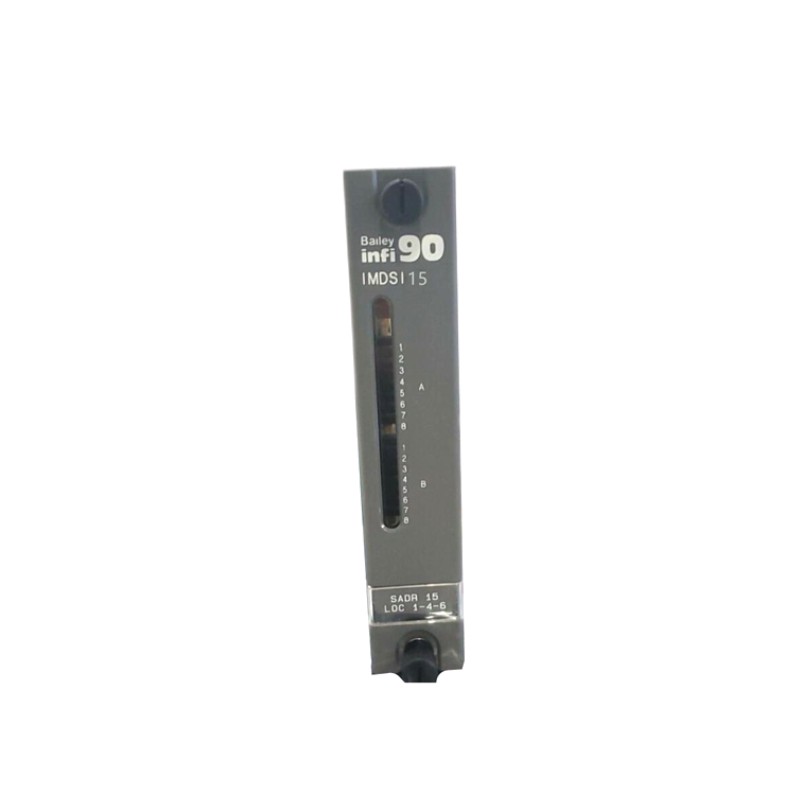
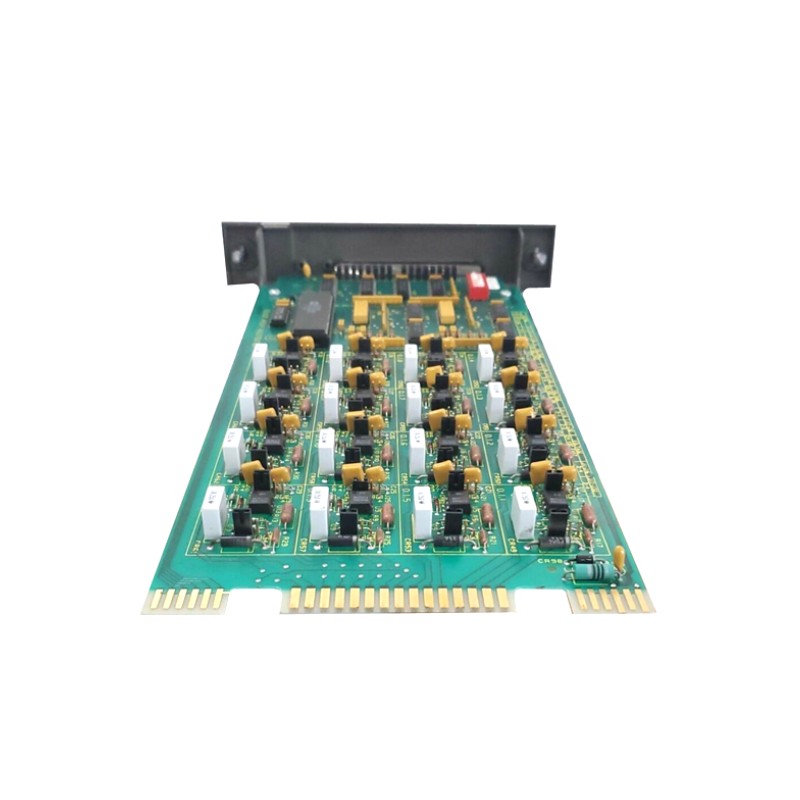
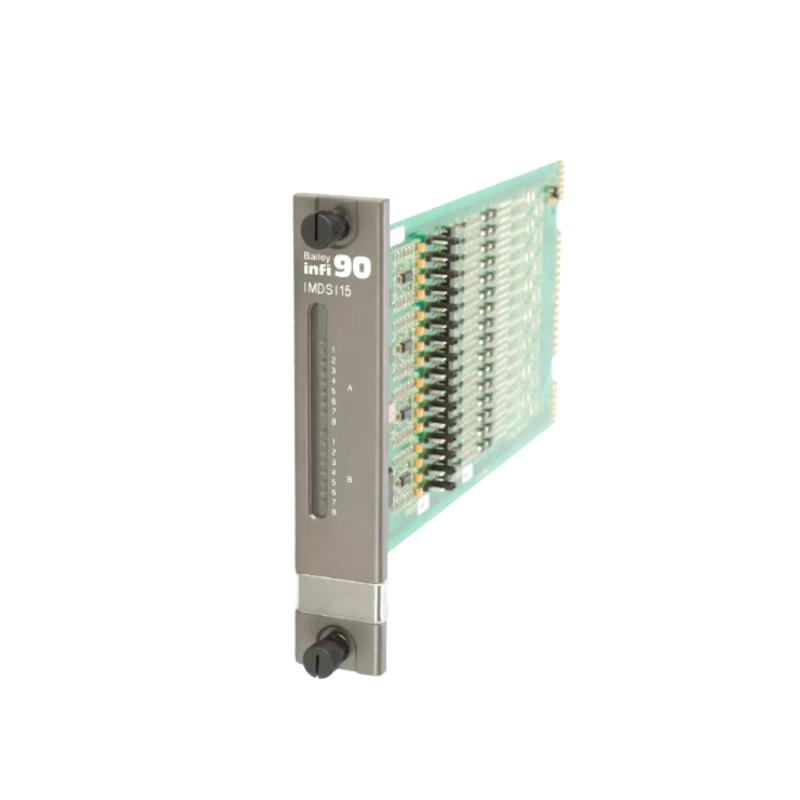
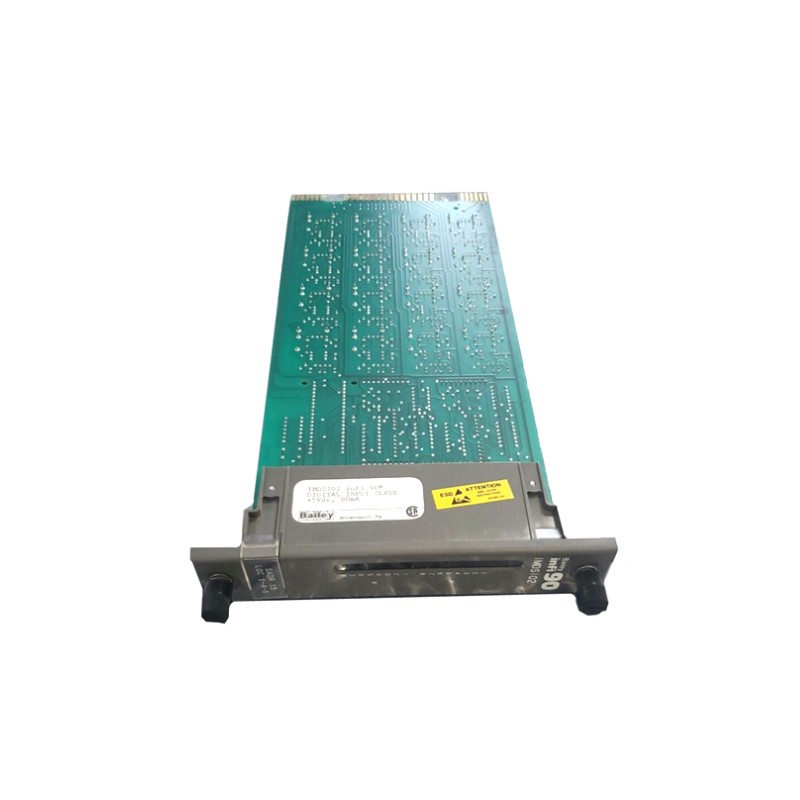
Product Snapshot
The ABB Bailey IMDSI15 Digital Input Slave Module is purpose-built for dependable acquisition of high-level discrete signals within INFI 90 distributed control systems. Acting as a bridge between field devices and the control backbone, it converts real-world contact and relay states into clean digital data for logic processing, alarms, and interlocks.
Engineered for resilience and stability, the IMDSI15 excels in environments where higher-voltage inputs are common, making it a strong fit for legacy upgrades and mission-critical automation layers.
Technical Specifications
| Parameter | Specification |
|---|
| Module Type | Digital Input Slave Module |
| Input Channels | 16 Digital Inputs |
| Input Voltage | 125 VDC / 120 VAC |
| Input Frequency | 50 / 60 Hz |
| Input Current | ~10 mA per channel |
| Communication | I/O Expander Bus |
| Operating Temperature | -40°C to +85°C |
| Storage Temperature | -55°C to +100°C |
| Humidity | 5% – 95% Non-condensing |
| Mounting | Standard INFI 90 Rack |
Typical Use Environments
The IMDSI15 plays a crucial role wherever dependable discrete signal monitoring is required:
-
Power plant turbine systems
-
Oil refining operations
-
Petrochemical processing
-
Water treatment automation
-
Steel and heavy manufacturing plants
-
Industrial safety interlock systems
Its ability to handle high-voltage digital signals makes it particularly valuable in legacy modernization projects.
Technical Questions & Answers
1. What type of signals does this module accept?
It supports high-voltage digital signals including 125 VDC and 120 VAC inputs.
2. How many input points are available?
The module supports 16 discrete digital inputs.
3. Is it suitable for retrofit projects?
Yes, it integrates smoothly into existing INFI 90 systems.
4. Does it support harsh industrial environments?
Yes, with an operating range down to -40°C.
5. What devices typically connect to it?
Limit switches, relays, and contact closures.
6. Is isolation provided?
The system-level architecture ensures safe signal handling.
7. Can it be used in safety applications?
Yes, especially for monitoring and status feedback.
8. Does it require additional interface modules?
It communicates through the I/O expander bus.
9. Is cabinet mounting supported?
Yes, standard rack mounting is used.
10. What makes it different from lower-voltage models?
It is optimized for higher voltage digital input ranges.
 A DCS Q Co., Ltd. - PLC and DCS Industrial Control Equipment Wholesale