Applications
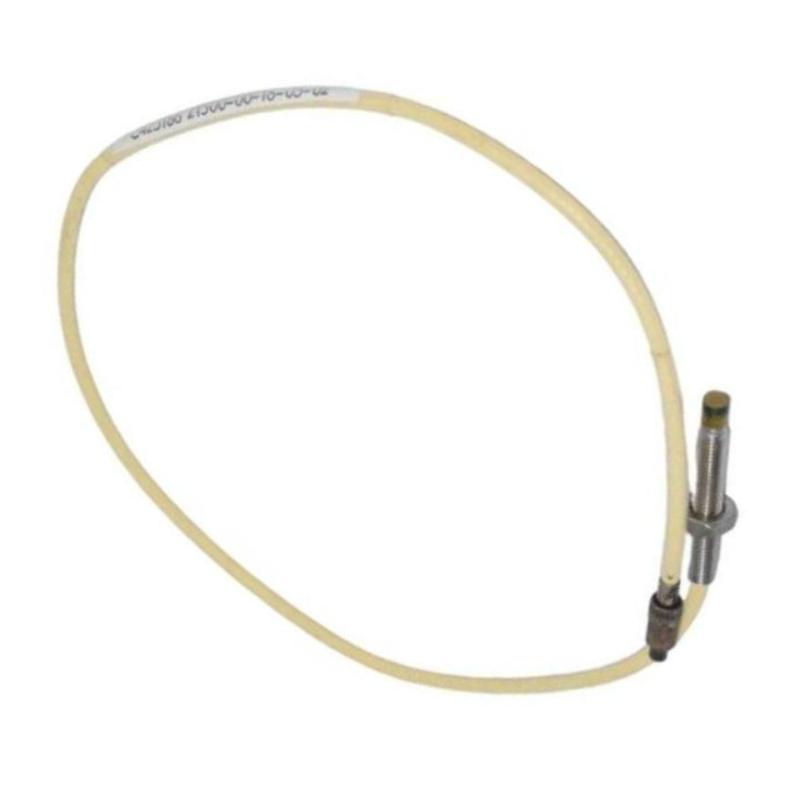
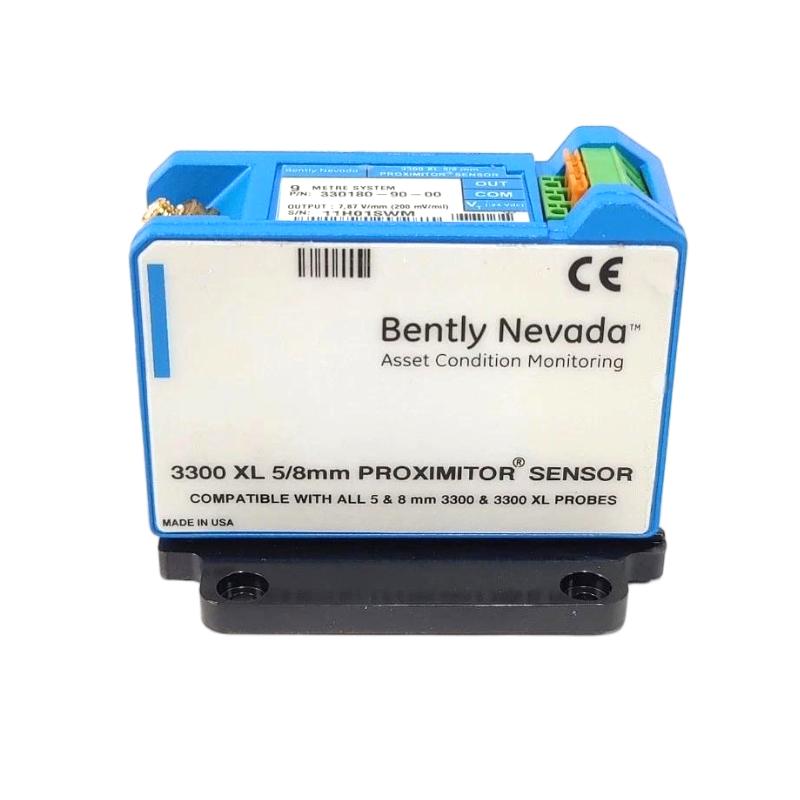
The 3300 XL 8 mm Proximitor Sensor is widely deployed in condition monitoring systems for critical rotating machinery:
-
Vibration and displacement monitoring on steam and gas turbines, compressors, and large pumps
-
Keyphasor speed reference generation for phase‑related vibration analysis
-
API 670 compliant monitoring systems requiring high reliability and accuracy
-
Integration with digital control systems (PLC, DCS, SCADA) for alarm and process logic
-
Predictive maintenance networks feeding real‑time data into analytics and reliability software
By delivering consistent and precise analog signals, this sensor supports early detection of imbalance, misalignment, rub, and other mechanical faults.
Advantages
-
Superior Signal Conditioning: Converts raw eddy‑current probe response to a clean, linear output for reliable monitoring.
-
Robust Industrial Design: Tolerates typical plant temperature and humidity conditions without drift.
-
EMI/RFI Resistance: Built‑in shielding and filtering reduce electrical noise effects on measurement data.
-
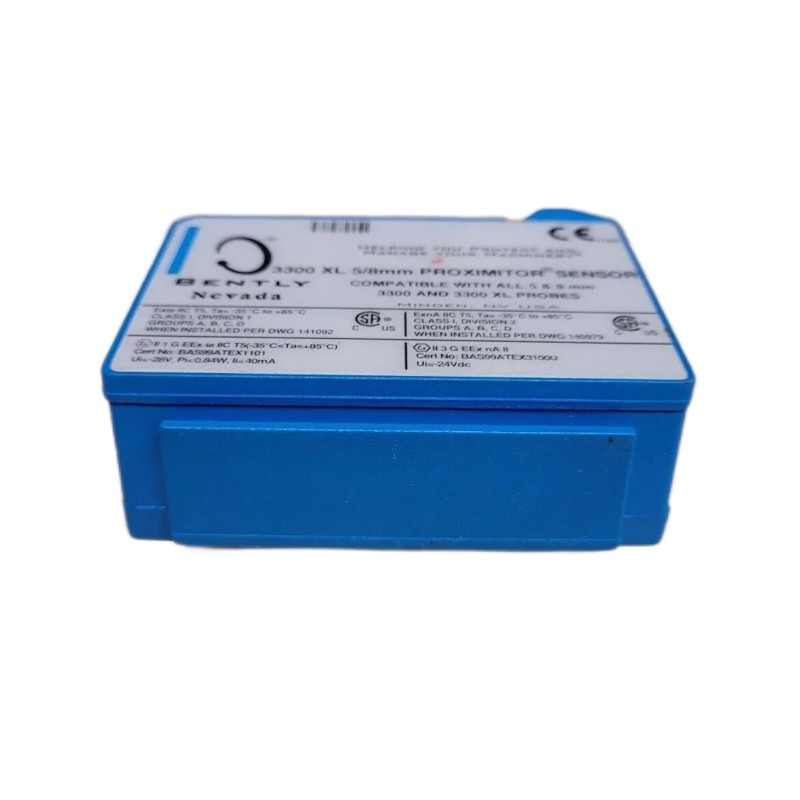
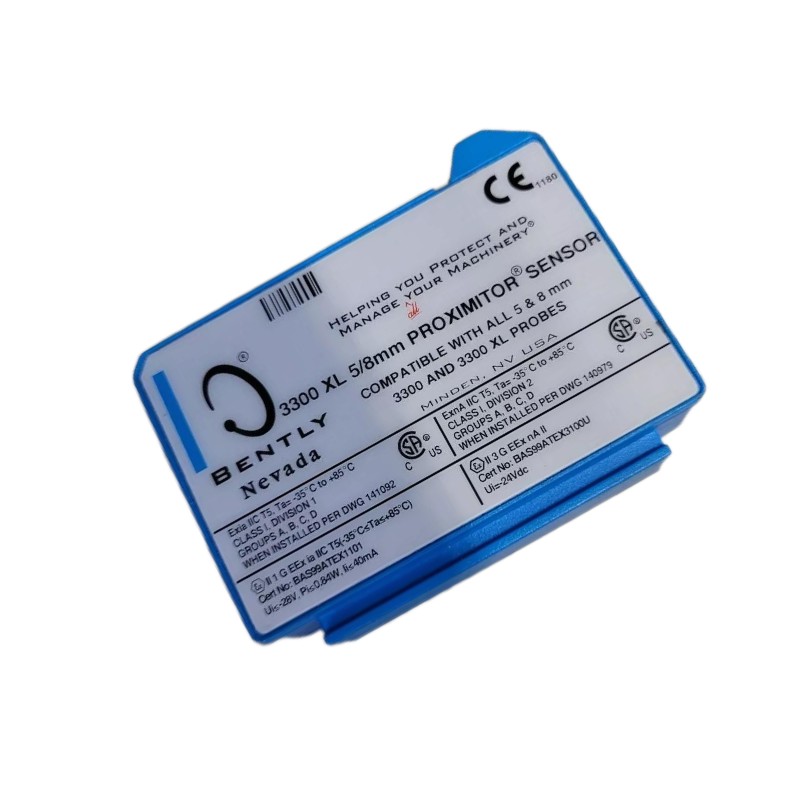
Mix‑and‑Match Compatibility: Works with existing 3300 and 3300 XL probes and rack modules without special calibration.
-
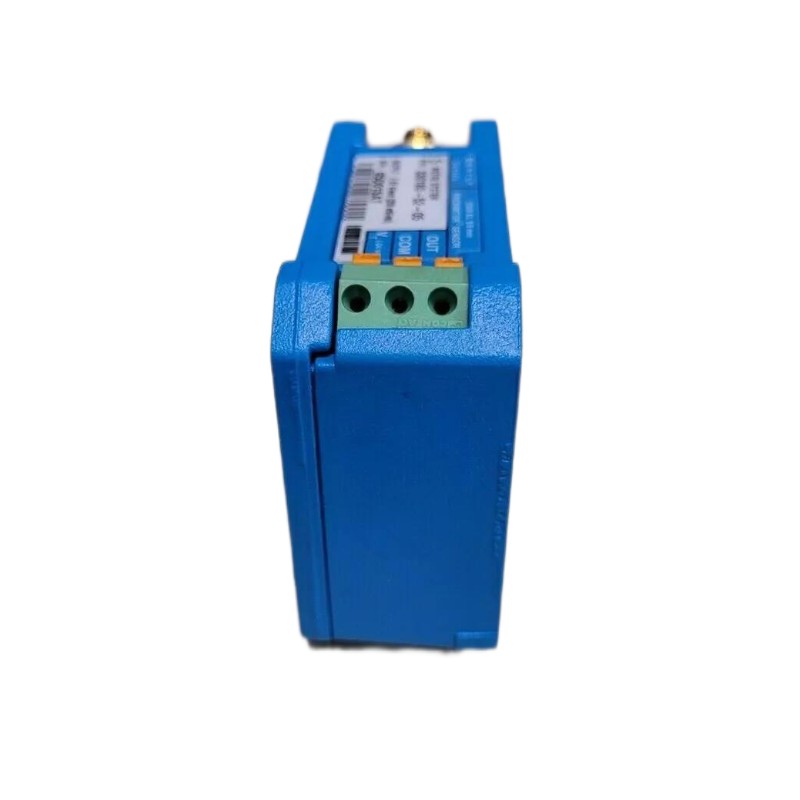
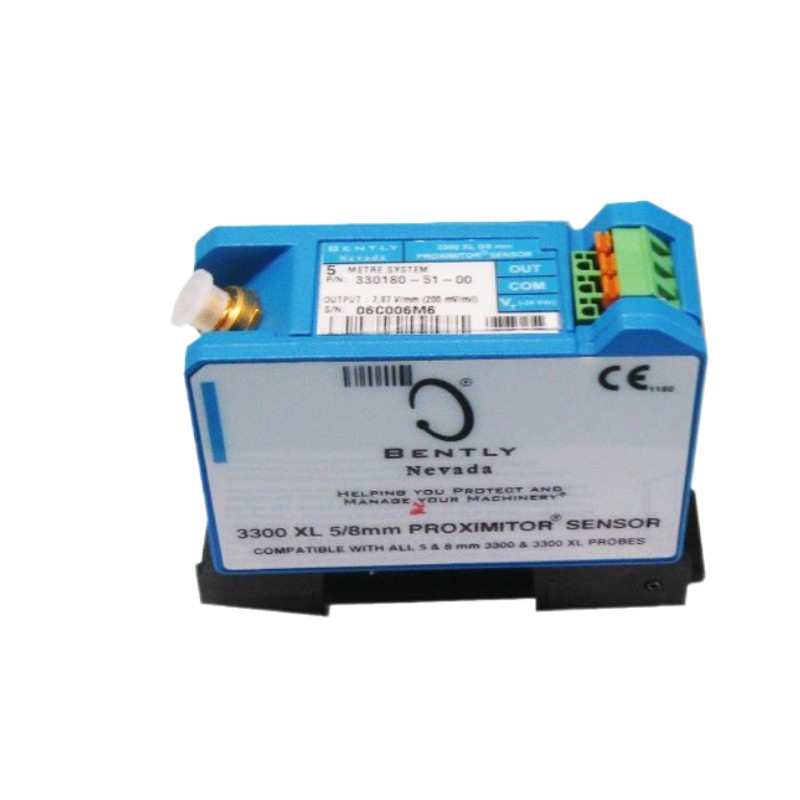
Flexible Mounting: Designed for easy cabinet, panel, or DIN rail integration in monitoring enclosures.
-
Improved Asset Protection: Enables accurate measurement inputs that feed protective alarms and shutdown logic.
These advantages make the 330180‑51‑CN suitable for use in demanding plant environments where machinery protection and reliability are essential.
Technical FAQs (Frequently Asked Questions)
-
What does the 330180‑51‑CN sensor measure?
It measures displacement and vibration through an 8 mm eddy‑current probe and produces a proportional voltage output.
-
What power supply is required?
This sensor operates on a standard –24 V DC industrial supply.
-
Is the sensor compatible with other 3300 system components?
Yes — it integrates with other 3300 and 3300 XL probes, cables, and rack modules without special matching.
-
Can it handle harsh industrial environments?
Yes — the design tolerates wide temperature and humidity ranges found in manufacturing and energy sectors.
-
Does it require field calibration?
No — factory calibration ensures consistent performance without bench adjustment.
-
What output format does it provide?
It delivers a conditioned analog voltage proportional to sensor gap, suitable for monitoring systems and analog inputs.
-
How is it typically mounted?
Installation is usually via DIN rail or panel mount within a control cabinet, based on system layout.
-
Does it support API 670 compliance?
Yes — the overall sensor system is designed to meet API 670 requirements for machinery protection.
-
Can it be integrated with PLC/DCS systems?
Yes — its standardized output is compatible with PLC, DCS, and other automation interfaces.
-
How does this sensor improve machine reliability?
By providing accurate, low‑noise signals for condition monitoring, it enables early detection of mechanical issues, reducing unexpected downtime.
 A DCS Q Co., Ltd. - PLC and DCS Industrial Control Equipment Wholesale