Introduction
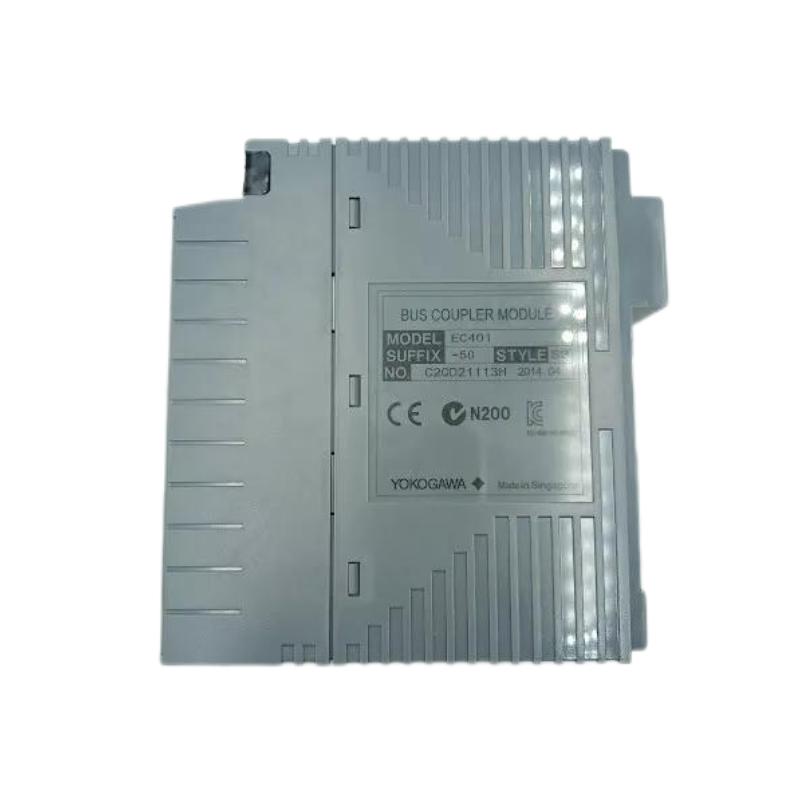
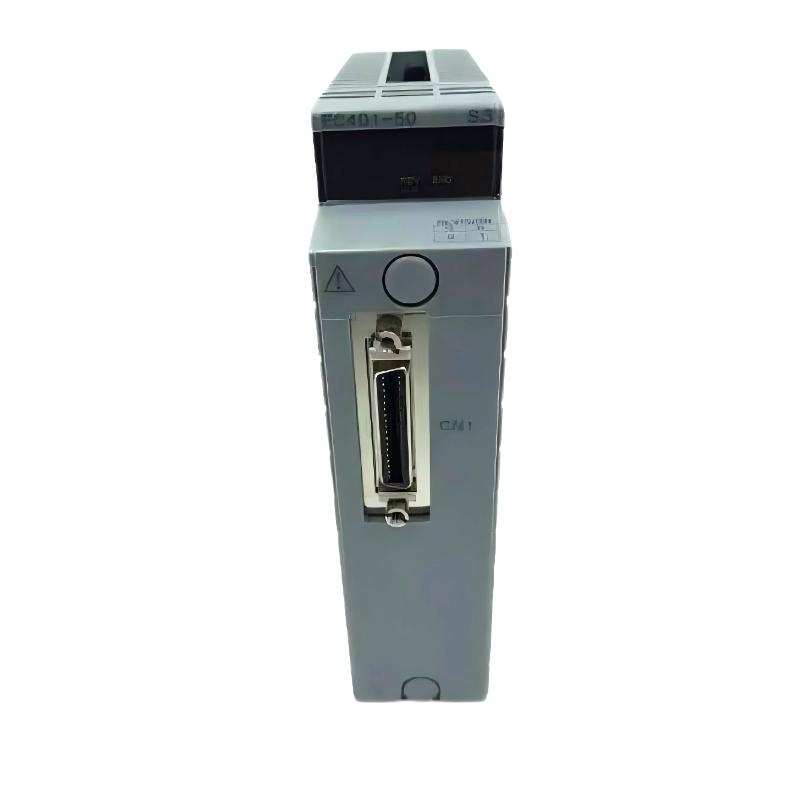
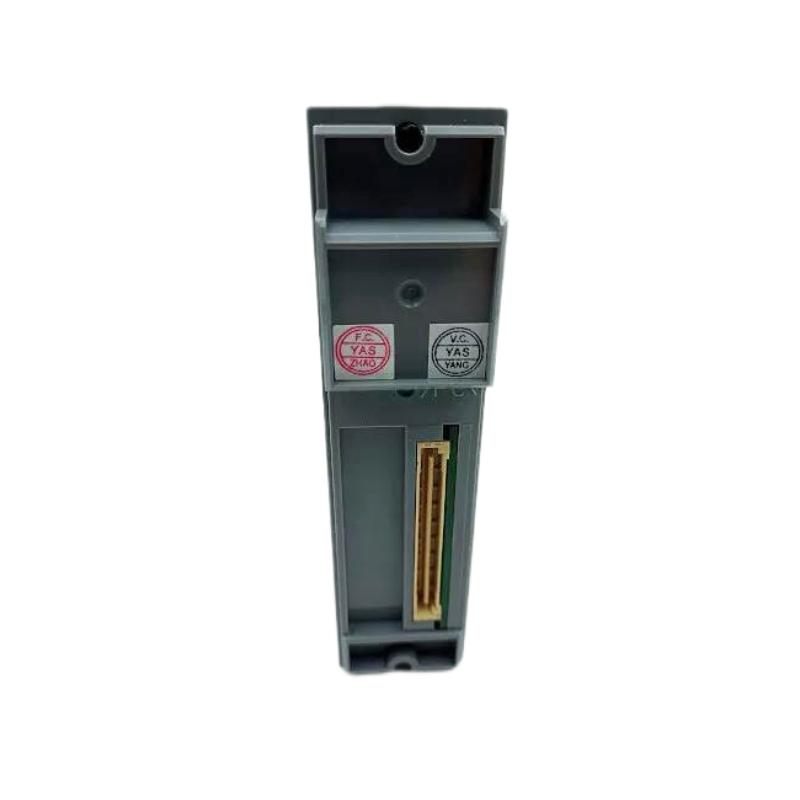
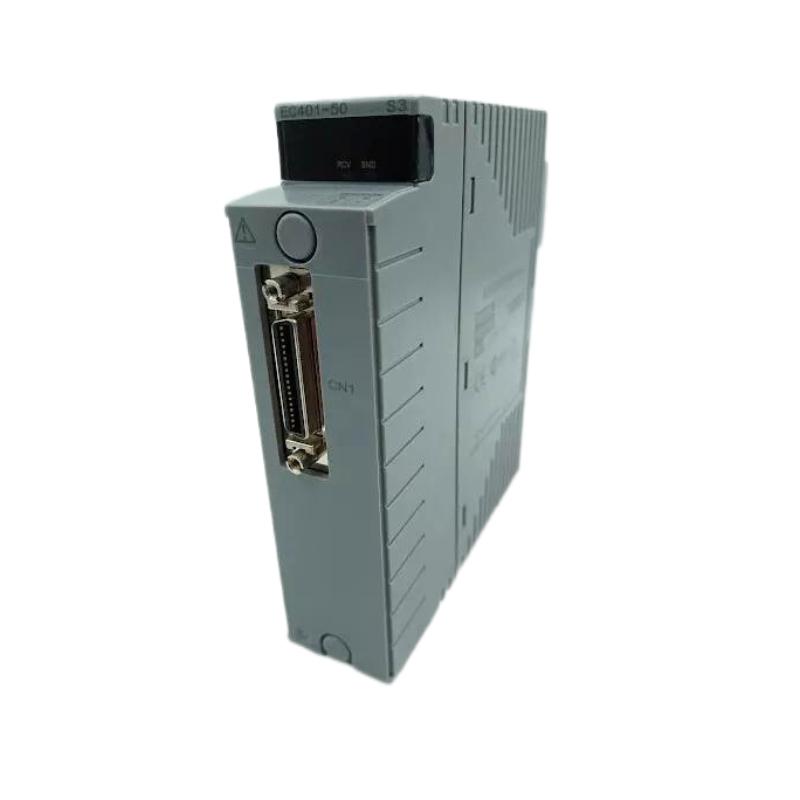
The Yokogawa EC401-50 ESB Bus Coupler Module is a critical component for integrating devices within industrial automation networks, offering reliable communication between field devices and control systems. With a compact design of 130 x 129.5 x 32.8 mm and a lightweight build of 0.24 kg, this module is engineered for seamless integration in ESB (Enhanced Service Bus) systems.
Designed for data coupling and interface management, the EC401-50 provides stable and high-speed communication between devices, ensuring that the system operates efficiently with minimal latency. This module is essential for distributed control systems (DCS) and process automation, where timely and accurate data transfer is paramount.
Technical Specifications
|
Parameter |
Specification |
|
Model |
EC401-50 |
|
Type |
ESB Bus Coupler Module |
|
Dimensions |
130 x 129.5 x 32.8 mm |
|
Weight |
0.24 kg (0.53 lbs) |
|
Operating Voltage |
24 V DC |
|
Power Consumption |
Low Power Consumption |
|
Communication Protocol |
Compatible with Yokogawa ESB and DCS systems |
|
Mounting Type |
Panel-Mountable |
|
Temperature Range |
-10°C to 60°C |
|
Compliance |
CE, RoHS |
Applications
The Yokogawa EC401-50 ESB Bus Coupler Module is designed to handle communication between devices in various industrial and automation contexts, including:
-
Distributed Control Systems (DCS): Used for connecting field instruments to the control network, facilitating seamless data transfer and communication.
-
ESB Systems: Serves as the critical communication bridge within ESB networks, ensuring stable operation of the bus system and connectivity between devices.
-
Process Automation: Ensures reliable communication in process automation systems where real-time data transfer between devices is essential for precise monitoring and control.
-
Data Acquisition Systems: Facilitates the collection and transmission of data from field devices to central controllers, enabling effective data logging and analysis.
-
Machine Control Systems: Interconnects various control devices and sensors, enhancing the overall performance and functionality of automated machinery.
-
Industrial Automation Networks: Ideal for large-scale automation systems, providing seamless communication across devices and ensuring consistency in control and data flow.
 A DCS Q Co., Ltd. - PLC and DCS Industrial Control Equipment Wholesale